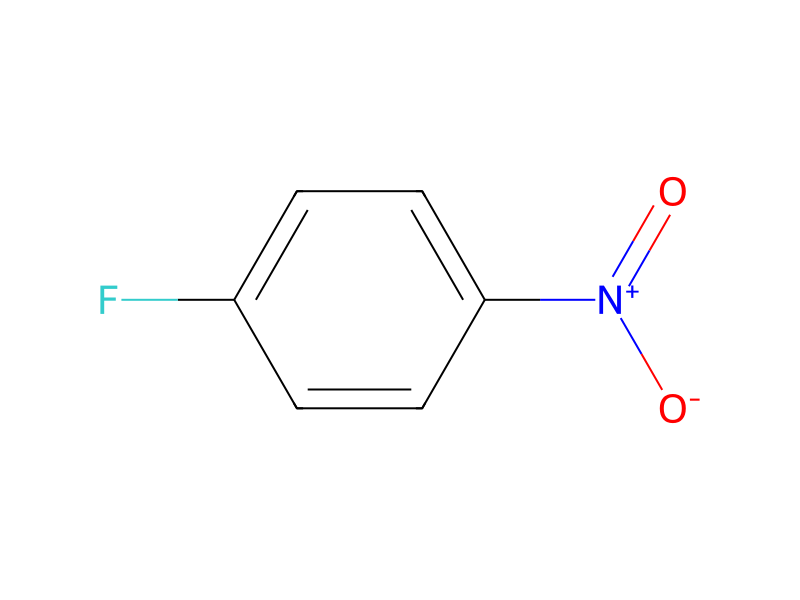
Into a 500-mL 4-necked round-bottom flask, was placed a solution of sodium hydride (4.05 g, 168.75 mmol, 1.70 equiv) in N,N-dimethylformamide (200 mL). A solution of 1-fluoro-4-nitrobenzene (14 g, 99.22 mmol, 1.00 equiv) in N,N-dimethylformamide (50 mL) was added dropwise with stirring at 0° C. over 20 min. The resulting solution was stirred for 2 hr at room temperature. Cu2Cl2 (9.83 g, 100.31 mmol, 1.01 equiv) was added and a solution of 2,6-difluorophenol (15.5 g, 119.15 mmol, 1.20 equiv) in N,N-dimethylformamide (50 mL) was added dropwise with stirring at 25° C. over 10 min. The resulting solution was stirred for 12 h at 100° C. in an oil bath, diluted with 500 mL of water and extracted with ethyl acetate. The combined organic layers were washed with water and brine, dried over anhydrous sodium sulfate and concentrated under vacuum. The residue was placed on a silica gel column and eluted with ethyl acetate/petroleum ether (1/8) to give 20 g (80%) of 1,3-difluoro-2-(4-nitrophenoxy)benzene as brown oil.