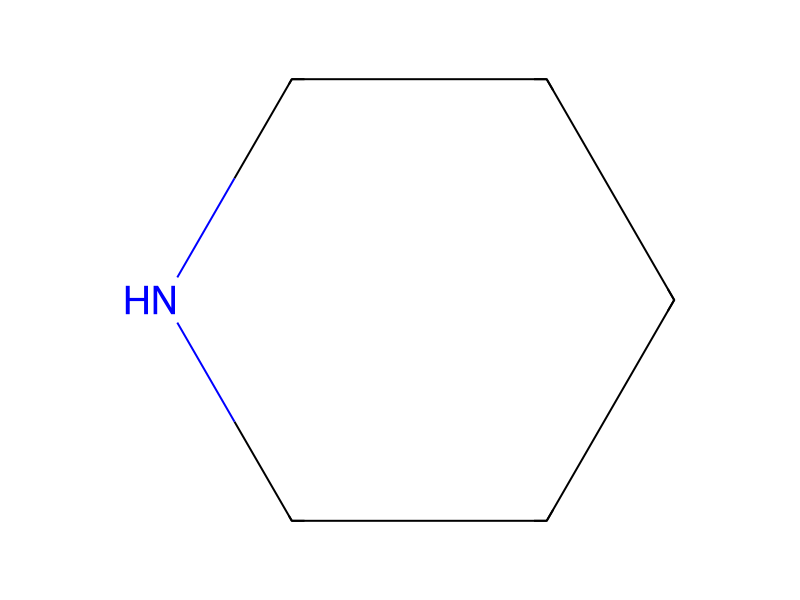
[OH:1][C:2]1[CH:7]=[CH:6][CH:5]=[CH:4][C:3]=1[C:8](=[O:14])[CH2:9][C:10]([O:12][CH3:13])=[O:11].[Cl:15][C:16]1[CH:17]=[C:18]([CH:21]=[CH:22][CH:23]=1)[CH:19]=O.N1CCCCC1.C(O)(=O)C>C(O)(C)C>[Cl:15][C:16]1[CH:17]=[C:18]([CH:19]2[CH:9]([C:10]([O:12][CH3:13])=[O:11])[C:8](=[O:14])[C:3]3[C:2](=[CH:7][CH:6]=[CH:5][CH:4]=3)[O:1]2)[CH:21]=[CH:22][CH:23]=1A mixture of methyl 3-(2-hydroxyphenyl)-3-oxopropanoate (prepared according to Cushman, M. et al., J. Med. Chem. 1991, 34, 798; 250 mg, 1.29 mmol) and 3-chlorobenzaldehyde (146 μL, 1.29 mmol) in isopropanol (5.0 mL) was treated with piperidine (13 μL, 129 μmol) and acetic acid (7.4 μL, 129 μmol) and heated to reflux for 17 h. After this time, the mixture was cooled to rt. The cooled solution was concentrated under vacuum and the resulting residue was purified by rotary TLC, eluting with 9:1 hexane-ethyl acetate, to provide a colorless gum. The colorless gum was crystallized from a hot isopropanol/water solution to provide methyl 2-(3-chlorophenyl)-4-oxochroman-3-carboxylate as an off-white solid (173 mg, 42%). The NMR indicated predominantly the enolic form. 1H NMR (400 MHz, CDCl3) δ ppm 3.78 (s, 3 H) 6.21 (s, 1 H) 6.82 (d, J=8.1 Hz, 1 H) 6.97 (t, J=7.9 Hz, 1 H) 7.18-7.32 (m, 4 H) 7.34 (m, 1 H) 7.69 (dd, J=7.9, 1.8 Hz, 1 H) 12.28 (br. s, 1 H). High resolution mass spec (M+H)+ calc. 317.0581, found 317.0597.