HomeMCPWorkbenchSkills
HomeWorkbenchNotificationsMe
llms.txt · MCP GuidePrivacy Policy · Terms of Service · Supportv1.8.3
  1. Home
  2. /Reaction

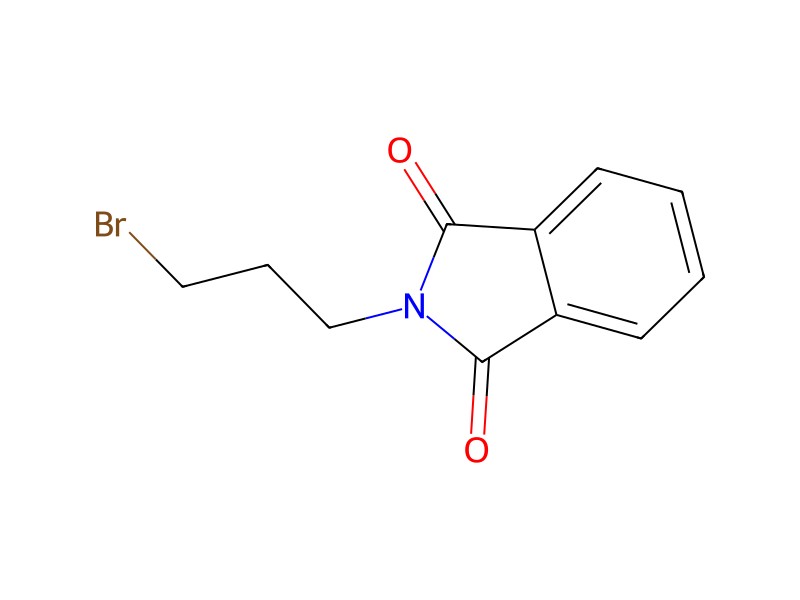
N-3-Bromopropylphthalimide → Dibenzyl-2-(3-phthalimidopropyl)malonate

HRID 413327
Print

Reaction equation

HRID 413327 reaction equation
[C:1]([O:14][CH2:15][C:16]1[CH:21]=[CH:20][CH:19]=[CH:18][CH:17]=1)(=[O:13])[CH2:2][C:3]([O:5][CH2:6][C:7]1[CH:12]=[CH:11][CH:10]=[CH:9][CH:8]=1)=[O:4].[H-].[Na+].Br[CH2:25][CH2:26][CH2:27][N:28]1[C:32](=[O:33])[C:31]2=[CH:34][CH:35]=[CH:36][CH:37]=[C:30]2[C:29]1=[O:38]>C1COCC1>[CH2:6]([O:5][C:3](=[O:4])[CH:2]([CH2:25][CH2:26][CH2:27][N:28]1[C:32](=[O:33])[C:31]2=[CH:34][CH:35]=[CH:36][CH:37]=[C:30]2[C:29]1=[O:38])[C:1]([O:14][CH2:15][C:16]1[CH:17]=[CH:18][CH:19]=[CH:20][CH:21]=1)=[O:13])[C:7]1[CH:12]=[CH:11][CH:10]=[CH:9][CH:8]=1
ParticipantsProcedureWorkupSources & evidenceReaction notes

Participants

5

Reactant 3

HCID 21611N-3-BromopropylphthalimideHCID 24758Sodium hydrideHCID 84754Dibenzyl malonate

Product 1

HCID 18533183Dibenzyl-2-(3-phthalimidopropyl)malonateYield 52.8%

Reagents, catalysts & solvents 1

HCID 8028TetrahydrofuranSolvent2×

Procedure

A solution of dibenzyl malonate (20 g) in anhydrous THF (200 ml) was treated at 0° C. with sodium hydride (60% dispersion in mineral oil, 3.1 g). The mixture was allowed to warm to room temperature and stirred for 30 minutes under nitrogen. The mixture was then treated with a solution of N-(3-bromopropyl)phthalimide (20.5 g) in THF (100 ml) and heated at reflux for 12 hours. The reaction was then cooled, filtered, and the filtrate evaporated in vacuo. The residue was partitioned between ethyl acetate (200 ml) and saturated aqueous ammonium chloride (150 ml). The organic layer was washed with water (100 ml), brine (100 ml), dried (MgSO4), filtered and the filtrate evaporated in vacuo. The residue was purified by column chromatography on silica gel eluting with 20% ethyl acetate in hexane to yield the title compound (17.5 g, 50%) as a white solid.

Workup

  1. temperatureheated
  2. temperatureat reflux for 12 hours
  3. temperatureThe reaction was then cooled
  4. filtrationfiltered
  5. customthe filtrate evaporated in vacuo
  6. customThe residue was partitioned between ethyl acetate (200 ml) and saturated aqueous ammonium chloride (150 ml)
  7. washThe organic layer was washed with water (100 ml), brine (100 ml)
  8. dry with materialdried (MgSO4)
  9. filtrationfiltered
  10. customthe filtrate evaporated in vacuo
  11. customThe residue was purified by column chromatography on silica gel eluting with 20% ethyl acetate in hexane

Sources & evidence

ORD record
ord-0dd42991ec174b6ab575e0df13e4cbe4
Source dataset
uspto-grants-2003_05
DOI
10.6084/m9.figshare.5104873.v1
Patent number
US06566384B1

Reaction notes

On this pageParticipantsProcedureWorkupSources & evidenceReaction notes