Reaction equation
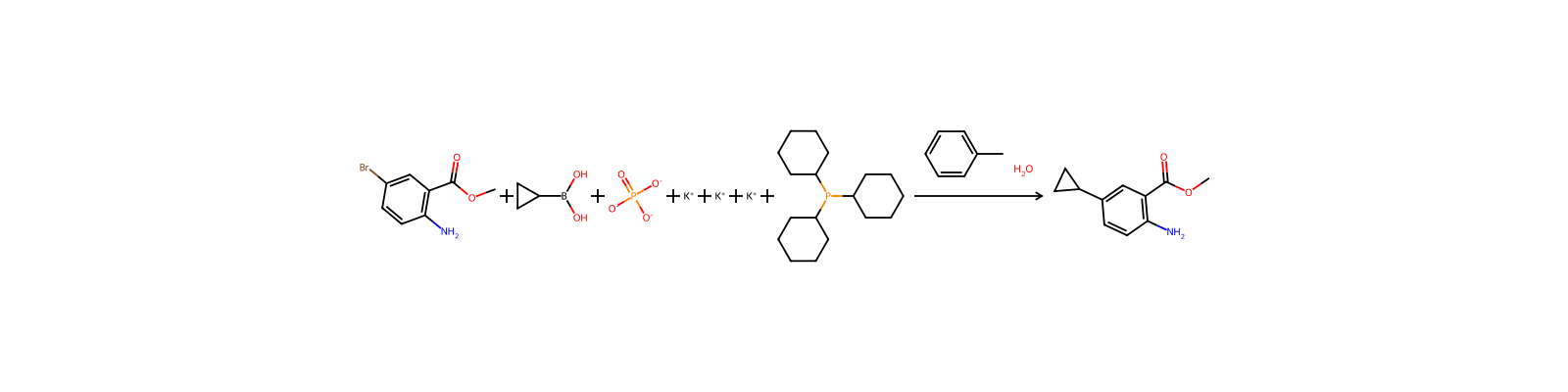
[NH2:1][C:2]1[CH:11]=[CH:10][C:9](Br)=[CH:8][C:3]=1[C:4]([O:6][CH3:7])=[O:5].[CH:13]1(B(O)O)[CH2:15][CH2:14]1.[O-]P([O-])([O-])=O.[K+].[K+].[K+].P(C1CCCCC1)(C1CCCCC1)C1CCCCC1>C1(C)C=CC=CC=1.O>[NH2:1][C:2]1[CH:11]=[CH:10][C:9]([CH:13]2[CH2:15][CH2:14]2)=[CH:8][C:3]=1[C:4]([O:6][CH3:7])=[O:5]Participants
7
Reactant 4


Product 1

Reagents, catalysts & solvents 2


Conditions
- Temperature
- 100 °C
Procedure
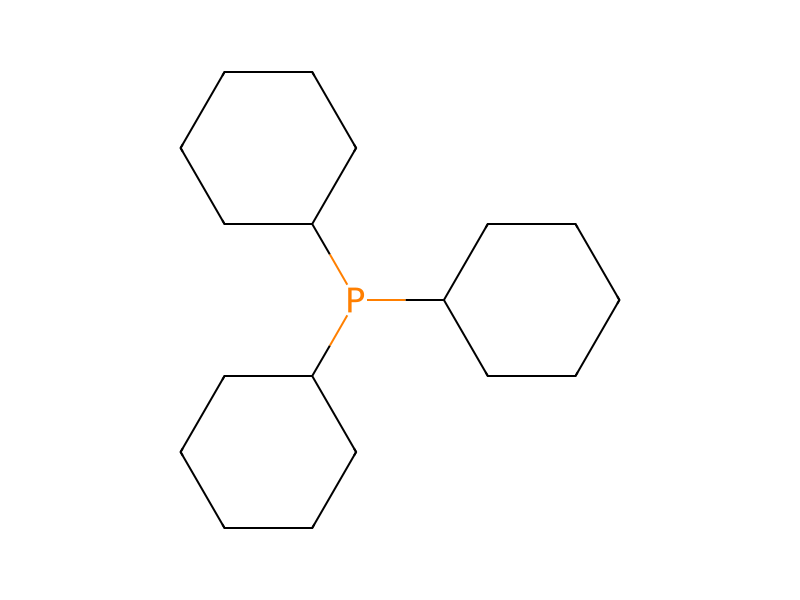
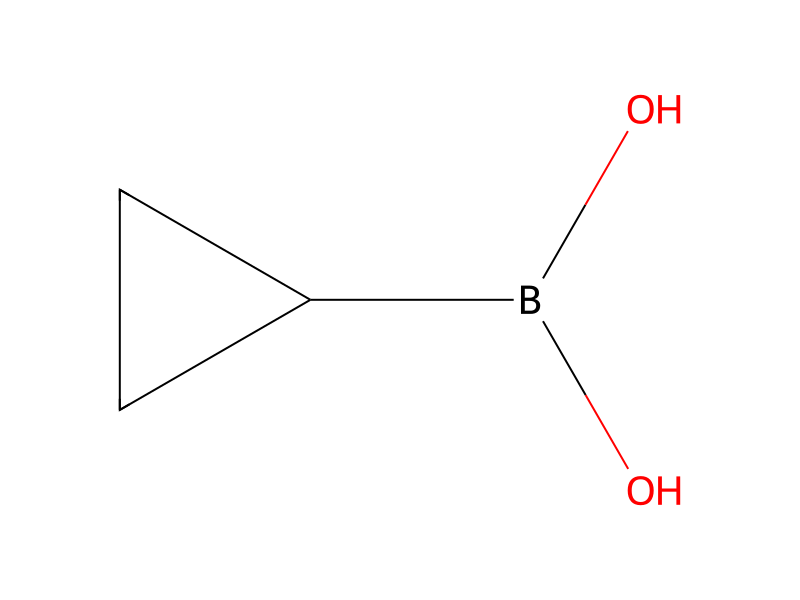
In a schlenck tube, a mixture of methyl 2-amino-5-bromobenzoate (43.47 mmol, 10 g), cyclopropylboronic acid (112.92 mmol, 9.700 g), K3PO4 (144.16 mmol, 30.6 g), Pd(AcO)2 (3.47 mmol, 0.780 g), P(Cy)3 (7.85 mmol, 2.2 g) in toluene (170 ml) and water (10 ml) was heated for 2 hours at 100° C., under nitrogen atmosphere. The reaction mixture was filtered through celite and the organic phase was separated and evaporated affording 7.34 g (yield 77%) of the expected product.
Workup
- filtrationThe reaction mixture was filtered through celite
- customthe organic phase was separated
- customevaporated
Sources & evidence
- ORD record
- ord-551834844ec144a489dbc19d16676188
- Source dataset
- uspto-grants-2013_09
- Patent number
- US08536165B2
Linked notes
Loading…