HomeMCPWorkbenchSkills
HomeWorkbenchNotificationsMe
llms.txt · MCP GuidePrivacy Policy · Terms of Service · Supportv1.8.0
  1. Home
  2. /Reaction

Diisopropylamine → HCID 12067664, compound

HRID 430259
Notes
Print preview

Reaction equation

HRID 430259 reaction equation
C(NC(C)C)(C)C.C([Li])CCC.[CH3:13][O:14][C:15](=[O:26])[CH2:16][C:17]1[CH:22]=[CH:21][C:20]([S:23][CH3:24])=[C:19]([Br:25])[CH:18]=1.I[CH2:28][CH:29]1[CH2:33][CH2:32][CH2:31][CH2:30]1>O1CCCC1.CN1CCCN(C)C1=O>[CH3:13][O:14][C:15](=[O:26])[CH:16]([C:17]1[CH:22]=[CH:21][C:20]([S:23][CH3:24])=[C:19]([Br:25])[CH:18]=1)[CH2:28][CH:29]1[CH2:33][CH2:32][CH2:31][CH2:30]1
ParticipantsConditionsProcedureWorkupSources & evidenceReaction notes

Participants

7

Reactant 4

HCID 7912DiisopropylamineHCID 2762531(Iodomethyl)cyclopentaneHCID 12067663(3-Bromo-4-methylsulfanyl-phenyl)-acetic acid methyl esterHCID 178418339Butyllithium

Product 1

HCID 12067664HCID 12067664, compoundYield 57.1%

Reagents, catalysts & solvents 2

HCID 8028
Tetrahydrofuran
Solvent
3×
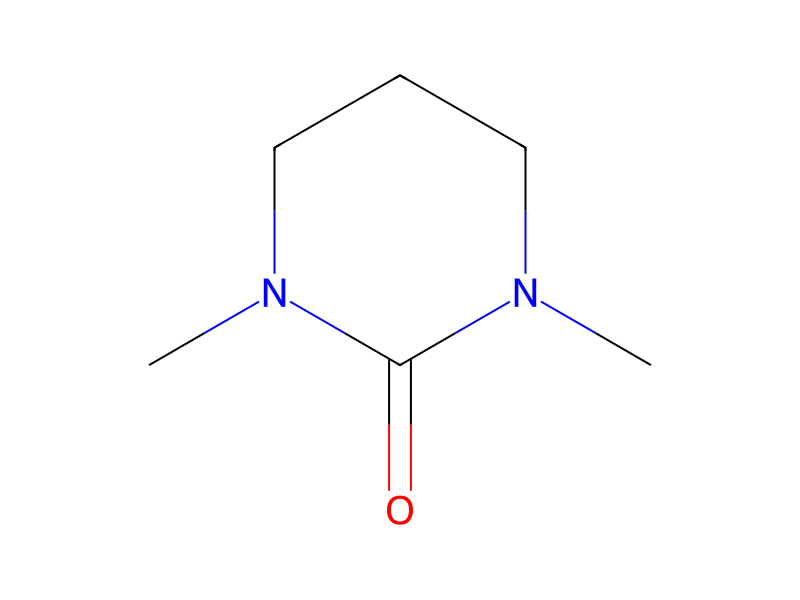
HCID 816462(1H)-Pyrimidinone, tetrahydro-1,3-dimethyl-Solvent2×

Conditions

Temperature
-78 °C

Procedure

A solution of diisopropylamine (3.4 mL, 24.38 mmol) in dry tetrahydrofuran (21 mL) and 1,3-dimethyl-3,4,5,6-tetrahydro-2(1H)-pyrimidinone (7 mL) was cooled to −78° C. under nitrogen and then treated with a 2.5M solution of n-butyllithium in hexanes (9.8 mL, 24.38 mmol). The resulting reaction mixture was stirred at −78° C. for 30 min and then treated dropwise with a solution of (3-bromo-4-methylsulfanyl-phenyl)-acetic acid methyl ester (6.10 g, 22.17 mmol) in dry tetrahydrofuran (21 mL) and 1,3-dimethyl-3,4,5,6-tetrahydro-2(1H)-pyrimidinone (7 mL). The resulting reaction mixture was allowed to stir at −78° C. for 1 h, at which time, a solution of iodomethylcyclopentane (5.59 g, 26.60 mmol) in a small amount of dry tetrahydrofuran was added dropwise. The reaction mixture was allowed to warm to 25° C. where it was stirred for 15 h. The reaction mixture was quenched with water (300 mL) and then concentrated in vacuo to remove tetrahydrofuran. The remaining aqueous phase was extracted with ethyl acetate (3×150 mL). The combined organic layers were washed with a saturated aqueous sodium chloride solution (1×200 mL), dried over sodium sulfate, filtered, and concentrated in vacuo. Flash chromatography (Merck Silica gel 60, 70-230 mesh, 19/1 hexanes/ethyl acetate) afforded 2-(3-bromo-4-methylsulfanyl-phenyl)-3-cyclopentyl-propionic acid methyl ester (4.52 g, 57%) as a light yellow oil: EI-HRMS m/e calcd for C16H21BrO2S (M+) 356.0446, found 356.0435.


Workup

  1. customThe resulting reaction mixture
  2. customThe resulting reaction mixture
  3. stirringto stir at −78° C. for 1 h, at which time
  4. temperatureto warm to 25° C. where it
  5. stirringwas stirred for 15 h
  6. customThe reaction mixture was quenched with water (300 mL)
  7. concentrationconcentrated in vacuo
  8. customto remove tetrahydrofuran
  9. extractionThe remaining aqueous phase was extracted with ethyl acetate (3×150 mL)
  10. washThe combined organic layers were washed with a saturated aqueous sodium chloride solution (1×200 mL)
  11. dry with materialdried over sodium sulfate
  12. filtrationfiltered
  13. concentrationconcentrated in vacuo

Sources & evidence

ORD record
ord-0c94abb6c6ad440a8b500802030727ab
Source dataset
uspto-grants-2001_11
DOI
10.6084/m9.figshare.5104873.v1
Patent number
US06320050B1

Reaction notes

Loading…

On this pageParticipantsConditionsProcedureWorkupSources & evidenceReaction notes