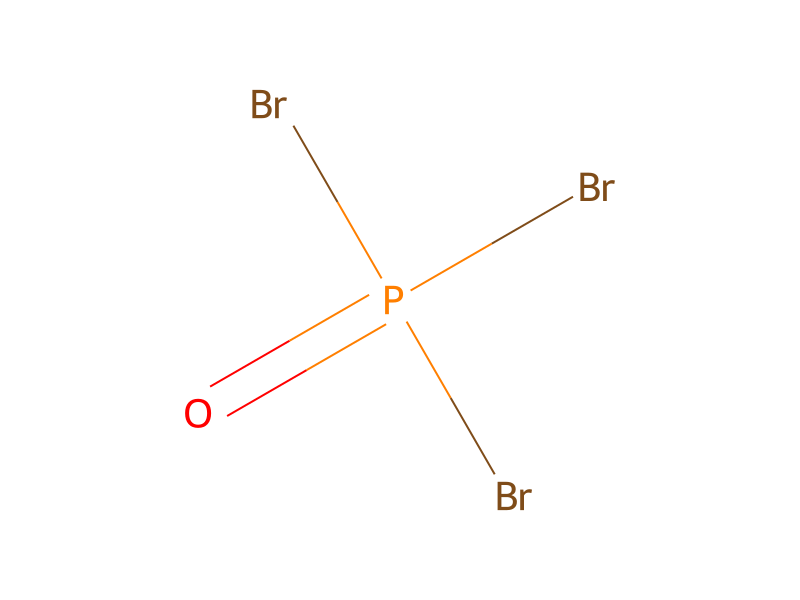
4-Hydroxy-7-phenyl-1,10-phenanthroline-3-carboxylic acid is de-carboxylated in three gram amounts by heating at 250-270° C. in a Woods metal bath until effervescence ceases. A cake, principally comprising 7-phenyl-1,10-phenanthrolin-4-ol, cracks away from the sides of the beaker and is ground up in a mortar. This material is treated with excess phosphoryl bromide (15 mL) and the mixture is heated to 140° C. for 8 hrs. The reaction mixture is cooled to room temperature, and the remaining phosphoryl bromide is distilled off under reduced pressure to yield a semi-crystalline mass. This solid is stirred into a mixture of toluene and dilute sodium bicarbonate sufficient to make the mixture slightly basic. The mixture is stirred for several hours, after which time the toluene layer is separated and the aqueous layer is extracted with additional toluene. The toluene fractions are combined, treated with decolorizing charcoal, filtered, and evaporated to yield the desired product, which is collected by filtration and re-crystallized from toluene.