Reaction equation

[Cr+6].[Cr:2](O[Cr]([O-])(=O)=O)([O-])(=O)=O.[K+].[K+].[C:13]([OH:16])(=[O:15])[CH3:14]>O>[C:13]([O-:16])(=[O:15])[CH3:14].[Cr+6:2].[C:13]([O-:16])(=[O:15])[CH3:14].[C:13]([O-:16])(=[O:15])[CH3:14].[C:13]([O-:16])(=[O:15])[CH3:14].[C:13]([O-:16])(=[O:15])[CH3:14].[C:13]([O-:16])(=[O:15])[CH3:14]Participants
Reactant 3

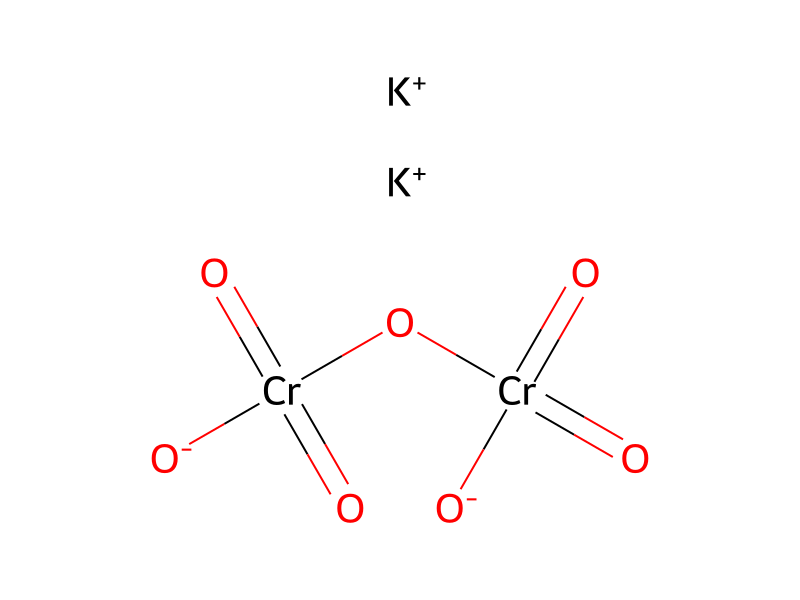

Product 1

Reagents, catalysts & solvents 1

Procedure
Chromium (VI) Micelle: Weighed 17 grams of potassium dichromate (K2CrO4), and added to a 4 liter beaker. Dissolved the contents of the beaker in 200 ml of distilled water and added 25 ml of glacial acetic acid to produce chromium (VI) acetate in solution. Added 100 grams of chrysotile asbestos (Union Carbide, high purity, grade 7), and diluted to 3.5 liters with distilled water. Added 400 ml of 1 N sodium hydroxide. Heated at 100° C. for 30 minutes. Allowed to cool and collected by the vacuum filtration using a Whatman #1 filter. A pale green product was obtained and allowed to air dry for 16 hours. The filter cake was dried at 330° F. for 90 minutes. The dry cake was fiberized by use of a blender at high speed for 1 minute. A sample of the product was completely dissolved for analysis by treatment with 20% by weight sodium peroxide at 850° C. Elemental analysis of the product is shown in Table I. HF insoluble matter increased to 45% compared to 8.6% for an untreated chrysotile sample as shown in Table II.
Sources & evidence
- ORD record
- ord-ae464f17d3044711aa5799f8351a9520
- Source dataset
- uspto-grants-1983_08
- Patent number
- US04401636
Linked notes
Loading…