HomeMCPWorkbenchSkills
HomeWorkbenchNotificationsMe
llms.txt · MCP GuidePrivacy Policy · Terms of Service · Supportv1.8.3
  1. Home
  2. /Reaction

Piperazine → 2-(Piperazin-1-yl)-1,3-benzoxazole

HRID 440245
Print

Reaction equation

HRID 440245 reaction equation
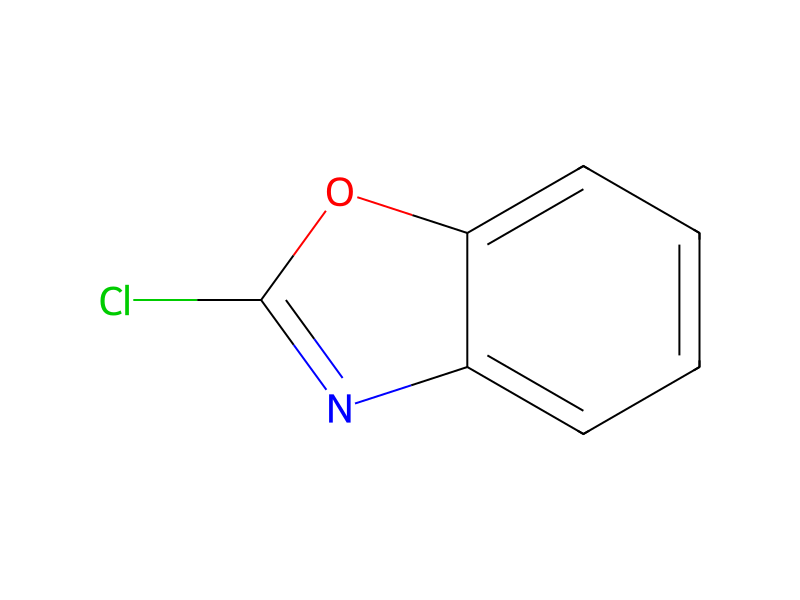
[NH:1]1[CH2:6][CH2:5][NH:4][CH2:3][CH2:2]1.Cl[C:8]1[O:9][C:10]2[CH:16]=[CH:15][CH:14]=[CH:13][C:11]=2[N:12]=1.C(=O)([O-])[O-].[K+].[K+].[I-].[K+]>C(#N)C>[O:9]1[C:10]2[CH:16]=[CH:15][CH:14]=[CH:13][C:11]=2[N:12]=[C:8]1[N:1]1[CH2:6][CH2:5][NH:4][CH2:3][CH2:2]1
ParticipantsProcedureWorkupSources & evidenceReaction notes

Participants

6

Reactant 4

HCID 4837PiperazineHCID 4875Potassium IodideHCID 11430Potassium CarbonateHCID 119862-Chlorobenzoxazole

Product 1

HCID 6478182-(Piperazin-1-yl)-1,3-benzoxazoleYield 57.1%

Reagents, catalysts & solvents 1

HCID 6342
Acetonitrile
Solvent

Procedure

In 200 ml of acetonitrile were dissolved 33.6 g (0.39 mole) of piperazine and 10.0 g (0.065 mole) of 2-chlorobenzoxazole, and 9.0 g (0.065 mole) of potassium carbonate and a catalytic amount of potassium iodide were added thereto. The mixture was refluxed by heating for 11 hours under stirring. The mixture was cooled to room temperature and then filtered. The filtrate was concentrated under reduced pressure, and the residue was applied to silica gel column chromatography (the eluent used was a mixture of chloroform : methanol = 9 : 1) to obtain 7.54 g of 1-(2-benzoxazolyl)piperazine as white crystals.

Workup

  1. temperatureThe mixture was refluxed
  2. temperatureby heating for 11 hours
  3. filtrationfiltered
  4. concentrationThe filtrate was concentrated under reduced pressure
  5. additiona mixture of chloroform

Sources & evidence

ORD record
ord-721d03863f784a5a993efaec3c9c6757
Source dataset
uspto-grants-1996_05
DOI
10.6084/m9.figshare.5104873.v1
Patent number
US05519016

Reaction notes

On this pageParticipantsProcedureWorkupSources & evidenceReaction notes