HomeMCPWorkbenchSkills
HomeWorkbenchNotificationsMe
llms.txt · MCP GuidePrivacy Policy · Terms of Service · Supportv1.8.3
  1. Home
  2. /Reaction

Potassium Iodide → 9-fluoro-2-(2-fluorophenyl)-5-{[4-(1H-imidazol-1-yl)phenyl]methyl}-2,5-dihydro-3H-pyrazolo[4,3-c]cinnolin-3-one

HRID 449950
Print

Reaction equation

HRID 449950 reaction equation
[N+:1](=[C:3]1[C:7]([C:8]2[CH:13]=[CH:12][CH:11]=[CH:10][C:9]=2[F:14])=[N:6][N:5]([C:15]2[CH:20]=[CH:19][CH:18]=[CH:17][C:16]=2[F:21])[C:4]1=[O:22])=[N-:2].C(P(CCCC)CCCC)CCC.Cl[CH2:37][C:38]1[CH:43]=[CH:42][C:41]([N:44]2[CH:48]=[CH:47][N:46]=[CH:45]2)=[CH:40][CH:39]=1.[I-].[K+].C(=O)([O-])[O-].[K+].[K+]>C(#N)C.O>[F:14][C:9]1[C:8]2[C:7]3[C:3]([C:4](=[O:22])[N:5]([C:15]4[CH:20]=[CH:19][CH:18]=[CH:17][C:16]=4[F:21])[N:6]=3)=[N:1][N:2]([CH2:37][C:38]3[CH:39]=[CH:40][C:41]([N:44]4[CH:48]=[CH:47][N:46]=[CH:45]4)=[CH:42][CH:43]=3)[C:13]=2[CH:12]=[CH:11][CH:10]=1


ParticipantsProcedureWorkupSources & evidenceReaction notes

Participants

8

Reactant 5

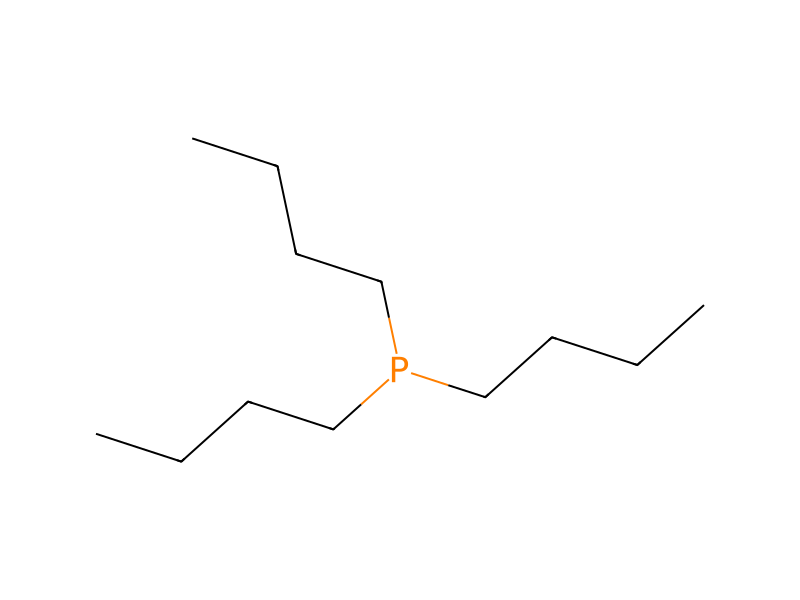
HCID 4875Potassium IodideHCID 11430Potassium CarbonateHCID 13831TributylphosphineHCID 70638591-(4-(Chloromethyl)phenyl)-1H-imidazoleHCID 178514319HCID 178514319, compound

Product 1

HCID 46896511
9-fluoro-2-(2-fluorophenyl)-5-{[4-(1H-imidazol-1-yl)phenyl]methyl}-2,5-dihydro-3H-pyrazolo[4,3-c]cinnolin-3-one

Reagents, catalysts & solvents 2

HCID 962WaterSolventHCID 6342AcetonitrileSolvent

Procedure

4-Diazo-2,5-bis(2-fluorophenyl)-2,4-dihydro-3H-pyrazol-3-one (0.17 g, 0.56 mmol) was dissolved in acetonitrile (5 mL) and treated with tri-n-butylphosphine (0.11 g, 0.56 mmol, 1.0 equiv). After stirring for 30 minutes at ambient temperature, 1-[4-(chloromethyl)phenyl]-1H-imidazole (0.11 g, 0.56 mmol, 1.0 equiv), potassium iodide (47 mg, 0.28 mmol, 0.5 equiv) and potassium carbonate (97 mg, 0.70 mmol, 1.25 equiv) were added at ambient temperature. After 45 minutes, the reaction mixture was warmed to 85° C., stirred for 2.5 hours and then cooled to ambient temperature. The mixture was poured into water (100 mL), extracted with ethyl acetate (2×75 mL) and the combined organic extracts were dried with sodium sulfate, filtered and concentrated in vacuo. The residue was purified twice by silica gel gradient chromatography (100:0 to 0:100; hexanes:ethyl acetate containing 10% methanol; and then 100:0 to 90:10; dichloromethane:methanol containing 10% ammonium hydroxide), providing the titled compound as a deep red solid: 1H-NMR (400 MHz, CDCl3) δ 8.33 (1H, dd, J=7.6, 1.8 Hz), 7.85 (1H, br s), 7.67-7.53 (4H, m), 7.46 (2H, d, J=8.5 Hz), 7.40 (2H, d, J=8.5 Hz), 7.42-7.37 (1H, m), 7.31-7.20 (4H, m), 5.88 (2H, s) ppm; high resolution mass spectrometry (ES+) m/z 437.1526 [(M+H)+; calculated for C25H18FN6O: 437.1521].

Workup

  1. waitAfter 45 minutes
  2. temperaturethe reaction mixture was warmed to 85° C.
  3. stirringstirred for 2.5 hours
  4. temperaturecooled to ambient temperature
  5. extractionextracted with ethyl acetate (2×75 mL)
  6. dry with materialthe combined organic extracts were dried with sodium sulfate
  7. filtrationfiltered
  8. concentrationconcentrated in vacuo
  9. customThe residue was purified twice by silica gel gradient chromatography (100:0 to 0:100

Sources & evidence

ORD record
ord-cc8b7d46a1e74efc8bfd5773cfb0a979
Source dataset
uspto-grants-2013_07
DOI
10.6084/m9.figshare.5104873.v1
Patent number
US08486946B2

Reaction notes

On this pageParticipantsProcedureWorkupSources & evidenceReaction notes