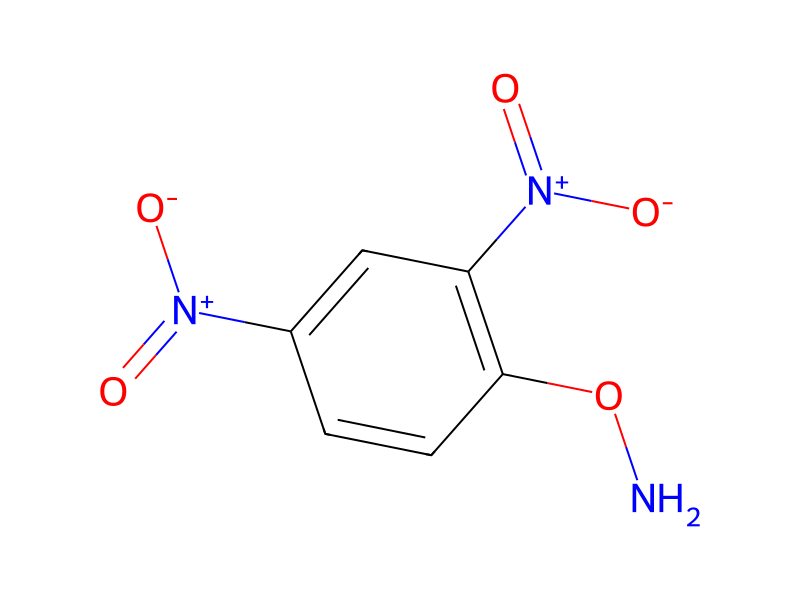
[CH3:1][C:2]1[N:11]=[C:10]2[C:5]([C:6](=[O:17])[C:7]([C:12]([O:14][CH2:15][CH3:16])=[O:13])=[CH:8][NH:9]2)=[CH:4][CH:3]=1.C(=O)([O-])[O-].[K+].[K+].[N+:24](C1C=C([N+]([O-])=O)C=CC=1ON)([O-])=O>CN(C)C=O>[NH2:24][N:9]1[C:10]2[C:5](=[CH:4][CH:3]=[C:2]([CH3:1])[N:11]=2)[C:6](=[O:17])[C:7]([C:12]([O:14][CH2:15][CH3:16])=[O:13])=[CH:8]1A mixture of 9.7 g (0.0417 m) of ethyl 1,4-dihydro-7-methyl-4-oxo-1,8-naphthyridine-3-carboxylate, 11.5 g (0.0834 m) of potassium carbonate and 200 ml of dimethylformamide was slurried at room temperature, and 8.3 g (0.0417 m) of O-(2,4-dinitrophenyl)hydroxylamine was added. The reaction mixture was stirred for 17 hours and then concentrated in vacuo. The residue was dissolved in 1 liter of warm water and extracted with 800 ml of chloroform. The extracts were filtered, dried over anhydrous magnesium sulfate, decolorized with charcoal and concentrated in vacuo. The residue was recrystallized from ethanol and chromatographed on silica gel, using isopropyl alcohol-chloroform (1:9) for elution, to give 6.5 g of ethyl 1-amino-1,4-dihydro-7-methyl-4-oxo-1,8-naphthyridine-3-carboxylate, buff-colored solid, m.p. 173°-174° C. when recrystallized from ethanol.