HomeMCPWorkbenchSkills
HomeWorkbenchNotificationsMe
llms.txt · MCP GuidePrivacy Policy · Terms of Service · Supportv1.8.0
  1. Home
  2. /Reaction

Sodium Cyanide → Cypermethrin

HRID 46752
Notes
Print preview

Reaction equation

HRID 46752 reaction equation
Cl[C:2](Cl)=[CH:3][CH:4]1[C:6]([CH3:8])(C)[CH:5]1[C:9]([O:11][C:12]([CH:14]1[C:16]([CH3:18])([CH3:17])[CH:15]1[CH:19]=[C:20]([Cl:22])[Cl:21])=[O:13])=O.[O:24](C1C=C(C=CC=1)C=O)[C:25]1[CH:30]=[CH:29][CH:28]=[CH:27][CH:26]=1.[C-:39]#[N:40].[Na+]>[Br-].C([N+](CCCC)(CCCC)CCCC)CCC.O>[Cl:22][C:20]([Cl:21])=[CH:19][CH:15]1[C:16]([CH3:17])([CH3:18])[CH:14]1[C:12]([O:11][CH:9]([C:39]#[N:40])[C:5]1[CH:4]=[CH:3][CH:2]=[C:8]([O:24][C:25]2[CH:30]=[CH:29][CH:28]=[CH:27][CH:26]=2)[CH:6]=1)=[O:13]
ParticipantsProcedureWorkupSources & evidenceReaction notes

Participants

6

Reactant 3

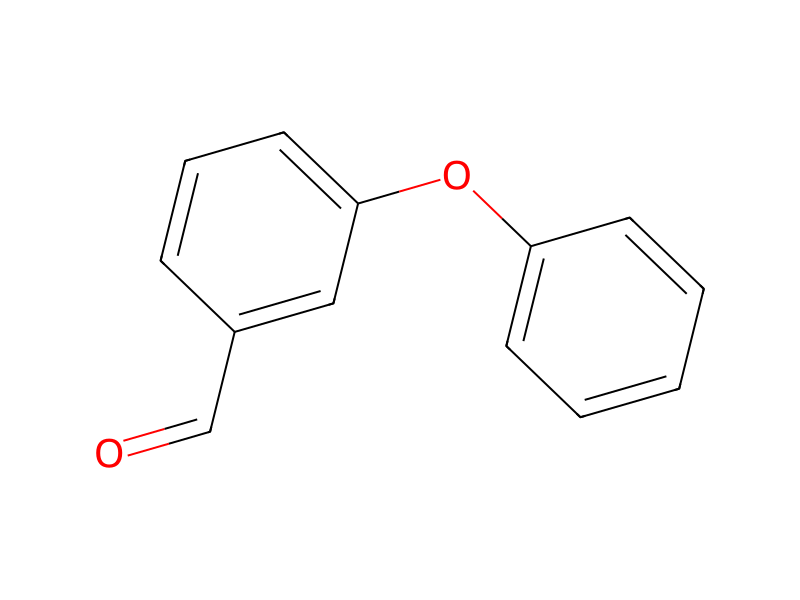
HCID 8929Sodium CyanideHCID 382843-Phenoxybenzaldehyde2×HCID 925503-(2,2-Dichlorovinyl)-2,2-dimethylcyclopropanecarboxylic anhydride

Product 1

HCID 2912Cypermethrin

Reagents, catalysts & solvents 2

HCID 74236Tetrabutylammonium BromideCatalyst
HCID 962
Water
Solvent

Procedure

A 100-ml round-bottomed flask equipped with a magnetic stirrer was charged with 2-(2,2-dichlorovinyl)-3,3-dimethylcyclopropanecarboxylic anhydride (10 mmol), prepared as described above, 3-phenoxybenzaldehyde (10 mmol) and a mixture of alkanes (25 ml) having a boiling range of from 60° C. to 80° C. A solution of sodium cyanide (12 mmol) and tetrabutylammonium bromide (0.006 mmol) in water (3 ml) was added to the mixture in the flask at a temperature of 20° C. and stirring was continued. After 100 minutes stirring, the reaction had come to a standstill at a conversion of 3-phenoxybenzaldehyde of 98.5% and at a yield of the title ester of 98%. The mixture obtained was allowed to settle into an organic and an aqueous layer, the aqueous layer was extracted with toluene (15 ml), the extract phase obtained was added to the organic layer obtained by settling of the reaction mixture, the organic liquid thus formed, was washed with water (25 ml), the washed liquid was dried and the solvent was evaporated from the dried liquid, leaving a residue containing the title ester. The yield of this ester was 96%.


Workup

  1. customA 100-ml round-bottomed flask equipped with a magnetic stirrer
  2. customprepared
  3. customof from 60° C. to 80° C
  4. stirringAfter 100 minutes stirring
  5. customThe mixture obtained
  6. extractionthe aqueous layer was extracted with toluene (15 ml)
  7. customthe extract phase obtained
  8. additionwas added to the organic layer
  9. customobtained
  10. customthe organic liquid thus formed
  11. washwas washed with water (25 ml)
  12. customthe washed liquid was dried
  13. customthe solvent was evaporated from the dried liquid
  14. customleaving a residue

Sources & evidence

ORD record
ord-a0c23644d7d14e22b3771975216734ff
Source dataset
uspto-grants-1979_11
DOI
10.6084/m9.figshare.5104873.v1
Patent number
US04175094

Reaction notes

Loading…

On this pageParticipantsProcedureWorkupSources & evidenceReaction notes