Reaction equation
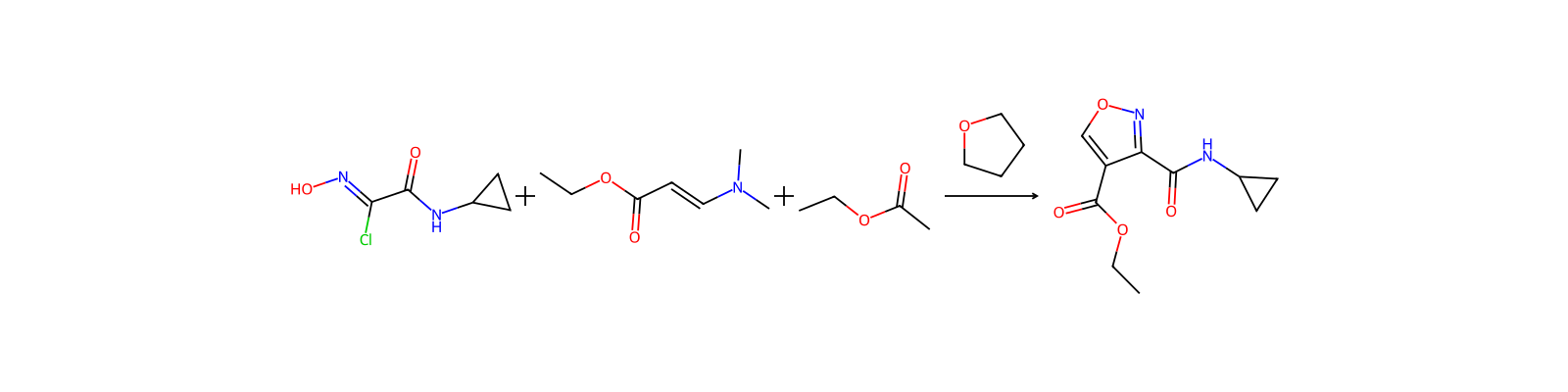
[CH:1]1([NH:4][C:5](=[O:10])[C:6](Cl)=[N:7][OH:8])[CH2:3][CH2:2]1.[CH2:11]([O:13][C:14](=[O:20])/[CH:15]=[CH:16]/N(C)C)[CH3:12].C(OCC)(=O)C>C1COCC1>[CH2:11]([O:13][C:14]([C:15]1[C:6]([C:5](=[O:10])[NH:4][CH:1]2[CH2:3][CH2:2]2)=[N:7][O:8][CH:16]=1)=[O:20])[CH3:12]Participants
5




Conditions
- Temperature
- 75 °C
Procedure
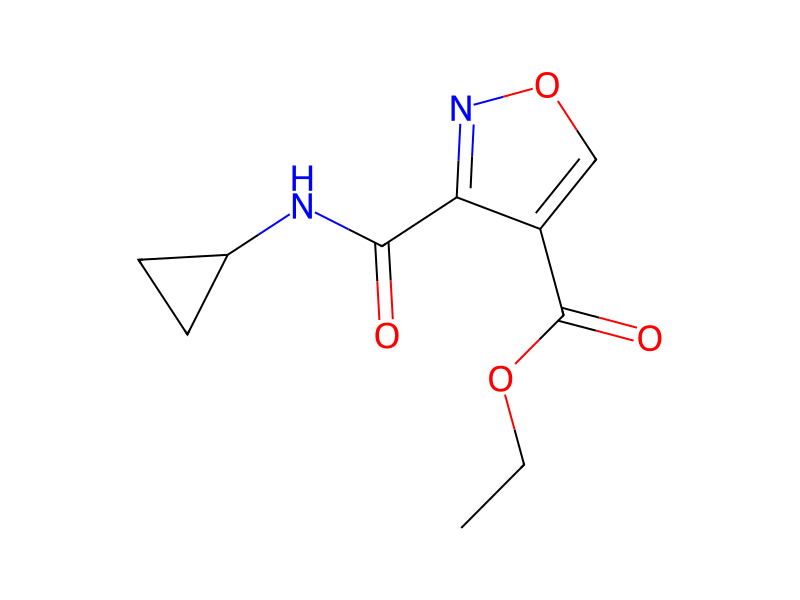
A mixture of N-cyclopropyl-2-chloro-2-hydroxyimino-acetamide (2 g, 12.3 mmol) and (E)-3-(dimethylamino)-acrylic acid ethyl ester (1.76 ml, 12.3 mmol) in THF (25 ml) was heated at 75° C. for 2 h. The reaction was then cooled to r.t., poured into 100 mL ethyl acetate and extracted with 1 M HCl. The aqueous layers were back-extracted with ethyl acetate. The organic phase was washed with water and brine, dried and evaporated. The product was obtained after purification by silica gel chromatography using a heptane/ethyl acetate gradient as light yellow solid (1.6 g, 58%).
Workup
- temperatureThe reaction was then cooled to r.t.
- extractionextracted with 1 M HCl
- extractionThe aqueous layers were back-extracted with ethyl acetate
- washThe organic phase was washed with water and brine
- customdried
- customevaporated
- customThe product was obtained
- customafter purification by silica gel chromatography
Sources & evidence
- ORD record
- ord-495a9bd1d11a4de7a97999cd4bc09afd
- Source dataset
- uspto-grants-2014_01
- Patent number
- US08623866B2
Linked notes
Loading…