HomeMCPWorkbenchSkills
HomeWorkbenchNotificationsMe
llms.txt · MCP GuidePrivacy Policy · Terms of Service · Supportv1.8.3
  1. Home
  2. /Reaction

1,2-Dibromoethane → 2,3-Dihydro-thieno(3,4-b)(1,4)dioxin-5,7-dicarboxylic acid

HRID 47183
Print

Reaction equation

HRID 47183 reaction equation
S1C=CCC1.[C:6]([O-:9])([O-:8])=O.[K+].[K+].C1OC2C(=CSC=2)OC1.BrCCBr.BrCC(Br)CCCCCCCCCCCCCC.BrCC(Br)CCCC.[C:51]([C:56]1[S:57][C:58](C(OCC)=O)=[C:59]2[O:64][CH2:63][CH2:62][O:61][C:60]=12)([O:53]CC)=[O:52].[OH-].[Na+]>O.CN(C=O)C>[C:6]([C:58]1[S:57][C:56]([C:51]([OH:53])=[O:52])=[C:60]2[O:61][CH2:62][CH2:63][O:64][C:59]=12)([OH:9])=[O:8]
ParticipantsProcedureWorkupSources & evidenceReaction notes

Participants

11

Reactant 8

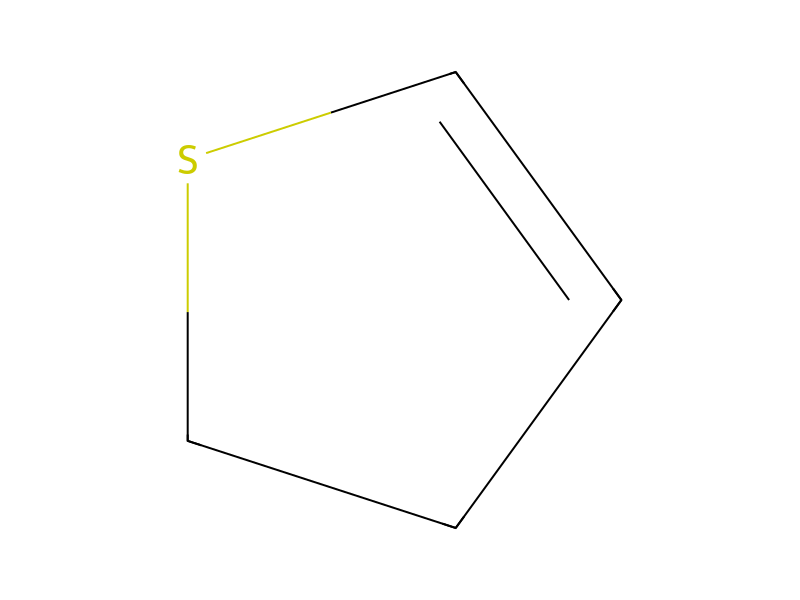
HCID 78391,2-DibromoethaneHCID 11430Potassium CarbonateHCID 14798Sodium HydroxideHCID 102451Hexane, 1,2-dibromo-HCID 1368802,3-DihydrothiopheneHCID 625399Diethyl 2,3-dihydrothieno[3,4-b][1,4]dioxine-5,7-dicarboxylate
HCID 4421864
3,4-Ethylenedioxythiophene
2×
HCID 50490181,2-Dibromohexadecane

Product 1

HCID 7288412,3-Dihydro-thieno(3,4-b)(1,4)dioxin-5,7-dicarboxylic acid

Reagents, catalysts & solvents 2

HCID 962WaterSolventHCID 6228DimethylformamideSolvent

Procedure

The salt either 5 or 6 is dissolved in water and acidified with 1 Molar HCI added slowly dropwise with constant stirring until the solution becomes acidic. Immediately following, thick white precipitate falls out. After filtration, the precipitate is washed with water and air-dried to give 2,5-dicarbethoxy-3,4-dihydroxythiophene (Z). The salt either (5, 2.5 grams) or 6 can be alkylated directly or the dihydrothiophene derivative (7) can be suspended in the appropriate 1,2-dihaloalkane or substituted 1,2-dihaloalkane and refluxed for 24 hours in the presence of anhydrous K2CO3 in anhydrous DMF. To prepare EDOT, either 1,2-dicholorethane (commercially available from Aldrich) or 1,2-dibromoethane (commercially from Aldrich) is used. To prepare the various substituted EDOT derivatives the appropriate 1,2-dibromoalkane is used, such as 1-dibromodecane, 1,2-dibromohexadecane (prepared from 1-hexadecene and bromine), 1,2-dibromohexane, other reported 1,2-dibromoalkane derivatives, and the like. The resulting 2,5-dicarbethoxy-3,4-ethylenedioxythiophene or 2,5-dicarbethoxy-3,4-alkylenedioxythiophene is refluxed in base, for example 10 percent aqueous sodium hydroxide solution for 1 to 2 hours, and the resulting insoluble material is collected by filtration. This material is acidified with 1 Normal HCl and recrystallized from methanol to produce either 2,5-dicarboxy-3,4-ethylenedioxythiophene or the corresponding 2,5-dicarboxy-3,4-alkylenedioxythiophene. The final step to reduce the carboxylic acid functional groups to hydrogen to produce the desired monomer is given in the references above.

Workup

  1. additionadded slowly dropwise
  2. filtrationAfter filtration
  3. washthe precipitate is washed with water
  4. customair-dried
  5. customto give 2,5-dicarbethoxy-3,4-dihydroxythiophene (Z)
  6. customTo prepare the
  7. filtrationthe resulting insoluble material is collected by filtration
  8. customrecrystallized from methanol

Sources & evidence

ORD record
ord-0d693ea225024267896906cff1342db4
Source dataset
uspto-grants-2004_03
DOI
10.6084/m9.figshare.5104873.v1
Patent number
US06699633B2

Reaction notes

On this pageParticipantsProcedureWorkupSources & evidenceReaction notes