Methyl chloroformate → 2-Bromo-4-tert-butylphenyl methyl carbonate
Reaction equation

[Br:1][C:2]1[CH:7]=[C:6]([C:8]([CH3:11])([CH3:10])[CH3:9])[CH:5]=[CH:4][C:3]=1[OH:12].C(N(CC)CC)C.Cl[C:21]([O:23][CH3:24])=[O:22]>CN(C1C=CN=CC=1)C.ClCCl>[C:21](=[O:22])([O:23][CH3:24])[O:12][C:3]1[CH:4]=[CH:5][C:6]([C:8]([CH3:9])([CH3:11])[CH3:10])=[CH:7][C:2]=1[Br:1]Participants
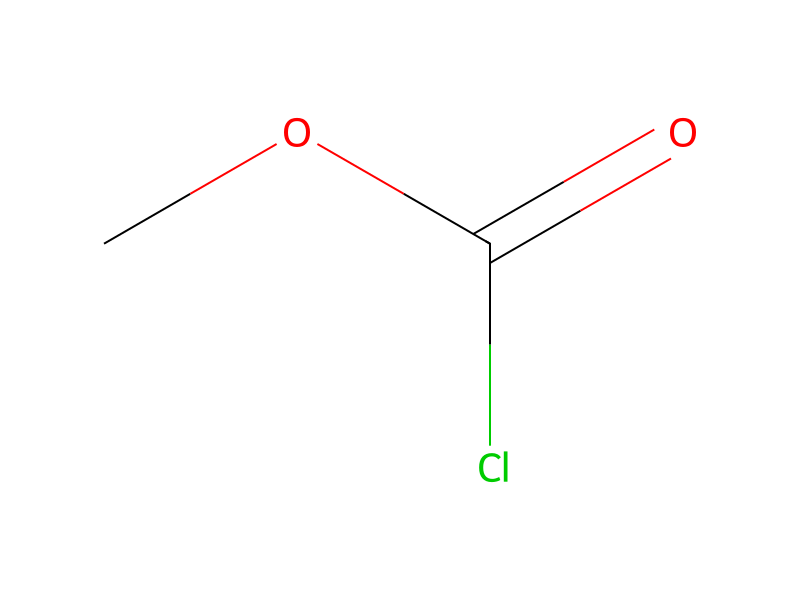





Procedure
2-Bromo-4-tert-butyl phenol (15.0 g, 65.5 mmol) and DMAP (400 mg, 3.3 mmol) was dissolved in dichloromethane (75 mL) and triethylamine (18.25 mL, 130.9 mmol), cooled to 0° C., then treated with methyl chloroformate (7.6 mL, 98.2 mmol) and allowed to warm to room temperature over 2 h. The reaction was quenched with water and the layers separated. The aqueous layer was extracted with dichloromethane and the combined organic extracts dried over Na2SO4. The solution was filtered and concentrated in vacuo to yield an oil that was purified by silica gel chromatography (20% ethyl acetate/hexane) to yield 2-bromo-4-tert-butylphenyl methyl carbonate (17 g, 90% yield). 1H NMR (400.0 MHz, DMSO-d6) δ 7.67 (d, J=2.3 Hz, 1H), 7.47 (dd, J=2.3, 8.5 Hz, 1H), 7.33 (d, J=8.5 Hz, 1H), 3.86 (s, 3H), 1.29-1.26 (m, 9H).
Workup
- customThe reaction was quenched with water
- customthe layers separated
- extractionThe aqueous layer was extracted with dichloromethane
- dry with materialthe combined organic extracts dried over Na2SO4
- filtrationThe solution was filtered
- concentrationconcentrated in vacuo
- customto yield an oil that
- customwas purified by silica gel chromatography (20% ethyl acetate/hexane)
Sources & evidence
- ORD record
- ord-318b28e697234ca8a872b0299b5753e0
- Source dataset
- uspto-grants-2014_01
- Patent number
- US08633189B2
Reaction notes
Loading…