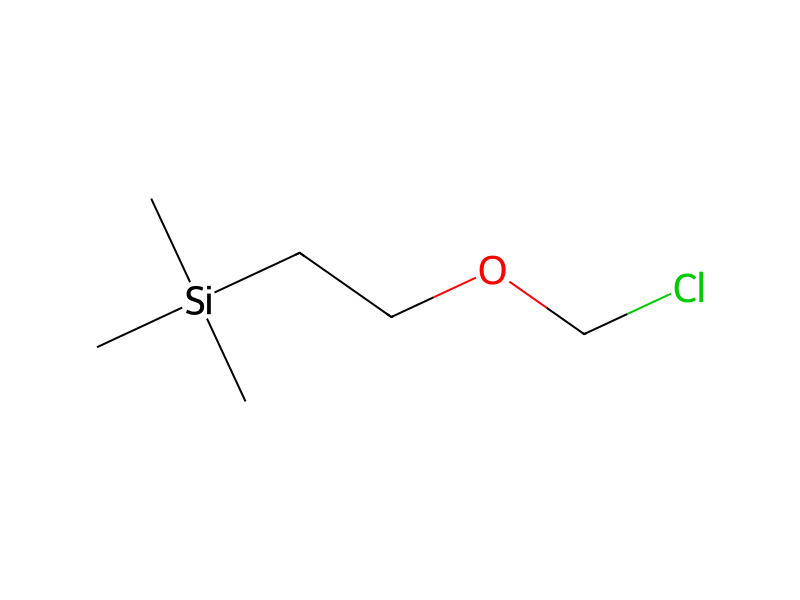
Into a 3 L 4-necked round-bottom flask under nitrogen was placed a solution of 3-nitro-1H-pyrazole (100 g, 884.37 mmol, 1.00 equiv.) in THF (1.5 L), followed by the addition of NaH (53 g, 1.32 mol, 1.50 equiv, 60% suspension) batchwise at 0° C. The resulting solution was stirred at 0° C. for 1 h. A solution of [2-(chloromethoxy)ethyl]trimethylsilane (117.4 g, 704.17 mmol, 1.20 equiv) in THF (500 mL) was then added dropwise with stirring at 0° C. The resulting solution was stirred at 25° C. for 1 h, quenched by the addition of EtOH (200 mL), concentrated under vacuum and diluted with 2 L of EtOAc. The resulting mixture was washed with 2×1 L of brine, dried (Na2SO4) and concentrated in vacuo. The residue was triturated with 200 mL of petroleum ether. The solids were collected by filtration and washed with petroleum ether (2×500 mL) to afford 125 g (52%) of 3-nitro-1-[[2-(trimethylsilyl)ethoxy]methyl]-1H-pyrazole as a yellow solid.