HomeMCPWorkbenchSkills
HomeWorkbenchNotificationsMe
llms.txt · MCP GuidePrivacy Policy · Terms of Service · Supportv1.8.3
  1. Home
  2. /Reaction

1,4-Dibromobutane → 6-Bromo-2-(4-isobutylphenyl)-2-methylhexanoic acid ethyl ester

HRID 47986
Print

Reaction equation

HRID 47986 reaction equation
[CH2:1]([C:5]1[CH:10]=[CH:9][C:8]([CH2:11][C:12]([O:14][CH2:15][CH3:16])=[O:13])=[CH:7][CH:6]=1)[CH:2]([CH3:4])[CH3:3].[CH:17]([N-]C(C)C)(C)C.[Li+].[Br:25][CH2:26][CH2:27][CH2:28][CH2:29]Br>O1CCCC1>[CH2:15]([O:14][C:12](=[O:13])[C:11]([C:8]1[CH:7]=[CH:6][C:5]([CH2:1][CH:2]([CH3:4])[CH3:3])=[CH:10][CH:9]=1)([CH3:17])[CH2:29][CH2:28][CH2:27][CH2:26][Br:25])[CH3:16]
ParticipantsConditionsProcedureWorkupSources & evidenceReaction notes

Participants

5

Reactant 3

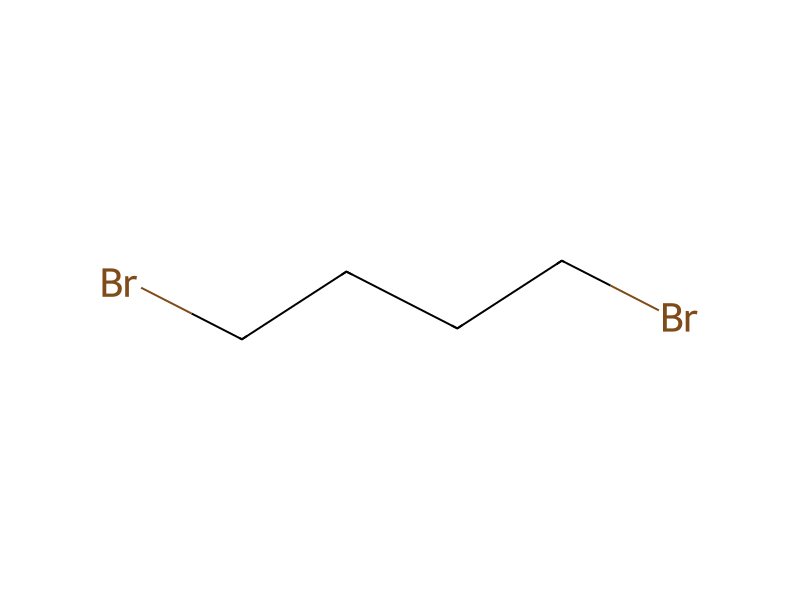
HCID 80561,4-DibromobutaneHCID 85037Ethyl 4-isobutylphenylacetateHCID 2724682Lithium diisopropylamide

Product 1

HCID 114400816-Bromo-2-(4-isobutylphenyl)-2-methylhexanoic acid ethyl esterYield 87.6%

Reagents, catalysts & solvents 1

HCID 8028TetrahydrofuranSolvent

Conditions

Temperature
-78 °C

Procedure

Ethyl (4-isobutyl-phenyl)-acetate (10.5 g, 44.8 mmol) was dissolved in freshly distilled tetrahydrofuran (150 mL) and cooled to −78° C. Lithium diisopropylamide (2 N, 28 mL, 56 mmol) was added and the solution stirred for 1 hour at −78° C. under a nitrogen atmosphere. 1,4-Dibromobutane (25 mL, 37.5 g, 175 mmol) was then added drop-wise over 30 minutes. The solution was allowed to warm to room temperature over five hours. After stirring at room temperature for an additional 16 hours, the reaction was quenched with water (100 mL) and extracted with diethyl ether (2×100 mL). The ether was washed with 10% hydrochloric acid (2×100 mL), saturated sodium bicarbonate (100 mL) and water (100 mL). After drying with sodium sulfate (5 g), filtration and concentration, the product was purified by flash chromatography on silica gel (200 g), eluting with 5% ethyl acetate/hexanes. The product was then heated to 150° C. under vacuum (0.5 mm Hg) for 30 minutes to remove excess 1,4-dibromobutane. The reaction yielded 6-bromo-2-(4-isobutyl-phenyl)-2-methyl-hexanoic acid ethyl ester (14.49 g, 87.5% yield) as a clear, viscous oil. 1H NMR (300 MHz, CDCl3/TMS): δ (ppm): 7.19 (d, 2H, J=8.0 Hz), 7.08 (d, 2H, J=8.0 Hz), 4.11 (q, 2H, J=7.0 Hz), 3.35 (t, 2H, J=6.8 Hz), 2.43 (d, 2H, J=7.3 Hz), 2.10-1.92 (m, 1H), 1.92-1.78 (m, 4H), 1.53 (s, 3H), 1.40-1.28 (m, 2H), 1.17 (t, 3H, J=7.0 Hz), 0.88 (6H, J=6.8). 13C NMR (75 MHz, CDCl3/TMS): δ (ppm) 176.17, 141.12, 140.04, 129.14, 125.64, 60.77, 49.80, 44.99, 38.52, 33.51, 33.26, 30.22, 23.55, 22.69, 22.50, 14.19. HRMS (LSIMS, nba): Calcd. for C19H30O2Br (MH+): 369.1429, found: 369.1445.

Workup

  1. temperatureto warm to room temperature over five hours
  2. stirringAfter stirring at room temperature for an additional 16 hours
  3. customthe reaction was quenched with water (100 mL)
  4. extractionextracted with diethyl ether (2×100 mL)
  5. washThe ether was washed with 10% hydrochloric acid (2×100 mL), saturated sodium bicarbonate (100 mL) and water (100 mL)
  6. dry with materialAfter drying with sodium sulfate (5 g), filtration and concentration
  7. customthe product was purified by flash chromatography on silica gel (200 g)
  8. washeluting with 5% ethyl acetate/hexanes
  9. temperatureThe product was then heated to 150° C. under vacuum (0.5 mm Hg) for 30 minutes
  10. customto remove excess 1,4-dibromobutane

Sources & evidence

ORD record
ord-4885d2e99586474d9c5e5f49ecf9d7a7
Source dataset
uspto-grants-2004_03
DOI
10.6084/m9.figshare.5104873.v1
Patent number
US06699910B2

Reaction notes

On this pageParticipantsConditionsProcedureWorkupSources & evidenceReaction notes
