HomeMCPWorkbenchSkills
HomeWorkbenchNotificationsMe
llms.txt · MCP GuidePrivacy Policy · Terms of Service · Supportv1.8.3
  1. Home
  2. /Reaction

Ammonia → 1-(4-Ethynyl-4-hydroxypiperidin-1-yl)ethan-1-one

HRID 482983
Print

Reaction equation

HRID 482983 reaction equation
N.[Na].[CH:3]#[CH:4].[C:5]([N:8]1[CH2:13][CH2:12][C:11](=[O:14])[CH2:10][CH2:9]1)(=[O:7])[CH3:6].[Cl-].[NH4+]>C1COCC1.C(Cl)(Cl)Cl.CO.ClCCl.CO.C(Cl)(Cl)Cl>[C:5]([N:8]1[CH2:13][CH2:12][C:11]([C:3]#[CH:4])([OH:14])[CH2:10][CH2:9]1)(=[O:7])[CH3:6]
ParticipantsProcedureWorkupSources & evidenceReaction notes

Participants

10

Reactant 5

HCID 222Ammonia2×HCID 6326AcetyleneHCID 25517Ammonium ChlorideHCID 122563N-Acetyl-4-piperidoneHCID 5360545Sodium2×

Product 1

HCID 132167351-(4-Ethynyl-4-hydroxypiperidin-1-yl)ethan-1-one

Reagents, catalysts & solvents 4

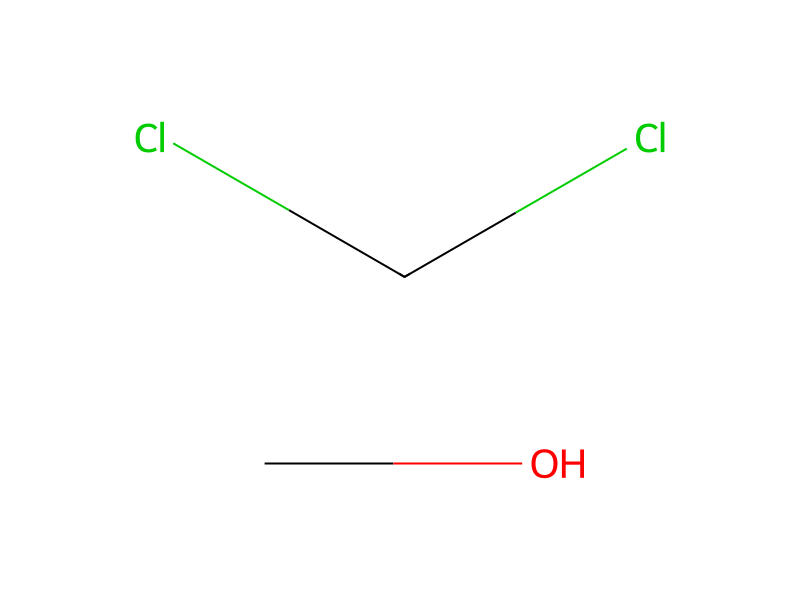
HCID 6212ChloroformSolventHCID 8028TetrahydrofuranSolventHCID 21226129Dichloromethane methanolSolventHCID 21584188Chloroform methanolSolvent

Procedure

To 350 ml of liquid ammonia was added 0.06 g of ferric nitrate. When the ferric nitrate dissolved, 1.0 g of sodium was added. The mixture was stirred until a black precipitate formed. To the mixture was then added 3.25 g of sodium. The solution was stirred until the mixture turned gray after which acetylene was bubbled through the reaction for 2 hrs. To the mixture was then added 25 g (0.177 mol) of N-acetyl-4-piperidone in 100 ml of dry THF. The mixture was subsequently stirred for 3 hrs. during which time acetylene was bubbled through. The reaction was then quenched by addition of 10 g (0.187 mol) of ammonium chloride. The ammonia was allowed to evaporate overnight. To the mixture was then added 75 ml of saturated ammonium nitrate and 40 ml of 25% ammonium hydroxide. The mixture was then extracted twice with chloroform, dried over potassium carbonate, filtered and the solvent evaporated to provide a white solid. The solid was washed with anhydrous ether and dried. The crude yield of 1-acetyl-4-ethynyl-4-piperidinol was 17.9 g (0.107 mol, 60.6%). Recrystallization from ethyl acetate provided analytically pure material, m.p. 132°-134° C. The material appeared pure by TLC (silica; 2% methanol/chloroform), Rf =0.2; (silica; 10% methanol/dichloromethane), Rf =0.4, IR (chloroform), 1H-NMR (CDCl3) and MS (MH+ =168) are consistent with the assigned structure.

Workup

  1. customformed
  2. stirringThe solution was stirred until the mixture
  3. customwas bubbled through the reaction for 2 hrs
  4. stirringThe mixture was subsequently stirred for 3 hrs
  5. customduring which time acetylene was bubbled through
  6. customto evaporate overnight
  7. additionTo the mixture was then added 75 ml of saturated ammonium nitrate and 40 ml of 25% ammonium hydroxide
  8. extractionThe mixture was then extracted twice with chloroform
  9. dry with materialdried over potassium carbonate
  10. filtrationfiltered
  11. customthe solvent evaporated
  12. customto provide a white solid
  13. washThe solid was washed with anhydrous ether
  14. customdried
  15. customRecrystallization from ethyl acetate
  16. customprovided analytically pure material, m.p. 132°-134° C

Sources & evidence

ORD record
ord-6a89e711e0894426a16aef476fd2d7bc
Source dataset
uspto-grants-1986_03
DOI
10.6084/m9.figshare.5104873.v1
Patent number
US04577026

Reaction notes

On this pageParticipantsProcedureWorkupSources & evidenceReaction notes