Sulfuric Acid → Boron trifluoride
Reaction equation

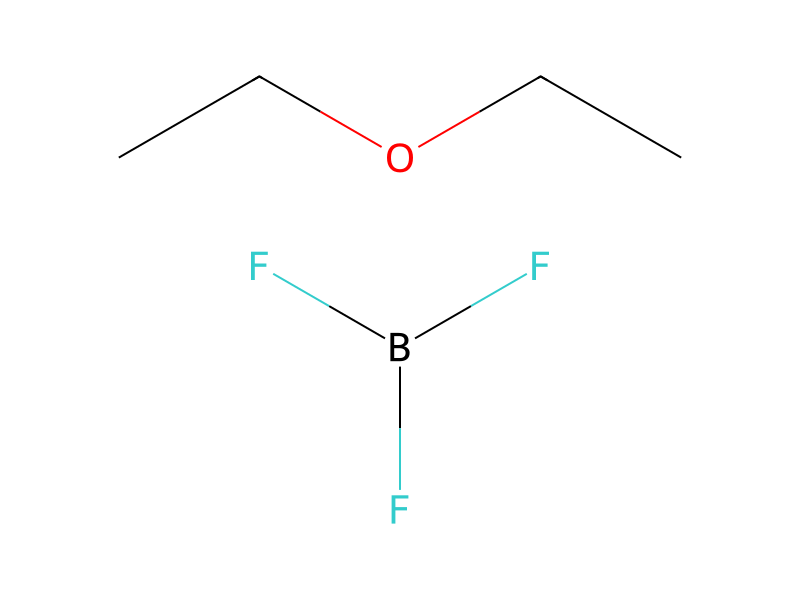
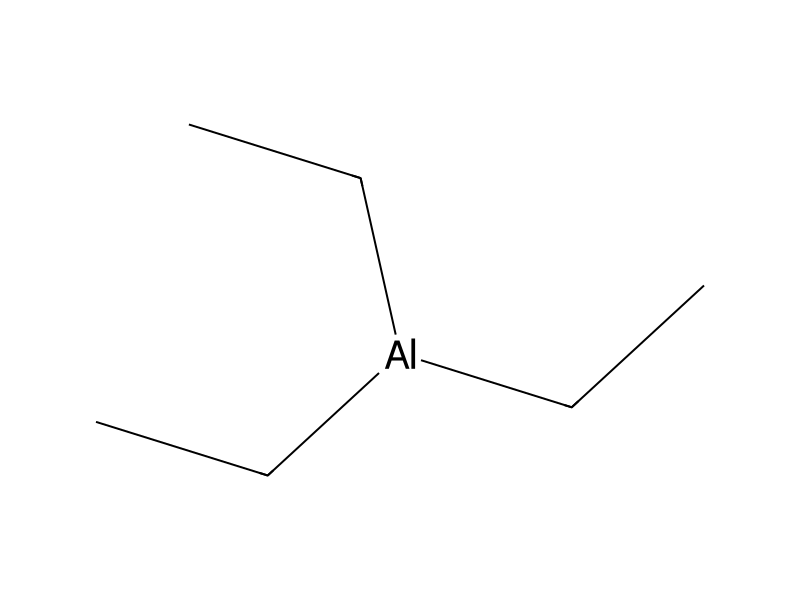
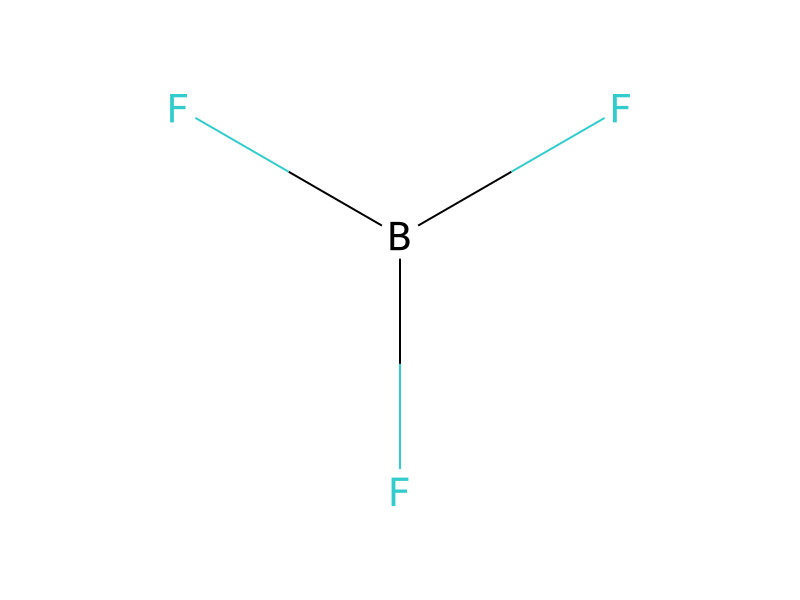
[B:1]([F:4])([F:3])[F:2].CO.[B:7]([F:10])([F:9])[F:8].O.B(F)(F)F.C[CH2:17][O:18]CC.C([Al](CC)CC)C.C(C(O)=O)(F)(F)F.[Al+3].[Cl-].[Cl-].[Cl-].OS(O)(=O)=O>Cl[Ti](Cl)(Cl)Cl>[B:1]([F:4])([F:3])[F:2].[B:7]([F:10])([F:9])[F:8].[CH3:17][OH:18]Participants
10
Reactant 7





Product 2
Reagents, catalysts & solvents 1

Conditions
- Temperature
- 83 °C
Procedure
As a comparison when other alkylating catalysts were used, the maximum yield was about 16% at reflux temperature 83° C. At 25° C. GC showed at most only a trace amount of product. Catalysts used included BF3 /CH3OH, BF3 /H2O, BF3 -Et2O, triethyl-aluminum, CF3CO2H, AlCl3, H2SO4 (no solvent) and TiCl4. Only the BF3 and BF3 /CH3OH catalyzed reactions provided any measurable amount of product under the reaction conditions illustrated below.
Workup
- customAt 25° C
Sources & evidence
- ORD record
- ord-2669b6a628cb482aba8aadfa14421654
- Source dataset
- uspto-grants-1993_07
- Patent number
- US05225588
Reaction notes
Loading…