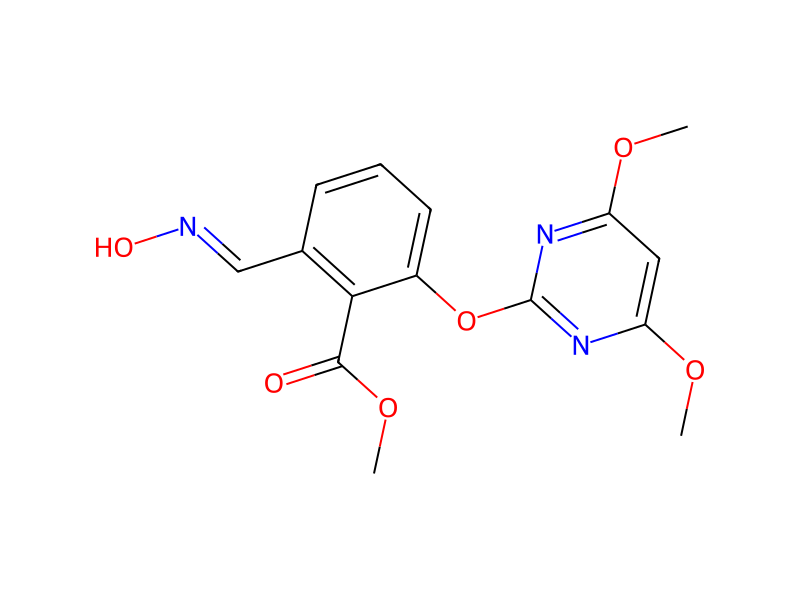
[CH3:1][O:2][C:3]1[CH:8]=[C:7]([O:9][CH3:10])[N:6]=[C:5]([O:11][C:12]2[CH:21]=[CH:20][CH:19]=[C:18]([CH:22]=O)[C:13]=2[C:14]([O:16][CH3:17])=[O:15])[N:4]=1.Cl.[OH:25][NH2:26].C([O-])(=O)C.[K+]>CO>[CH3:10][O:9][C:7]1[CH:8]=[C:3]([O:2][CH3:1])[N:4]=[C:5]([O:11][C:12]2[CH:21]=[CH:20][CH:19]=[C:18]([CH:22]=[N:26][OH:25])[C:13]=2[C:14]([O:16][CH3:17])=[O:15])[N:6]=12.0 g of methyl 2-[(4,6-dimethoxypyrimidin-2-yl)oxy]-6-formylbenzoate, 0.8 g of hydroxyamine hydrochloride, 1.1 g of potassium acetate and 10 ml of methanol were placed in a 50 ml eggplant type flask, and were stirred for 10 minutes at room temperature. Methanol was distilled off under reduced pressure, and the residue was dissolved in ethyl acetate. The organic layer was washed with water, 5% hydrochloric acid and a saturated salt aqueous solution, and was dried with magnesium sulfate anhydride. After filtering, a small amount of Florisil was added to the resultant product, and was stirred for 5 minutes. The Florisil was filtered out, and ethyl acetate was distilled off under reduced pressure to obtain 1.5 g of the aimed compound (refractive index=1.5558) at a yield of 72%.