Reaction equation

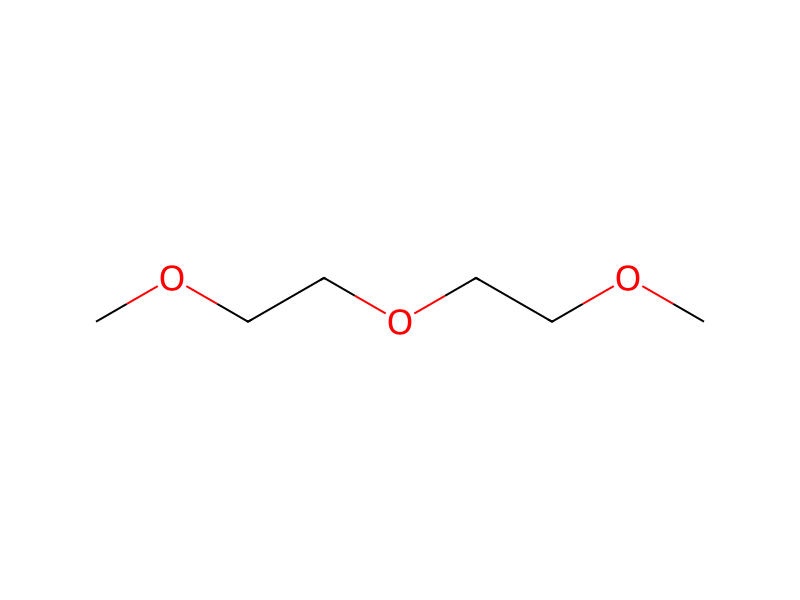
[F:1][C:2]([F:7])([F:6])[C:3]([F:5])=[O:4].[F-:8].[K+].[CH2:10]=[C:11]([C:16](OS(F)(=O)=O)([F:18])[F:17])[C:12]([F:15])([F:14])[F:13]>COCCOCCOC>[F:17][C:16]([F:18])([O:4][C:3]([F:8])([F:5])[C:2]([F:7])([F:6])[F:1])[C:11]([C:12]([F:15])([F:14])[F:13])=[CH2:10]Participants
5
Reactant 3



Product 1

Reagents, catalysts & solvents 1
Conditions
- Temperature
- 20 °C
Procedure
Trifluoroacetyl fluoride (6 g, 0.051 mole) is bubbled into a mixture of KF (2.4 g, 0.041 mole) and dry diglyme (15 ml). The reaction mixture is stirred at 20° C. for 30 minutes and then CH2═C(CF3)CF2OSO2F (10 g, 0.041 mile) is added gradually. The resulting mixture is stirred at 20° C. for 1 hour. Hexafluoroisobutylene is distilled from the reaction mixture and the residue is poured into water. The organic layer. is separated, washed in turn with aqueous sodium bicarbonate solution and water, and then dried over MgSO4. Distillation gives 3,3-Difluoro-3-pentafluoroethoxy-2-trifluoromethylpropene (CH2═C(CF3)CF2OCF2CF3) (3.5 g, 31% yield, b.pt. 67° C.).
Workup
- stirringThe resulting mixture is stirred at 20° C. for 1 hour
- distillationHexafluoroisobutylene is distilled from the reaction mixture
- additionthe residue is poured into water
- customis separated
- washwashed in turn with aqueous sodium bicarbonate solution and water
- dry with materialdried over MgSO4
- distillationDistillation
Sources & evidence
- ORD record
- ord-aaafe8030fd246c1927a22706221032d
- Source dataset
- uspto-grants-2009_05
- Patent number
- US07531689B2
Linked notes
Loading…