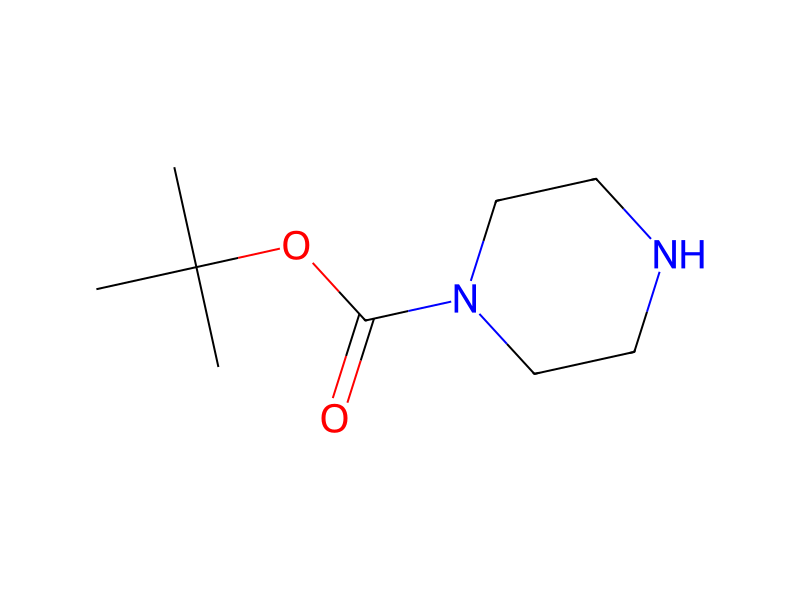
[N:1]12[CH2:8][CH2:7][CH:4]([CH2:5][CH2:6]1)[CH2:3][C:2]2=O.[C:10]([O:14][C:15]([N:17]1[CH2:22][CH2:21][NH:20][CH2:19][CH2:18]1)=[O:16])([CH3:13])([CH3:12])[CH3:11].C(O)C.C([BH3-])#N.[Na+]>CC(C)[O-].[Ti+4].CC(C)[O-].CC(C)[O-].CC(C)[O-].O>[N:1]12[CH2:8][CH2:7][CH:4]([CH2:5][CH2:6]1)[CH:3]([N:20]1[CH2:19][CH2:18][N:17]([C:15]([O:14][C:10]([CH3:13])([CH3:12])[CH3:11])=[O:16])[CH2:22][CH2:21]1)[CH2:2]21 g (8 mM) of quinuclidinone, 1.63 g (8.75 mM) of 1-piperazinecarboxylic acid t-butyl ester (1-Boc-piperazine) and 2.71 ml (9.1 mM) of titanium isopropoxide are mixed and this mixture is kept under agitation for 1 hour. 5 ml of ethanol and then 460 mg (7.3 mM) of sodium cyanoborohydride are then added, and this mixture is agitated for 24 hours at ambient temperature. 25 ml of water are added and agitation is carried out for 15 minutes. The precipitate formed is separated off by filtration and the filtrate is concentrated under reduced pressure. The residue is purified by NH2 silica gel chromatography in eluting with the aid of a toluene/isopropanol mixture (95/5; v/v). 1 g of the compound sought after are thus obtained as a white solid (yield=42%).