Reaction equation

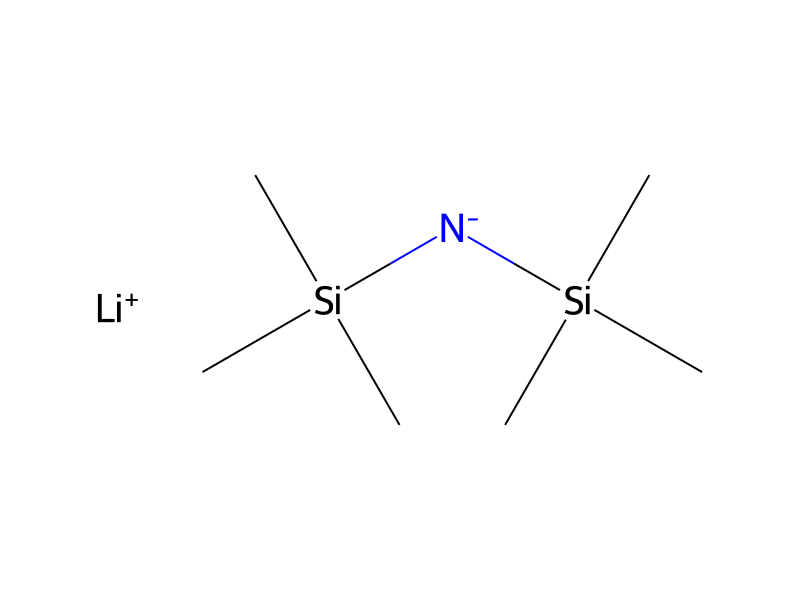
[Li+].C[Si]([N-][Si](C)(C)C)(C)C.[Br:11][C:12]1[CH:17]=[CH:16][C:15]([NH2:18])=[C:14]([Cl:19])[CH:13]=1.Cl[C:21]1[C:26]([C:27]([OH:29])=[O:28])=[CH:25][N:24]=[C:23]([Cl:30])[CH:22]=1>C1COCC1>[ClH:19].[Br:11][C:12]1[CH:17]=[CH:16][C:15]([NH:18][C:21]2[C:26]([C:27]([OH:29])=[O:28])=[CH:25][N:24]=[C:23]([Cl:30])[CH:22]=2)=[C:14]([Cl:19])[CH:13]=1Participants




Procedure
LiHMDS (261 mL of a 1 M solution in hexanes) was added dropwise over 30 minutes to a solution of 4-bromo-2-chlorophenylamine (35.0 g, 172 mmol) in THF (80 mL) at −78° C. After 1 hour, 4,6-dichloronicotinic acid (23) (15.7 g, 81.7 mmol) was added dropwise over 30 minutes. The reaction mixture was slowly warmed to room temperature and stirred 16 hours. The reaction mixture was quenched with water, diluted with EtOAc and acidified with 1 M HCl. The resulting precipitate was isolated by filtration and washed with EtOAc. The solids were twice concentrated from toluene, triturated with CH2Cl2 and collected by filtration. The solids were further concentrated from toluene (3×) followed by drying in vacuo to give the desired product (24) containing a small amount of water (36.0 g).
Workup
- customThe reaction mixture was quenched with water
- additiondiluted with EtOAc
- customThe resulting precipitate was isolated by filtration
- washwashed with EtOAc
- concentrationThe solids were twice concentrated from toluene
- customtriturated with CH2Cl2
- filtrationcollected by filtration
- concentrationThe solids were further concentrated from toluene (3×)
- customby drying in vacuo
Sources & evidence
- ORD record
- ord-38829f9580374c3ab8477ac18b7e7191
- Source dataset
- uspto-grants-2009_05
- Patent number
- US07538120B2
Linked notes
Loading…