3-Butyn-1-OL → HCID 23404490, compound
HRID 494898
Reaction equation

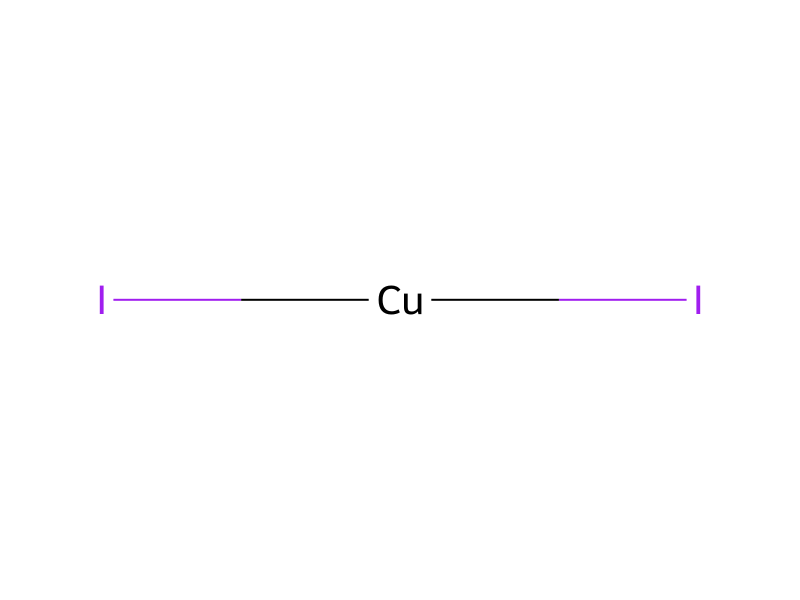
Br[C:2]1[CH:7]=[CH:6][CH:5]=[C:4]([OH:8])[C:3]=1[OH:9].[CH2:10]([OH:14])[CH2:11][C:12]#[CH:13]>[Cu](I)I.C(N(CC)CC)C>[OH:14][CH2:10][CH2:11][C:12]1[O:9][C:3]2[C:4]([OH:8])=[CH:5][CH:6]=[CH:7][C:2]=2[CH:13]=1Participants
5
Reactant 2


Product 1

Reagents, catalysts & solvents 2

Procedure
As shown in Scheme 17, 3-bromo-1,2-benzenediol is treated with bis-triphenylphosphine palladium dichloride, copper iodide, triethylamine, and 3-butyn-1-ol and heated at between 40° C. and 80° C. for several hours or until TLC (thin layer chromatography) indicates the reaction is complete to provide 2-(2-hydroxyethyl)-1-benzofuran-7-ol. 2-(2-Hydroxyethyl)-1-benzofuran-7-ol is then processed according to procedures described for Examples 203-224 as shown as in Scheme 15 to provide 2-{2-[(2R)-2-methyl-1-pyrrolidinyl]ethyl}-1-benzofuran-7-yl trifluoromethanesulfonate, which is processed as described in Murata, et al., Journal of Organic Chemistry (2000) 65, 164-168 and followed by treatment with a suitable starting material, for example, aryl halides, aryl triflates, or heterocyclic halides, a palladium catalyst, such as palladium (II) acetate, a trivalent phosphine such as biphen-2-yl-dicyclohexylphosphine, and aqueous sodium carbonate or potassium phosphate in an organic solvent such as ethanol or tetrahydrofuran at 25° C. to 120° C. to provide compounds formula (53). Compounds of formula (53) can be isolated and purified by methods known to those skilled in the art. For example, compounds of formula (53) can be partitioned between dichloromethane and water, the organic phase concentrated, and the residue purified by chromatography on silica gel.