Reaction equation

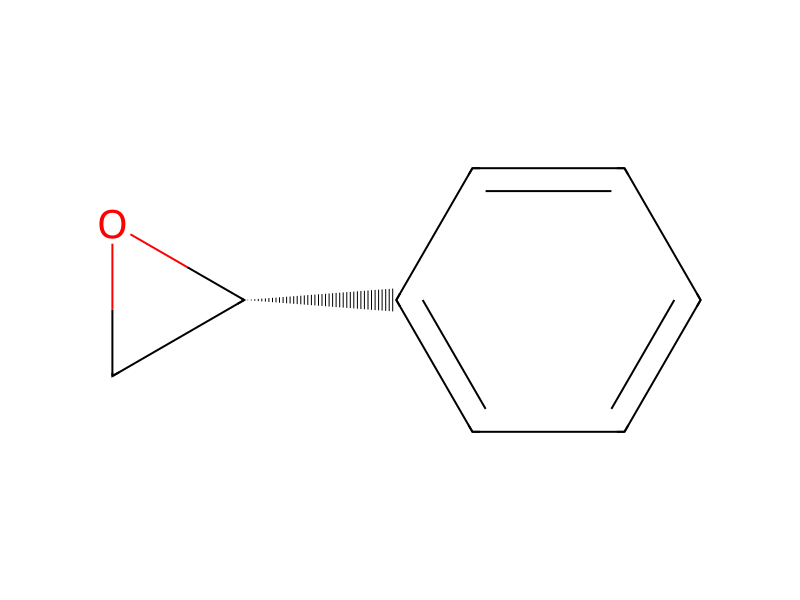
[C:1]1([C@@H:7]2[CH2:9][O:8]2)[CH:6]=[CH:5][CH:4]=[CH:3][CH:2]=1.CCOCC.[Mg+2].[Br-].[Br-].[CH2:18]([NH:21][CH2:22][CH:23]=[CH2:24])[CH:19]=[CH2:20].[Cl-].[NH4+]>O1CCCC1>[CH2:18]([N:21]([C@@H:7]([C:1]1[CH:6]=[CH:5][CH:4]=[CH:3][CH:2]=1)[CH2:9][OH:8])[CH2:22][CH:23]=[CH2:24])[CH:19]=[CH2:20]Participants





Procedure
In a 100 ml 2-necked flask equipped with a reflux condenser, a thermometer, a magnetic stirrer and an inert gas supply, 20 ml tetrahydrofuran were added to 2.3 ml (R)-phenyloxirane (20 mmol) and 1.03 g magnesium bromide ethyl etherate (4 mmol) were dissolved therein. The yellowish solution was mixed with 4.9 ml diallylamine and refluxed for 2 h. The orange-brown solution was cooled to room temperature, stirred for 15 min with 20 ml 5M ammonium chloride solution and the aqueous phase was separated. The organic phase was dried with 8.5 g sodium sulfate, filtered and washed with 10 ml tetrahydrofuran. The solvent was concentrated and the orange-brown oil was dried during 1 h to yield 4.2 g (97%) of (S)-2-(N,N-diallylamino)-2-phenylethanol and (R)-2-(N,N-diallylamino)-1-phenylethanol.
Workup
- customIn a 100 ml 2-necked flask equipped with a reflux condenser
- dissolutionwere dissolved
- temperaturerefluxed for 2 h
- customthe aqueous phase was separated
- dry with materialThe organic phase was dried with 8.5 g sodium sulfate
- filtrationfiltered
- washwashed with 10 ml tetrahydrofuran
- concentrationThe solvent was concentrated
- customthe orange-brown oil was dried during 1 h
Sources & evidence
- ORD record
- ord-f9f56912e0aa48e58f9396080f2ecc31
- Source dataset
- uspto-grants-2005_09
- Patent number
- US06939986B2
Linked notes
Loading…