HomeMCPWorkbenchSkills
HomeWorkbenchNotificationsMe
llms.txt · MCP GuidePrivacy Policy · Terms of Service · Supportv1.8.3
  1. Home
  2. /Reaction

N,N-Dimethylaniline → HCID 11737115, compound

HRID 497734
Print

Reaction equation

HRID 497734 reaction equation
[C:1]1([S:7][C:8]2[NH:9][C:10](=O)[C:11]3[NH:12][CH:13]=[N:14][C:15]=3[N:16]=2)[CH:6]=[CH:5][CH:4]=[CH:3][CH:2]=1.CN(C)C1C=CC=CC=1.P(Cl)(Cl)([Cl:29])=O>[Cl-].C([N+](CCCC)(CCCC)CCCC)CCC.C(#N)C>[C:1]1([S:7][C:8]2[N:16]=[C:15]3[C:11]([NH:12][CH:13]=[N:14]3)=[C:10]([Cl:29])[N:9]=2)[CH:6]=[CH:5][CH:4]=[CH:3][CH:2]=1
ParticipantsConditionsProcedureWorkupSources & evidenceReaction notes

Participants

6

Reactant 3

HCID 949N,N-DimethylanilineHCID 24813Phosphorus oxychlorideHCID 1358480392-Phenylsulfenylhypoxanthine

Product 1

HCID 11737115HCID 11737115, compoundYield 72%

Reagents, catalysts & solvents 2

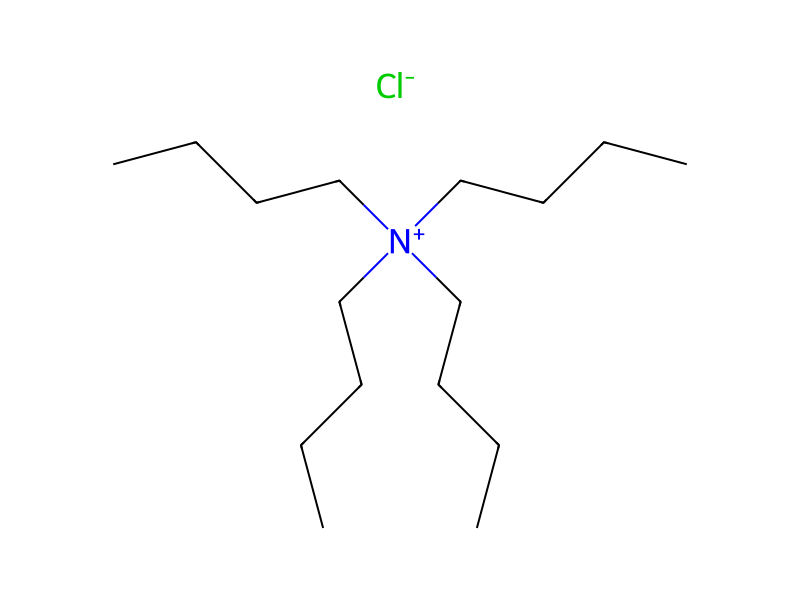
HCID 70681Tetrabutylammonium ChlorideCatalyst
HCID 6342
Acetonitrile
Solvent

Conditions

Temperature
0 °C

Procedure

To a flame-dried round bottom flask (200 mL) was added 2-Phenylsulfenylhypoxanthine 2 (1.22 g, 5.0 mmol), tetrabutyl-ammonium chloride (anhydrous, 2.78 g, 10.0 mmol) and N,N-dimethylaniline (0.63 mL, 5.0 mmol), followed by dissolving them in acetonitrile (anhydrous, 50 mL). To the solution phosphorus oxychloride (2.8 mL, 30.0 mmol) was added dropwise. The reaction was refluxed under argon. After 2 hours, the reaction was cooled to 0° C. on an ice bath and quenched by addition of saturated sodium bicarbonate solution. The aqueous layer was extracted with ethyl acetate (4×100 mL). The combined organic layers were dried over sodium sulfate, and were concentrated on the rotary evaporator. The crude product was further purified by re-crystallization from methanol to afford desired product 3 as white solid (0.94 g, 72%). 1H NMR (400 MHz, (CD3)2SO) 7.50 (m, 3H), δ 7.65 (m, 2H), 8.53 (s, 1H); MS (ES) calculated for C11H7ClN4S [MH+] 263.02, found: 263.00.

Workup

  1. temperatureThe reaction was refluxed under argon
  2. customquenched by addition of saturated sodium bicarbonate solution
  3. extractionThe aqueous layer was extracted with ethyl acetate (4×100 mL)
  4. dry with materialThe combined organic layers were dried over sodium sulfate
  5. concentrationwere concentrated on the rotary evaporator
  6. customThe crude product was further purified by re-crystallization from methanol

Sources & evidence

ORD record
ord-5e4c42f808934890b909a30cc6e636b7
Source dataset
uspto-grants-2005_09
DOI
10.6084/m9.figshare.5104873.v1
Patent number
US06949644B2

Reaction notes

On this pageParticipantsConditionsProcedureWorkupSources & evidenceReaction notes