Ethylenediamine → 1-[2-Amino-4-(trifluoromethyl)phenyl]pyrrolidin-2-one
Reaction equation

Br[C:2]1[CH:8]=[CH:7][C:6]([C:9]([F:12])([F:11])[F:10])=[CH:5][C:3]=1[NH2:4].[NH:13]1[CH2:17][CH2:16][CH2:15][C:14]1=[O:18].C(N)CN.C(=O)([O-])[O-].[K+].[K+]>[Cu](I)I.C1(C)C=CC=CC=1>[NH2:4][C:3]1[CH:5]=[C:6]([C:9]([F:12])([F:11])[F:10])[CH:7]=[CH:8][C:2]=1[N:13]1[CH2:17][CH2:16][CH2:15][C:14]1=[O:18]Participants
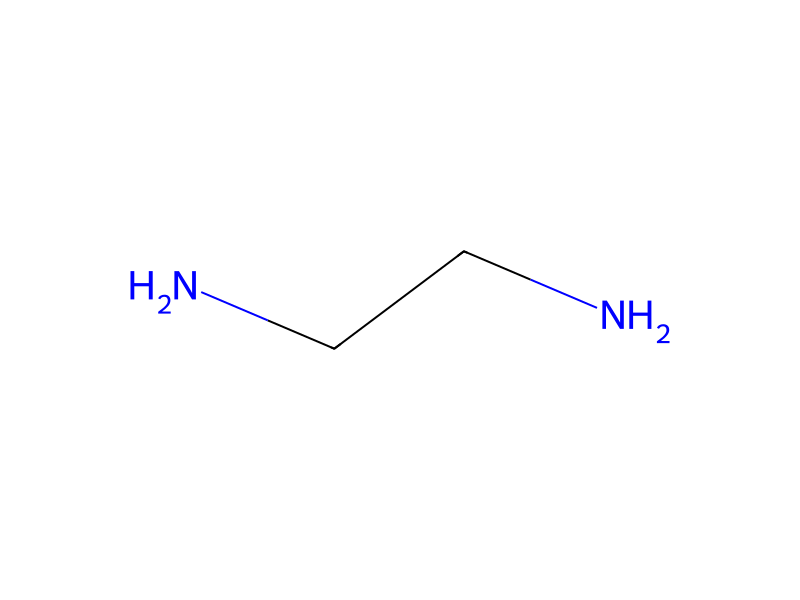





Conditions
- Temperature
- 80 °C
Procedure
A resealable tube was charged with 2-bromo-5-(trifluoromethyl)aniline (1.00 g, 4.16 mmol), 2-pyrrolidinone (0.425 g, 5.00 mmol), N,N′-ethylene diamine (0.037 g, 0.42 mmol), potassium carbonate (1.15 g, 8.32 mmol), copper iodide (0.80 mg, 0.42 mmol) and toluene (1.0 mL). The tube was sealed and the mixture was heated at 80° C. for 24 h. The resulting mixture was partitioned between ethyl acetate and water. The organic phase was separated, dried over anhydrous sodium sulfate, filtered, and concentrated. The residue was purified via column chromatography on silica gel (gradient elution with 0-100% ethyl acetate-hexane) to afford 1-(2-amino-4-(trifluoromethyl)phenyl)pyrrolidin-2-one as a gray solid. MS m/z=245 [M+H]+. Calc'd for C11H11F3N2O: 244.
Workup
- customThe tube was sealed
- customThe resulting mixture was partitioned between ethyl acetate and water
- customThe organic phase was separated
- dry with materialdried over anhydrous sodium sulfate
- filtrationfiltered
- concentrationconcentrated
- customThe residue was purified via column chromatography on silica gel (gradient elution with 0-100% ethyl acetate-hexane)
Sources & evidence
- ORD record
- ord-2cd0d031b196476493fe1db15da15114
- Source dataset
- uspto-grants-2010_08
- Patent number
- US07776869B2
Reaction notes
Loading…