Methanol → HCID 131728297, compound
Reaction equation

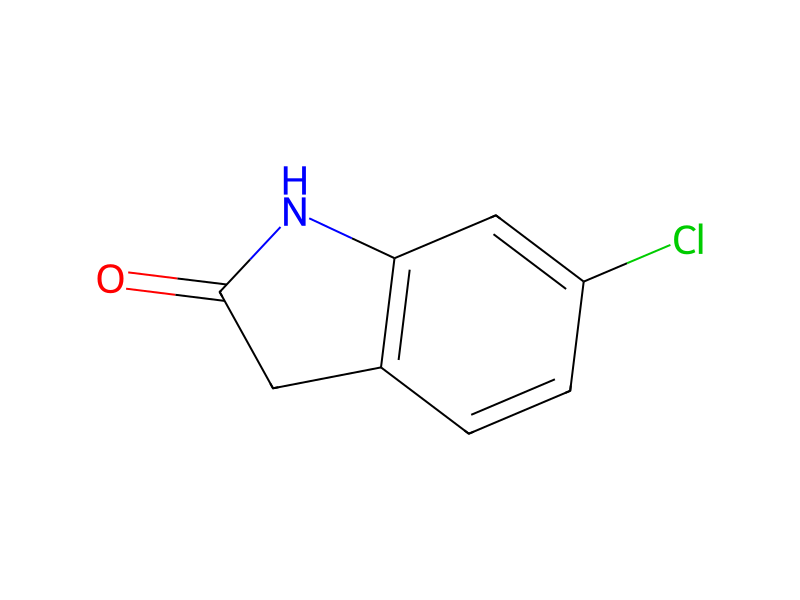
[Cl:1][C:2]1[CH:3]=[CH:4][C:5]([O:10][CH2:11][S:12]([CH3:14])=[O:13])=[C:6]([CH:9]=1)[CH:7]=O.[Cl:15][C:16]1[CH:24]=[C:23]2[C:19]([CH2:20][C:21](=[O:25])[NH:22]2)=[CH:18][CH:17]=1.N1CCCC1.C[OH:32]>>[Cl:15][C:16]1[CH:24]=[C:23]2[C:19](/[C:20](=[CH:7]/[C:6]3[CH:9]=[C:2]([Cl:1])[CH:3]=[CH:4][C:5]=3[O:10][CH2:11][S:12]([CH3:14])(=[O:32])=[O:13])/[C:21](=[O:25])[NH:22]2)=[CH:18][CH:17]=1Participants
5




Procedure
In a manner similar to the method described in Example 9b, 5-chloro-2-methanesulfinylmethoxy-benzaldehyde (1.25 g, 5 mmol) was reacted with 6-chlorooxindole (0.9 g, 5.4 mmol) and pyrrolidine (0.5 mL, 6.1 mmol) in methanol (50 mL) to give the title compound as a yellow solid (1.8 g).