HomeMCPWorkbenchSkills
HomeWorkbenchNotificationsMe
llms.txt · MCP GuidePrivacy Policy · Terms of Service · Supportv1.8.3
  1. Home
  2. /Reaction

Ammonium Chloride → 5-chloro-N-(2,4-dimethoxybenzyl)-2,4-difluoro-N-(1,3,4-thiadiazol-2-yl)benzenesulfonamide

HRID 509102
Print

Reaction equation

HRID 509102 reaction equation
[CH3:1][O:2][C:3]1[CH:15]=[C:14]([O:16][CH3:17])[CH:13]=[CH:12][C:4]=1[CH2:5][NH:6][C:7]1[S:8][CH:9]=[N:10][N:11]=1.C[Si]([N-][Si](C)(C)C)(C)C.[Li+].[Cl:28][C:29]1[C:30]([F:40])=[CH:31][C:32]([F:39])=[C:33]([S:35](Cl)(=[O:37])=[O:36])[CH:34]=1.[Cl-].[NH4+]>CC1CCCO1.O>[Cl:28][C:29]1[C:30]([F:40])=[CH:31][C:32]([F:39])=[C:33]([S:35]([N:6]([CH2:5][C:4]2[CH:12]=[CH:13][C:14]([O:16][CH3:17])=[CH:15][C:3]=2[O:2][CH3:1])[C:7]2[S:8][CH:9]=[N:10][N:11]=2)(=[O:37])=[O:36])[CH:34]=1
ParticipantsConditionsProcedureWorkupSources & evidenceReaction notes

Participants

7

Reactant 4

HCID 25517Ammonium ChlorideHCID 2733832Lithium hexamethyldisilazaneHCID 27735275-Chloro-2,4-difluorobenzenesulphonyl chlorideHCID 58042278N-(2,4-dimethoxybenzyl)-1,3,4-thiadiazol-2-amine

Product 1

HCID 580422535-chloro-N-(2,4-dimethoxybenzyl)-2,4-difluoro-N-(1,3,4-thiadiazol-2-yl)benzenesulfonamideYield 58.5%

Reagents, catalysts & solvents 2

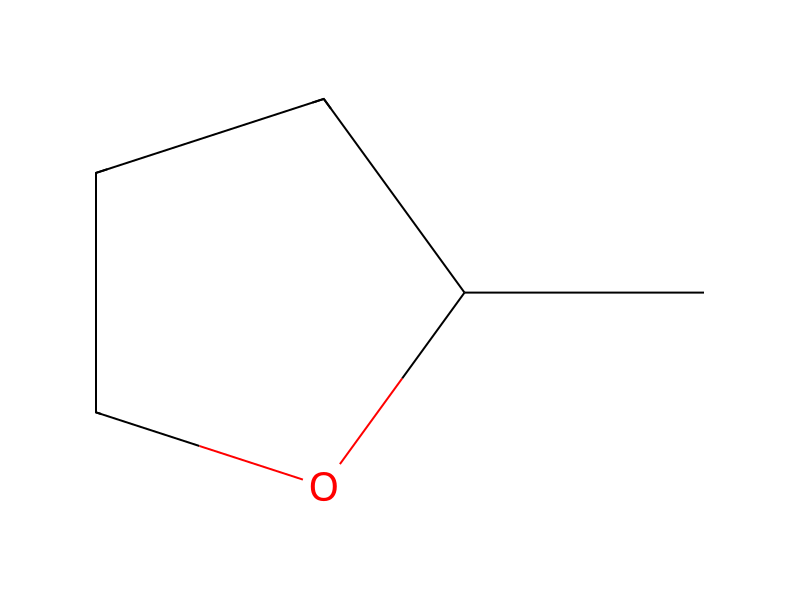
HCID 962WaterSolventHCID 73012-MethyltetrahydrofuranSolvent2×

Conditions

Temperature
15 °C

Procedure

N-(2,4-Dimethoxybenzyl)-1,3,4-thiadiazol-2-amine (Preparation 19, 203.4 g, 0.809 mol) was dissolved in 2-methyltetrahydrofuran (1.63 L) and the yellow suspension cooled to between −38° C. and −45° C. Lithium bis(trimethylsilyl)amide (890 mL of 1M solution in tetrahydrofuran, 0.890 mol) was added slowly over 15 minutes keeping the temperature between −38° C. and −45° C. to give an orange suspension. This orange suspension was stirred at −38° C. to −45° C. for 45 minutes and then a solution of 5-chloro-2,4-difluorobenzenesulfonyl chloride, (200 g, 0.809 mol) in 2-methyltetrahydrofuran (407 mL) added slowly over 20 minutes keeping the temperature between −38° C. and −45° C. The mixture was warmed to 15° C. over 1 hour. The reaction was quenched with a solution of ammonium chloride (203.4 g, 3.80 mol) in water (1.02 L) and stirred vigorously for 5 minutes. The layers were separated and the organic layer washed with water (813.6 mL) and concentrated in vacuo to give an orange solid which was triturated with isopropyl acetate (1.22 L) to afford the title compound as a yellow-orange solid (218.6 g, 58%).

Workup

  1. temperaturethe yellow suspension cooled to between −38° C. and −45° C
  2. customthe temperature between −38° C. and −45° C.
  3. customto give an orange suspension
  4. customthe temperature between −38° C. and −45° C
  5. stirringstirred vigorously for 5 minutes
  6. customThe layers were separated
  7. washthe organic layer washed with water (813.6 mL)
  8. concentrationconcentrated in vacuo
  9. customto give an orange solid which
  10. customwas triturated with isopropyl acetate (1.22 L)

Sources & evidence

ORD record
ord-a5f0e9a230d64259a53b6d07f8a98862
Source dataset
uspto-grants-2015_08
DOI
10.6084/m9.figshare.5104873.v1
Patent number
US09096558B2

Reaction notes

On this pageParticipantsConditionsProcedureWorkupSources & evidenceReaction notes