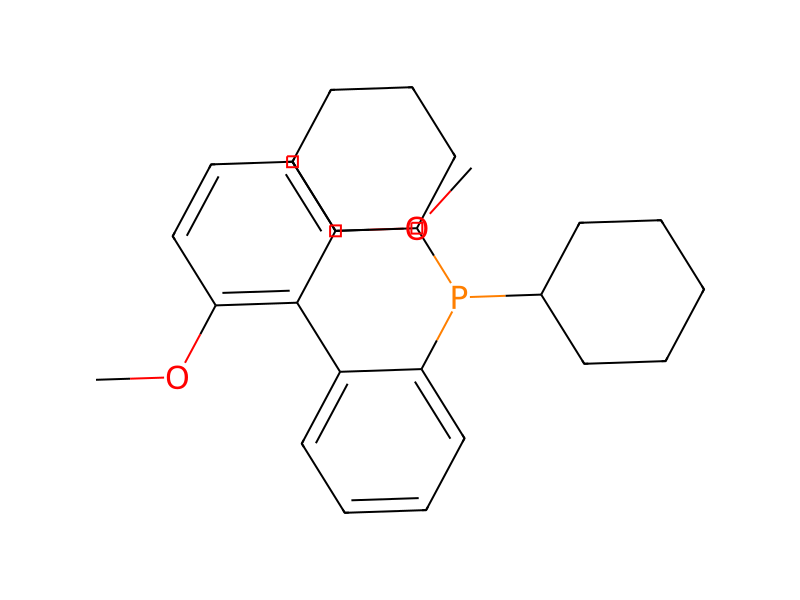
Br[C:2]1[C:3](=[O:9])[CH2:4][CH2:5][C:6]=1[O:7][CH3:8].[CH3:10][C:11]1[CH:16]=[C:15]([CH3:17])[CH:14]=[C:13]([CH3:18])[C:12]=1B(O)O.P([O-])([O-])([O-])=O.[K+].[K+].[K+]>C1(C)C=CC=CC=1.CC([O-])=O.CC([O-])=O.[Pd+2].COC1C=CC=C(OC)C=1C1C=CC=CC=1P(C1CCCCC1)C1CCCCC1>[CH3:10][C:11]1[CH:16]=[C:15]([CH3:17])[CH:14]=[C:13]([CH3:18])[C:12]=1[C:2]1[C:3](=[O:9])[CH2:4][CH2:5][C:6]=1[O:7][CH3:8]To a suspension of 2-bromo-3-methoxy-cyclopent-2-enone (6.75 g, 35.3 mmol), 2,4,6-trimethylphenyl boronic acid (6.99 g, 42.6 mmol) and freshly ground potassium phosphate (15 g, 70.6 mmol) in degassed toluene (180 ml) under nitrogen are added Pd(OAc)2 (159 mg, 0.71 mmol) and S-Phos (579 mg, 1.41 mmol), and the reaction heated to 90° C. with stirring under N2 for 4 hours. The reaction mixture is partitioned between ethyl acetate (150 ml) and water (150 ml), and the organic layer is removed, Silica gel is added to the organic layer, the solvent is evaporated under reduced pressure and the residue is purified by flash chromatography on silica gel to give 2-(2,4,6-trimethylphenyl)-3-methoxy-cyclopent-2-enone (6.2 g).