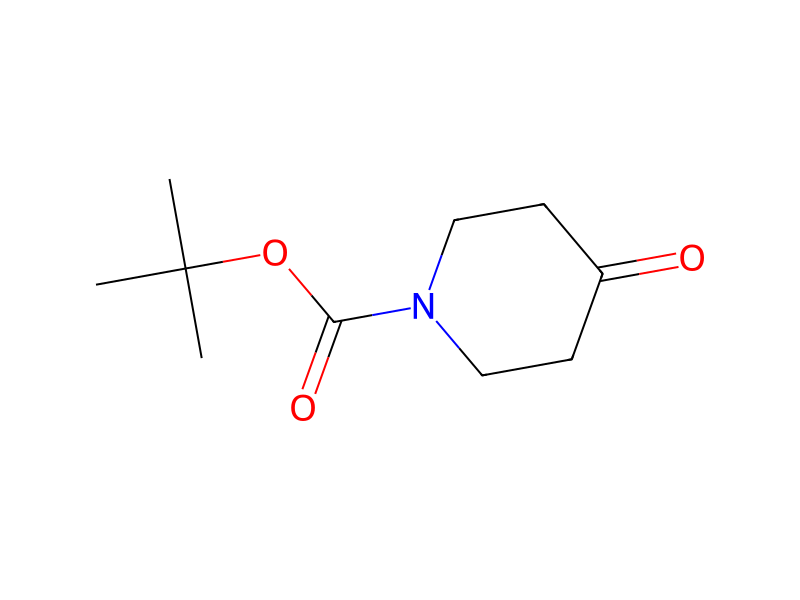
[H-].[Na+].[N+:3]([C:6]1[CH:7]=[C:8]([CH:18]=[CH:19][CH:20]=1)[CH2:9]P(=O)(OCC)OCC)([O-:5])=[O:4].O=[C:22]1[CH2:27][CH2:26][N:25]([C:28]([O:30][C:31]([CH3:34])([CH3:33])[CH3:32])=[O:29])[CH2:24][CH2:23]1>O1CCCC1>[N+:3]([C:6]1[CH:7]=[C:8]([CH:18]=[CH:19][CH:20]=1)[CH:9]=[C:22]1[CH2:27][CH2:26][N:25]([C:28]([O:30][C:31]([CH3:34])([CH3:33])[CH3:32])=[O:29])[CH2:24][CH2:23]1)([O-:5])=[O:4]A suspension of sodium hydride (10.98 mmol, 0.439 g) in tetrahydrofuran (40 mL) was added to a stirred solution of diethyl 3-nitrobenzylphosphonate (7.32 mmol, 2 g) in tetrahydrofuran (40 mL) at 0° C. and the reaction stirred for 30 minutes. tert-Butyl 4-oxopiperidine-1-carboxylate (7.32 mmol, 1.459 g) was added and the reaction mixture stirred at room temperature overnight. The reaction mixture was concentrated under vacuum and the residue partitioned between dichloromethane and water. The organic layer was separated, dried and concentrated under vacuum. The residue was purified by silica column chromatography (eluent: 0-2% methanol in dichloromethane) to afford the intermediate tert-butyl 4-(3-nitrobenzylidene)-piperidine-1-carboxylate (2 g).