Reaction equation

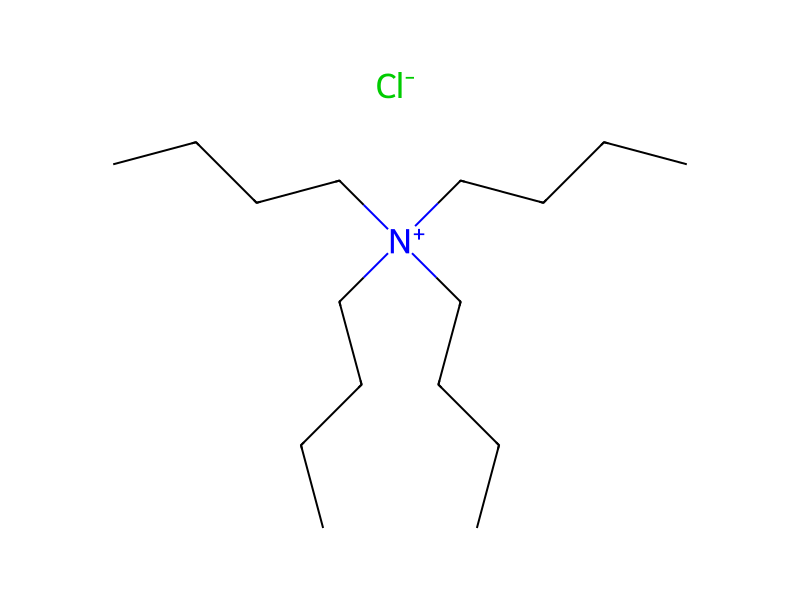
ClCl.ClC=C(Cl)C(Cl)=CCl.[Cl:11][CH:12]([Cl:22])[C:13](Cl)([Cl:20])[C:14](Cl)([Cl:18])[CH:15]([Cl:17])[Cl:16]>[Cl-].C([N+](CCCC)(CCCC)CCCC)CCC>[Cl:11][C:12]([Cl:22])=[C:13]([Cl:20])[C:14]([Cl:18])=[C:15]([Cl:17])[Cl:16]Participants
Reactant 3



Product 1

Reagents, catalysts & solvents 1
Procedure
The present invention is directed to a process for the preparation of of Z-1,1,1,4,4,4-hexafluoro-2-butene from 2,3-dichloro-1,3-butadiene. The process of the present invention includes the sequential steps initiating with initiating the reaction of chlorine with 2,3-dichloro-1,3-butadiene to obtain 1,2,2,3,3,4 hexachlorobutane followed by contacting the 1,2,2,3,3,4 hexachlorobutane with tetrabutyl ammonium chloride in a basic aqueous solution to produce 1,2,3,4-tetrachlorobuta-1,3-diene. Chlorine is added to the 1,2,3,4-tetrachlorobuta-1,3-diene to obtain 1,1,2,2,3,3,4,4 octachlorabutane followed by contacting the 1,1,2,2,3,3,4,4 octachlorobutane with tetrabutyl ammonium chloride in a basic aqueous solution to produce 1,1,2,3,4,4-hexachlorobuta-1,3-diene. Hydrogen fluoride is chlorinated and combined with the 1,1,2,3,4,4-hexachlorobuta-1,3-diene to provide E- or Z-1326mxz (1,1,1,4,4,4-hexafluoro-2-chloro-2-butene). Z-1,1,1,4,4,4-hexafluoro-2-chloro-2-butene is reacted with an aqueous solution of an alkali metal hydroxide and an alkali metal halide in the presence of a quaternary alkylammonium salt having alkyl groups of from four to twelve carbon atoms and mixtures thereof, to produce a mixture including hexafluoro-2-butyne. The final step is hydrogenating hexafluoro-2-butyne to 1,1,1,4,4,4 hexafluro-2-butene.
Workup
- customto obtain 1,1,2,2,3,3,4,4 octachlorabutane
Sources & evidence
- ORD record
- ord-8ab912ead069416fbcba6ee870fdce22
- Source dataset
- uspto-grants-2016_05
- Patent number
- US09328042B2
Linked notes
Loading…