HomeMCPWorkbenchSkills
HomeWorkbenchNotificationsMe
llms.txt · MCP GuidePrivacy Policy · Terms of Service · Supportv1.8.0
  1. Home
  2. /Reaction

Potassium Carbonate → HCID 67376918, compound

HRID 525223
Notes
Print preview

Reaction equation

HRID 525223 reaction equation
[Br:1][C:2]1[CH:7]=[CH:6][C:5]([NH:8][C:9]([NH:11][NH:12][C:13](=O)[CH2:14][CH:15]2[CH2:18][N:17]([C:19]([O:21]C(C)(C)C)=O)[CH2:16]2)=[O:10])=[CH:4][CH:3]=1.C(=O)([O-])[O-].[K+].[K+].[CH:33](N(CC)C(C)C)(C)[CH3:34].[C:42](Cl)(=[O:45])[CH2:43][CH3:44]>O.ClCCl>[Br:1][C:2]1[CH:3]=[CH:4][C:5]([N:8]2[C:13]([CH2:14][CH:15]3[CH2:16][N:17]([C:19](=[O:21])[CH2:33][CH3:34])[CH2:18]3)=[N:12][N:11]([C:42](=[O:45])[CH2:43][CH3:44])[C:9]2=[O:10])=[CH:6][CH:7]=1
ParticipantsConditionsProcedureWorkupSources & evidenceReaction notes

Participants

7

Reactant 4

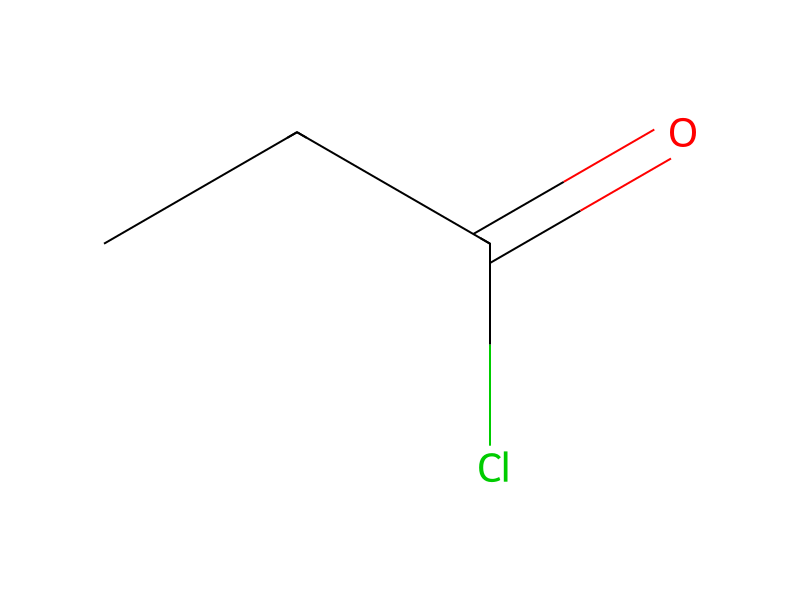
HCID 11430Potassium CarbonateHCID 62324Propionyl chlorideHCID 81531DiisopropylethylamineHCID 673543531,1-Dimethylethyl 3-[2-(2-{[(4-bromophenyl)amino]carbonyl}hydrazino)-2-oxoethyl]-1-azetidinecarboxylate

Product 1

HCID 67376918HCID 67376918, compoundYield 27.5%

Reagents, catalysts & solvents 2

HCID 962WaterSolventHCID 6344DichloromethaneSolvent

Conditions

Temperature
130 °C

Procedure

In a round bottom flask equipped with reflux condenser, a mixture of 1,1-dimethylethyl 3-[2-(2-{[(4-bromophenyl)amino]carbonyl}hydrazino)-2-oxoethyl]-1-azetidinecarboxylate (5.69 mmol) and potassium carbonate (28.5 mmol) in water (110 mL) was stirred at reflux (oil bath, 130° C.) for 16 h. The reaction mixture was cooled to room temperature and concentrated in vacuo partially and then lyophilized overnight to give a white solid. The solid was treated with dichloromethane (20 mL) followed by N,N-diisopropylethylamine (11.45 mmol) and the mixture was stirred at room temperature for 10 min. The reaction mixture was cooled to 0° C. and propionyl chloride (5.76 mmol) was added. The reaction was allowed to warm to room temperature and the reaction was stirred at room temperature for 2 h. The reaction was quenched with water (100 mL) and 1N HCl solution (10 mL), stirred for 10 min, and then acidified to pH˜5 using 1N aq HCl. The layers were separated and the aqueous layer was extracted with ethyl acetate (2×50 mL). The organic layers were combined, dried over magnesium sulphate, and concentrated in vacuo. Purification of the residue by silica gel chromatography (0-7% methanol/ethyl acetate) afforded 4-(4-bromophenyl)-2-propanoyl-5-[(1-propanoyl-3-azetidinyl)methyl]-2,4-dihydro-3H-1,2,4-triazol-3-one as a pale yellow solid (660 mg) and the title compound as an ivory solid (341 mg, 60% pure, 10% yield). MS(ES)+ m/e 365.0, 366.8 [M+H]+.


Workup

  1. customIn a round bottom flask equipped
  2. temperaturewith reflux condenser
  3. temperatureThe reaction mixture was cooled to room temperature
  4. concentrationconcentrated in vacuo partially
  5. customto give a white solid
  6. stirringthe mixture was stirred at room temperature for 10 min
  7. temperatureThe reaction mixture was cooled to 0° C.
  8. temperatureto warm to room temperature
  9. stirringthe reaction was stirred at room temperature for 2 h
  10. customThe reaction was quenched with water (100 mL) and 1N HCl solution (10 mL)
  11. stirringstirred for 10 min
  12. customThe layers were separated
  13. extractionthe aqueous layer was extracted with ethyl acetate (2×50 mL)
  14. dry with materialdried over magnesium sulphate
  15. concentrationconcentrated in vacuo
  16. customPurification of the residue by silica gel chromatography (0-7% methanol/ethyl acetate)

Sources & evidence

ORD record
ord-ef76bef12ddb45449866d166eb373f33
Source dataset
uspto-grants-2016_05
DOI
10.6084/m9.figshare.5104873.v1
Patent number
US09340529B2

Reaction notes

Loading…

On this pageParticipantsConditionsProcedureWorkupSources & evidenceReaction notes