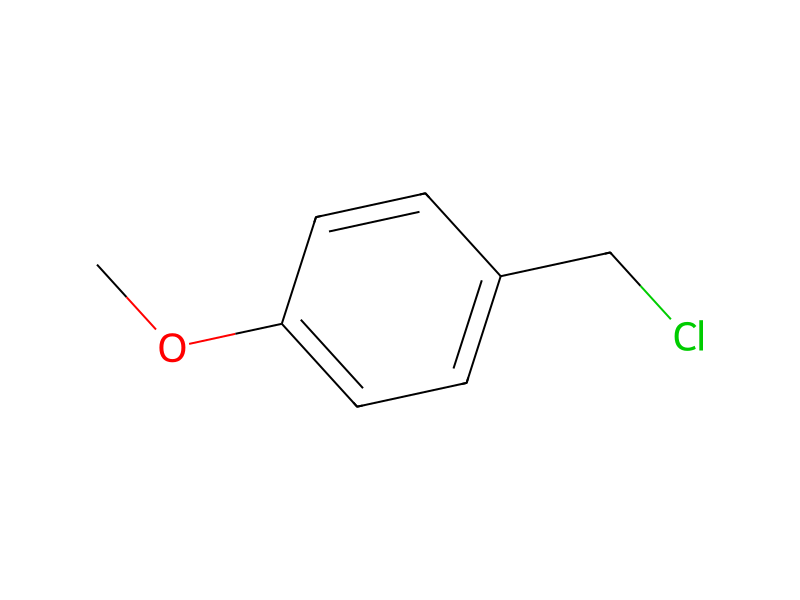
[Br:1][C:2]1[CH:3]=[CH:4][CH:5]=[C:6]2[C:11]=1[N:10]([CH3:12])[CH:9]=[C:8]([OH:13])[C:7]2=[O:14].C(=O)([O-])[O-].[K+].[K+].Cl[CH2:22][C:23]1[CH:28]=[CH:27][C:26]([O:29][CH3:30])=[CH:25][CH:24]=1.[I-].[K+]>CN(C)C=O>[Br:1][C:2]1[CH:3]=[CH:4][CH:5]=[C:6]2[C:11]=1[N:10]([CH3:12])[CH:9]=[C:8]([O:13][CH2:22][C:23]1[CH:28]=[CH:27][C:26]([O:29][CH3:30])=[CH:25][CH:24]=1)[C:7]2=[O:14]A suspension of 8-bromo-3-hydroxy-1-methylquinolin-4(1H)-one (2.4 g, 8.97 mmol) and potassium carbonate (1.488 g, 10.77 mmol) in N,N-dimethylformamide (50 mL) was heated at 90° C. for 0.5 h. Then 1-(chloromethyl)-4-methoxybenzene (1.442 mL, 9.87 mmol) and potassium iodide (0.149 g, 0.897 mmol) were added, and the mixture was heated at the same temperature for another 2 h. After cooling. N,N-dimethylformamide was removed in vacuo and the residue was partitioned between dichloromethane and brine. The organic phase was separated, the aqueous phase was extracted with dichloromethane for several times. The combined organic extracts were dried over sodium sulfate, filtered and concentrated, The residue was purified by automatic silica gel column chromatography (Combiflash RF), eluting with ethyl acetate/hexanes (0-100%) to afford 8-bromo-3-((4-methoxybenzyl)oxy)-1-methylquinolin-4(1H)-one (2.6 g, 6.95 mmol, 77% yield) as a light brown solid. LCMS: (M+H)+: 374.0.