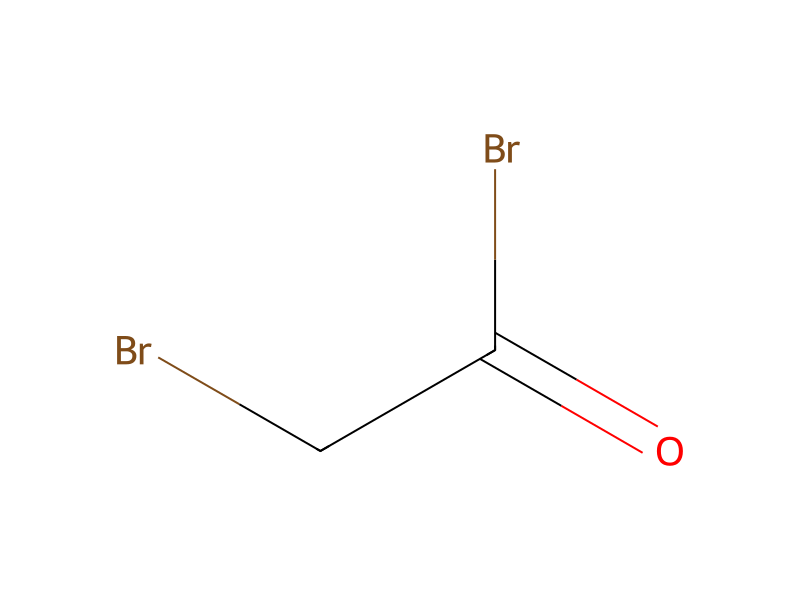
[Cl-].[Al+3].[Cl-].[Cl-].[C:5]1([CH2:11][CH2:12][CH2:13][CH2:14][CH2:15][CH2:16][CH2:17][CH2:18][OH:19])[CH:10]=[CH:9][CH:8]=[CH:7][CH:6]=1.[Br:20][CH2:21][C:22](Br)=[O:23].Cl>ClCCl>[Br:20][CH2:21][C:22]([C:8]1[CH:9]=[CH:10][C:5]([CH2:11][CH2:12][CH2:13][CH2:14][CH2:15][CH2:16][CH2:17][CH2:18][OH:19])=[CH:6][CH:7]=1)=[O:23]Aluminium chloride (200 mg, 1.50 mmol, 3.0 eq.) was suspended in dry dichloromethane (8 mL) and cooled to 0° C. 8-phenyl-1-octanol (0.11 mL, 0.50 mmol) and bromo acetylbromide (53 μL, 0.60 mmol, 1.2 eq.) were added dropwise. After 20 min the mixture was warmed to r.t. and stirred overnight. The reaction was stopped by pouring the solution into a mixture of ice water (25 mL) and concentrated hydrochloric acid (10 mL). The phases were separated and the aqueous layer was extracted with dichloromethane (2×10 mL). The combined organic phases were washed with saturated sodium bicarbonate solution (1×10 mL) and brine (1×10 mL) and dried over MgSO4. The solvent was evaporated and the residue was purified by column chromatography (silica gel, 12×4 cm, cyclohexane/ethyl acetate, 8:1). The product was isolated as colourless oil. Yield: 120 mg (73%).