Reaction equation
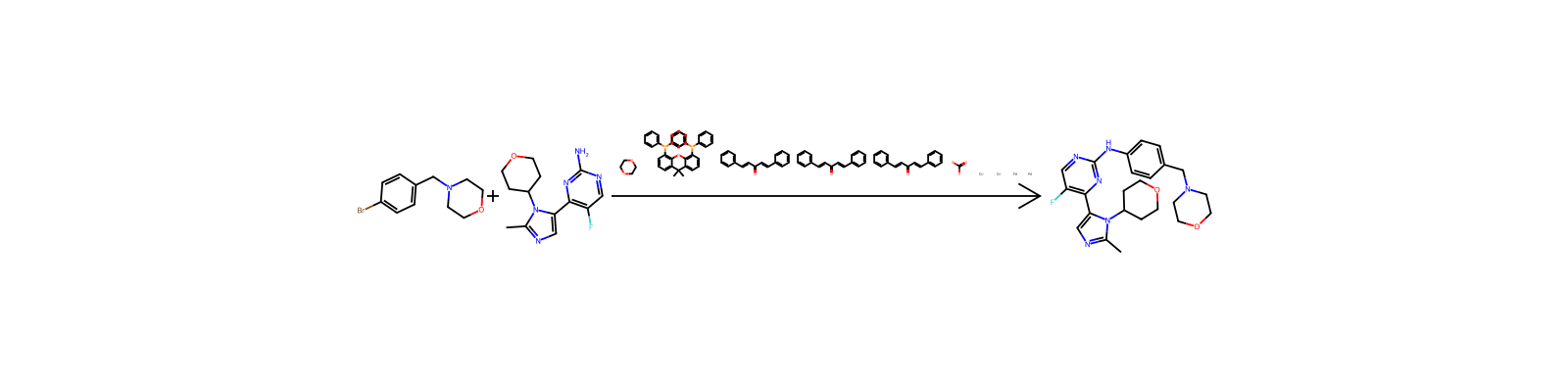
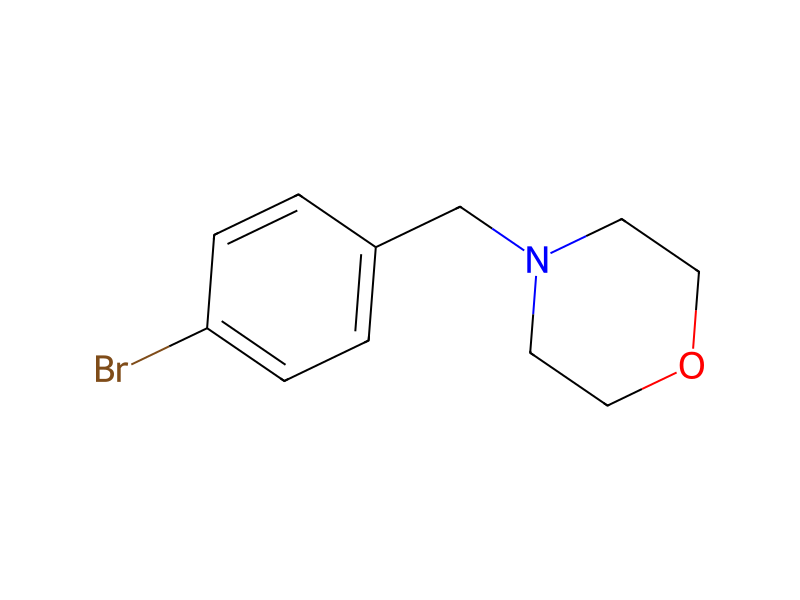
Brc1ccc(CN2CCOCC2)cc1.Cc1ncc(-c2nc(N)ncc2F)n1C1CCOCC1>C1COCCO1.CC1(C)c2cccc(P(c3ccccc3)c3ccccc3)c2Oc2c(P(c3ccccc3)c3ccccc3)cccc21.O=C(/C=C/c1ccccc1)/C=C/c1ccccc1.O=C(/C=C/c1ccccc1)/C=C/c1ccccc1.O=C(/C=C/c1ccccc1)/C=C/c1ccccc1.O=C([O-])[O-].[Cs+].[Cs+].[Pd].[Pd]>Cc1ncc(-c2nc(Nc3ccc(CN4CCOCC4)cc3)ncc2F)n1C1CCOCC1Participants
7
Reactant 2
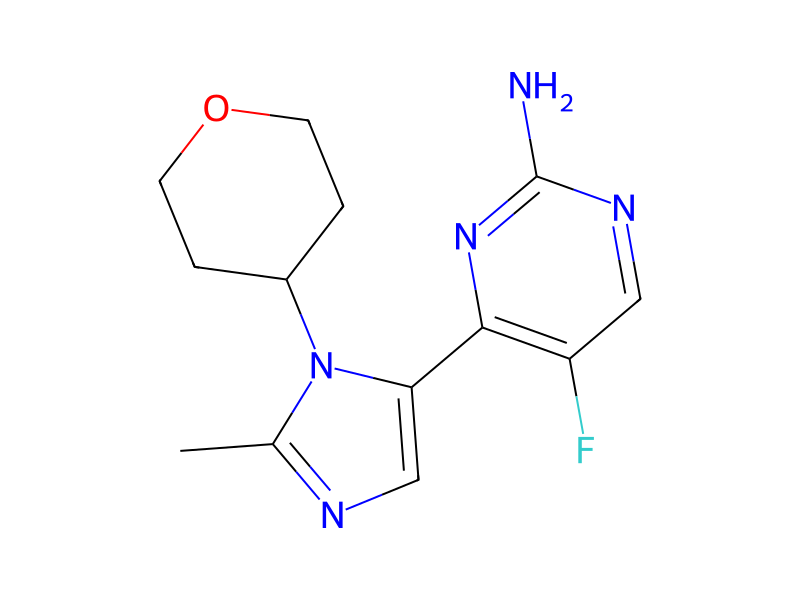
Product 1
Reagents, catalysts & solvents 4




Conditions
- Temperature
- 100 °C
Procedure
The aim of the reaction is optimization. Tris(dibenzylideneacetone)dipalladium(0) (4.5 mg, 4.91 µmol) and 9,9-Dimethyl-4,5-bis(diphenylphosphino)xanthene (5.1 mg, 8.81 µmol) were dissolved in dioxane (1.8 mL) in a 10 mL Schlenk tube and activated at 100 °C for 6 min under argon. Then 5-fluoro-4-(2-methyl-1-(tetrahydro-2H-pyran-4-yl)-1H-imidazol-5-yl)pyrimidin-2-amine (51 mg, 0.18 mmol), 4-(4-bromobenzyl)morpholine (51 mg, 0.20 mmol) and Cesium carbonate (94 mg, 0.29 mmol) were added. It was degassed again and stirred at 100 °C under argon. The reaction was followed by HPLC. After 26 h 85.5 % conversion was obtained. 20 % by-product formation was detected. Finally, the reaction mixture was discarded.
Sources & evidence
- ORD record
- ord-f88e9fa13a294cdea3238d7489919aa6
- Source dataset
- 750 AstraZeneca ELN dataset
- Original link
- View source
Linked notes
Loading…