HomeMCPWorkbenchSkills
HomeWorkbenchNotificationsMe
llms.txt · MCP GuidePrivacy Policy · Terms of Service · Supportv1.8.0
  1. Home
  2. /Reaction

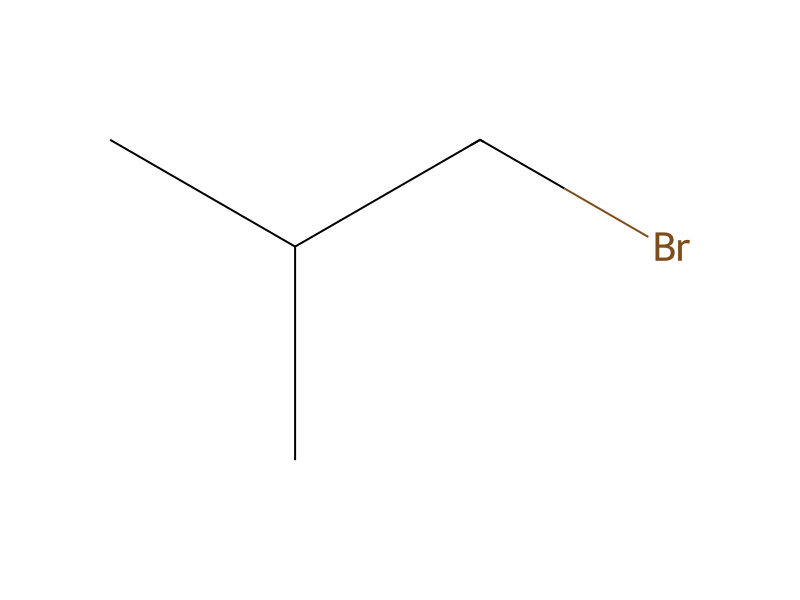
1-Bromo-2-methylpropane → 2-[2-(3-Ethoxyphenyl)ethyl]-1-isobutyl-1H-benzimidazole

HRID 537321
Notes
Print preview

Reaction equation

HRID 537321 reaction equation
[N:1]1[C:5]2[CH:6]=[CH:7][CH:8]=[CH:9][C:4]=2[NH:3][C:2]=1[CH2:10][CH2:11][C:12]1[CH:17]=[CH:16][CH:15]=[C:14]([O:18][CH2:19][CH3:20])[CH:13]=1.C([O-])([O-])=O.[K+].[K+].Br[CH2:28][CH:29]([CH3:31])[CH3:30]>CN(C=O)C>[CH2:19]([O:18][C:14]1[CH:13]=[C:12]([CH2:11][CH2:10][C:2]2[N:3]([CH2:28][CH:29]([CH3:31])[CH3:30])[C:4]3[CH:9]=[CH:8][CH:7]=[CH:6][C:5]=3[N:1]=2)[CH:17]=[CH:16][CH:15]=1)[CH3:20]
ParticipantsConditionsProcedureWorkupSources & evidenceReaction notes

Participants

5

Reactant 3

HCID 65551-Bromo-2-methylpropane3×HCID 11430Potassium Carbonate3×HCID 866892951-(2-Benzimidazol-2-ylethyl)-3-ethoxybenzene

Product 1

HCID 866892962-[2-(3-Ethoxyphenyl)ethyl]-1-isobutyl-1H-benzimidazoleYield 69.3%

Reagents, catalysts & solvents 1

HCID 6228Dimethylformamide
Solvent

Conditions

Temperature
90 °C

Procedure

A 50 mL flask fitted with a stir-bar and septum with an Ar inlet was charged with benzimidazole 70 (800 mg, 3.00 mmol) and K2CO3 (829 mg, 6.00 mmol). DMF (10 mL) was added followed by 1-bromo-2-methylpropane (617 mg, 0.489 mL, 4.50 mmol). The mixture was heated in a 90° C. bath overnight. Another 0.5 mL of 1-bromo-2-methylpropane and 300 mg of K2CO3 were added, and the mixture was heated overnight again. A third addition of 0.5 mL of 1-bromo-2-methylpropane and 300 mg of K2CO3 were added. The mixture was heated another 4 hr until complete as monitored by HPLC. The suspension was cooled, and the solids were filtered off and rinsed with EtOAc (60 mL). The filtrate was washed with saturated aqueous NH4Cl (2×50 mL), H2O (2×50 mL), and brine (30 mL), filtered through phase separation paper, and concentrated in vacuo to an orange-brown oil. The crude oil was filtered through a plug of silica gel with CH2Cl2 (2×100 mL) and 5% EtOAc in CH2Cl2 (3×100 mL). The EtOAc/CH2Cl2 filtrates were concentrated to give 670 mg of Compound #16 as a yellow oil (69%). 1H NMR (300 MHz, CDCl3): δ 7.78 (m, 1H), 7.34-7.19 (m, 4H), 6.87-6.76 (m, 3H), 3.98 (qt, 2H), 3.81 (d, 2H), 3.32-3.22 (m, 2H), 3.21-3.11 (m, 2H), 2.17 (nonet, 1H), 1.40 (t, 3H), 0.93 (d, 6H) ppm. HPLC analysis (5:10:85 H2O:A1:MeOH) showed a purity of 99% with a retention time of 5.1 min.

Workup

  1. customA 50 mL flask fitted with a stir-bar
  2. temperaturethe mixture was heated overnight again
  3. additionwere added
  4. temperatureThe mixture was heated another 4 hr until complete
  5. temperatureThe suspension was cooled
  6. filtrationthe solids were filtered off
  7. washrinsed with EtOAc (60 mL)
  8. washThe filtrate was washed with saturated aqueous NH4Cl (2×50 mL), H2O (2×50 mL), and brine (30 mL)
  9. filtrationfiltered through phase separation paper
  10. concentrationconcentrated in vacuo to an orange-brown oil
  11. filtrationThe crude oil was filtered through a plug of silica gel with CH2Cl2 (2×100 mL) and 5% EtOAc in CH2Cl2 (3×100 mL)
  12. concentrationThe EtOAc/CH2Cl2 filtrates were concentrated

Sources & evidence

ORD record
ord-0e76138e066d4ddc85cf028cf1879d6a
Source dataset
uspto-grants-2014_10
DOI
10.6084/m9.figshare.5104873.v1
Patent number
US08859780B2

Reaction notes

Loading…

On this pageParticipantsConditionsProcedureWorkupSources & evidenceReaction notes

