HomeMCPWorkbenchSkills
HomeWorkbenchNotificationsMe
llms.txt · MCP GuidePrivacy Policy · Terms of Service · Supportv1.8.3
  1. Home
  2. /Reaction

Toluene → 2-(3-Methoxyphenyl)pyridine

HRID 539460
Print

Reaction equation

HRID 539460 reaction equation
Br[C:2]1[CH:7]=[CH:6][CH:5]=[CH:4][N:3]=1.[CH3:8][O:9][C:10]1[CH:11]=[C:12](B(O)O)[CH:13]=[CH:14][CH:15]=1.O.[O-]P([O-])([O-])=O.[K+].[K+].[K+].C1(C)C=CC=CC=1>O.C1C=CC(/C=C/C(/C=C/C2C=CC=CC=2)=O)=CC=1.C1C=CC(/C=C/C(/C=C/C2C=CC=CC=2)=O)=CC=1.C1C=CC(/C=C/C(/C=C/C2C=CC=CC=2)=O)=CC=1.[Pd].[Pd].C1(P(C2CCCCC2)C2C=CC=CC=2C2C(OC)=CC=CC=2OC)CCCCC1>[CH3:8][O:9][C:10]1[CH:15]=[C:14]([C:2]2[CH:7]=[CH:6][CH:5]=[CH:4][N:3]=2)[CH:13]=[CH:12][CH:11]=1
ParticipantsProcedureWorkupSources & evidenceReaction notes

Participants

8

Reactant 4

HCID 1140TolueneHCID 79732-BromopyridineHCID 2734370(3-Methoxyphenyl)boronic acidHCID 22031701Potassium phosphate, tribasic, monohydrate

Product 1

HCID 27597152-(3-Methoxyphenyl)pyridineYield 92%

Reagents, catalysts & solvents 3

HCID 9811564
Bis(dibenzylideneacetone)palladium
Catalyst
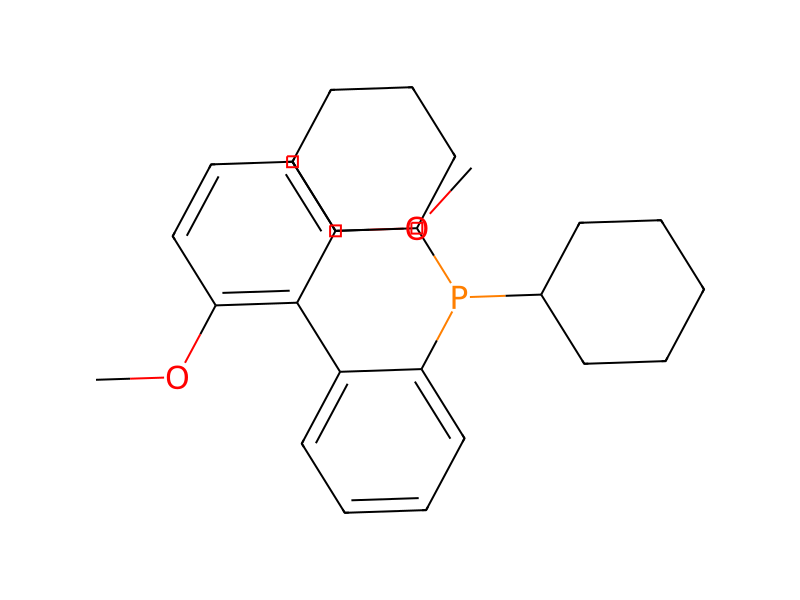
HCID 112698722-Dicyclohexylphosphino-2',6'-dimethoxybiphenylCatalyst
HCID 962WaterSolvent2×

Procedure

To a 1 L 3-neck round-bottom flask was added 2-bromopyridine (12.07 mL, 127 mmol), (3-methoxyphenyl)boronic acid (24.04 g, 158 mmol), potassium phosphate tribasic monohydrate (87 g, 380 mmol), dicyclohexyl(2′,6′-dimethoxy-[1,1′-biphenyl]-2-yl)phosphine (S-phos) (2.079 g, 5.06 mmol), 450 mL toluene, and 45 mL water. Nitrogen was bubbled directly into the mixture. Pd2(dba)3 (1.159 g, 1.266 mmol) was added and the reaction mixture heated to reflux overnight under nitrogen. The reaction mixture was diluted with water and the layers were separated. The aqueous layer was extracted with ethyl acetate. The organic layers were dried over magnesium sulfate, filtered, and evaporated. The crude material was purified by column chromatography eluting with 20% ethyl acetate to afford a yellow liquid (21.5 g, 92%).

Workup

  1. customNitrogen was bubbled directly into the mixture
  2. temperaturethe reaction mixture heated
  3. temperatureto reflux overnight under nitrogen
  4. customthe layers were separated
  5. extractionThe aqueous layer was extracted with ethyl acetate
  6. dry with materialThe organic layers were dried over magnesium sulfate
  7. filtrationfiltered
  8. customevaporated
  9. customThe crude material was purified by column chromatography
  10. washeluting with 20% ethyl acetate

Sources & evidence

ORD record
ord-3d2500bc206740549b65f49fff7503b2
Source dataset
uspto-grants-2014_10
DOI
10.6084/m9.figshare.5104873.v1
Patent number
US08871361B2

Reaction notes

On this pageParticipantsProcedureWorkupSources & evidenceReaction notes