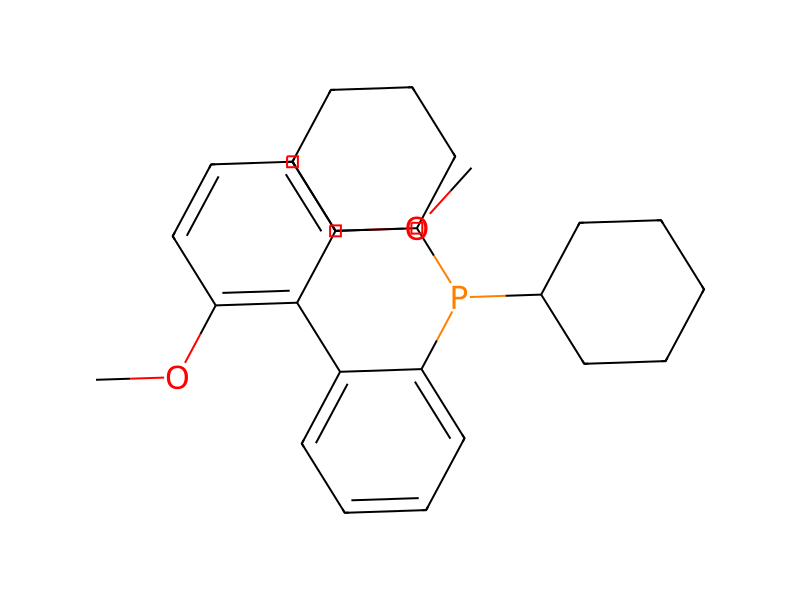
Cl[C:2]1[CH:9]=[CH:8][C:5]([C:6]#[N:7])=[CH:4][C:3]=1[N+:10]([O-:12])=[O:11].[C:13]1(B(O)O)[CH:18]=[CH:17][CH:16]=[CH:15][CH:14]=1.C1(P(C2CCCCC2)C2C=CC=CC=2C2C(OC)=CC=CC=2OC)CCCCC1.O.[O-]P([O-])([O-])=O.[K+].[K+].[K+]>O.C1C=CC(/C=C/C(/C=C/C2C=CC=CC=2)=O)=CC=1.C1C=CC(/C=C/C(/C=C/C2C=CC=CC=2)=O)=CC=1.C1C=CC(/C=C/C(/C=C/C2C=CC=CC=2)=O)=CC=1.[Pd].[Pd].C1(C)C=CC=CC=1>[N+:10]([C:3]1[CH:4]=[C:5]([C:6]#[N:7])[CH:8]=[CH:9][C:2]=1[C:13]1[CH:18]=[CH:17][CH:16]=[CH:15][CH:14]=1)([O-:12])=[O:11]4-chloro-3-nitrobenzonitrile (10 g, 54.8 mmol), phenylboronic acid (8.68 g, 71.2 mmol), Pd2dba3 (1.002 g, 1.096 mmol) and 2-dicyclohexylphosphino-2′,6′-dimethoxybiphenyl (S-Phos) (1.797 g, 4.38 mmol) were charged into a 500 mL 3-neck flask. Toluene (250 mL) was then charged into the reaction mixture followed by potassium phosphate tribasic monohydrate (35.3 g, 153 mmol) dissolved in 60 mL of water. This mixture was degassed with nitrogen then heated at reflux overnight. The reaction mixture was cooled to room temperature then partitioned with water. The toluene layer was dried over magnesium sulfate, filtered, and dried under vacuum. This crude residue was passed through a silica gel column using 15-35% ethyl acetate/hexanes as the eluent. The product fractions were combined and solvents were removed under vacuum. This crude product was triturated with ethyl acetate/hexanes. The product, 2-nitro-[1,1′-biphenyl]-4-carbonitrile, (8.87 g, 39.6 mmol, 72.2% yield) was isolated via filtration as a yellow solid.