Reaction equation
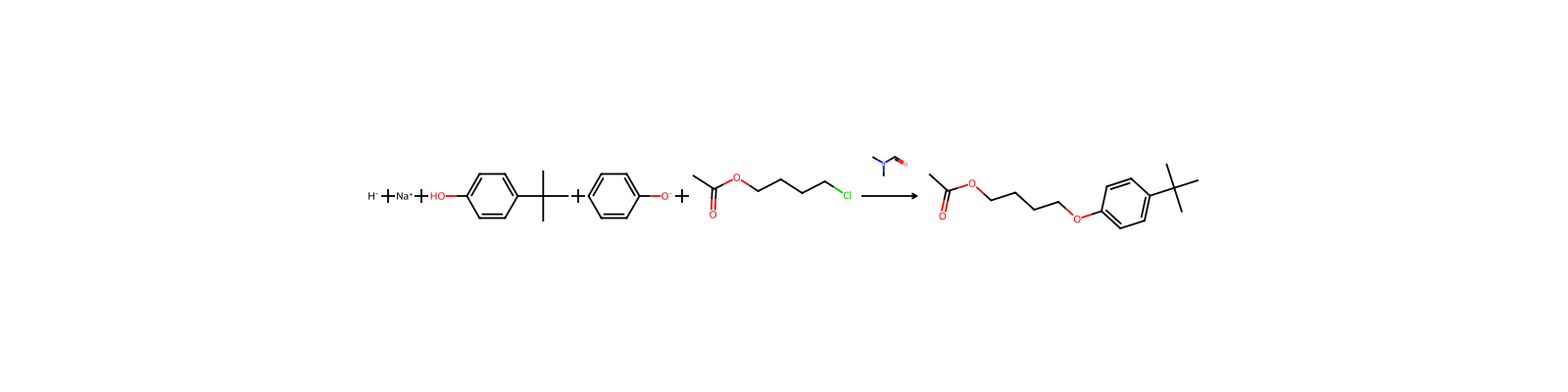
[H-].[Na+].[C:3]([C:7]1[CH:12]=[CH:11][C:10]([OH:13])=[CH:9][CH:8]=1)([CH3:6])([CH3:5])[CH3:4].[O-]C1C=CC=CC=1.[C:21]([O:24][CH2:25][CH2:26][CH2:27][CH2:28]Cl)(=[O:23])[CH3:22]>CN(C)C=O>[C:21]([O:24][CH2:25][CH2:26][CH2:27][CH2:28][O:13][C:10]1[CH:9]=[CH:8][C:7]([C:3]([CH3:6])([CH3:4])[CH3:5])=[CH:12][CH:11]=1)(=[O:23])[CH3:22]Participants
Reactant 4



Product 1

Reagents, catalysts & solvents 1

Procedure
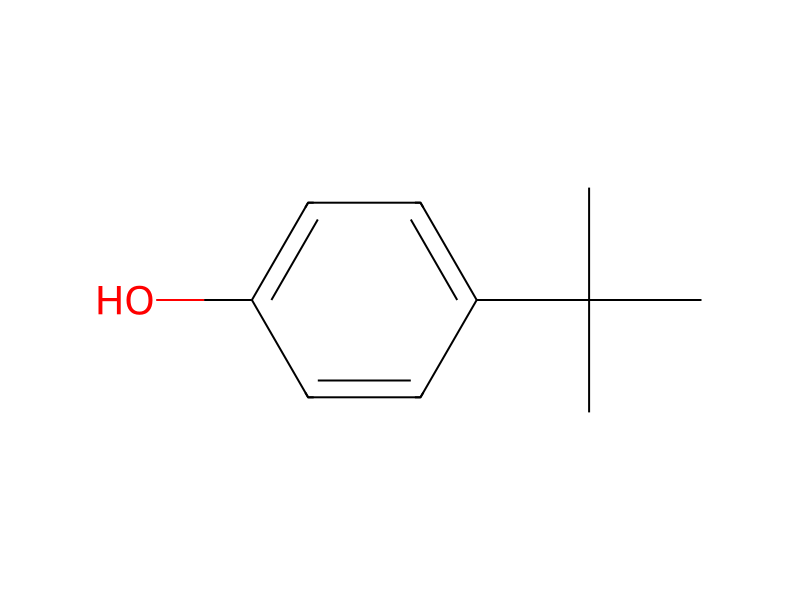
To a stirred slurry of 1.6 g sodium hydride (as 50% dispersion in oil) in 50 ml dry dimethyl formamide was added, dropwise, a solution of 5.0 g p-tert-butylphenol (33.3 mmoles) in 50 ml dry dimethyl formamide and the solution stirred under nitrogen until the phenoxide had totally formed. To the phenoxide was added a solution of 5.0 g 4-chlorobutyl acetate (33.3 mmoles) in 50 ml dry dimethyl formamide and the solution was stirred for fourteen hours. The reaction mixture was partitioned between water/toluene. The organic layer was removed, washed with water, then 1 N sodium bicarbonate. The organic layer was removed, dried and evaporated to an orange oil, 5.6 g. The oil was chromatographed on 500 g, 90 to 200 mesh silica gel (CH2Cl2 eluent) yielding pure 4-(p-tert-butylphenoxy)-butyl acetate.
Workup
- customhad totally formed
- customThe reaction mixture was partitioned between water/toluene
- customThe organic layer was removed
- washwashed with water
- customThe organic layer was removed
- customdried
- customevaporated to an orange oil, 5.6 g
- customThe oil was chromatographed on 500 g, 90 to 200 mesh silica gel (CH2Cl2 eluent)
Sources & evidence
- ORD record
- ord-68859b502a7640898737464c79dba6be
- Source dataset
- uspto-grants-1984_05
- Patent number
- US04451474
Linked notes
Loading…