Reaction equation

C[C:2]1[CH:10]=[C:9]([Br:11])[CH:8]=[CH:7][C:3]=1[C:4]([OH:6])=O.[H-].[Na+].[CH3:14][C:15]([C:17]1[CH:22]=[CH:21][C:20]([Br:23])=[CH:19][CH:18]=1)=[O:16].CO>C1C=CC=CC=1>[Br:23][C:20]1[CH:21]=[CH:22][C:17]([C:15](=[O:16])[CH2:14][C:4](=[O:6])[C:3]2[CH:2]=[CH:10][C:9]([Br:11])=[CH:8][CH:7]=2)=[CH:18][CH:19]=1Participants
Reactant 4

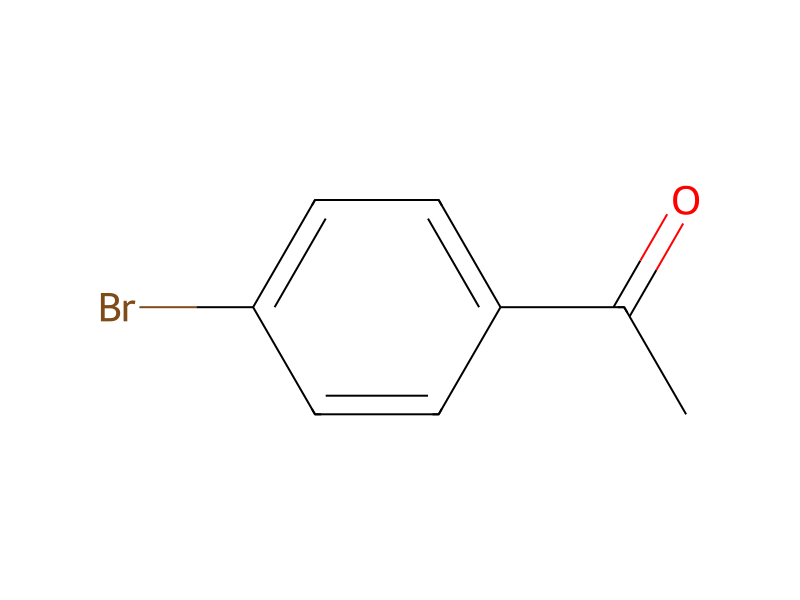


Product 1

Reagents, catalysts & solvents 1

Conditions
- Temperature
- 60 °C
Procedure
In a 1-liter three neck round bottom flask, 43 g (0.2 mol) methyl 4-bromobenzoic acid and 17.6 g (0.4 mol) sodium hydride were dissolved in 200 ml dried benzene and heated to 60° C. Next, 39.8 g (0.2 mol) 4-bromoacetophenone in 100 ml dry benzene was slowly added through a dropping funnel, and 1 ml methanol was added to the flask to initiate the reaction. After the mixture was refluxed overnight, the reaction was quenched by adding methanol and pouring it into ice water. The pH of the mixture was brought down to 7.0 using 5 N sulfuric acid. A solid was collected, washed with water, and recrystallized from benzene to give a light yellow product. Characterization. Yield: 30.3 g (40%). 1H NMR (300 MHz, CDCl3, 20° C., δ): 7.84 (d, 4H, ArH); 7.62 (d, 4H, ArH); 6.77 (s, 2H, CH2). EI-MS: 382(M+), 301, 225, 183, 157.
Workup
- customthe reaction
- temperatureAfter the mixture was refluxed overnight
- customthe reaction was quenched
- additionby adding methanol
- additionpouring it into ice water
- customA solid was collected
- washwashed with water
- customrecrystallized from benzene
- customto give a light yellow product
Sources & evidence
- ORD record
- ord-161a6d8692fc4453be1c6fe10cd2abf5
- Source dataset
- uspto-grants-2011_11
- Patent number
- US08053094B2
Linked notes
Loading…