Reaction equation

[O:1]=[C:2]1[CH:6]([C:7]([O:9][CH2:10][CH3:11])=[O:8])[CH2:5][C:4](=[O:12])[NH:3]1.[N:13]([C:25]([O:27][CH2:28][C:29]1[CH:34]=[CH:33][CH:32]=[CH:31][CH:30]=1)=[O:26])=[N:14][C:15]([O:17][CH2:18][C:19]1[CH:24]=[CH:23][CH:22]=[CH:21][CH:20]=1)=[O:16].C(=O)([O-])[O-].[K+].[K+]>C(OCC)(=O)C>[CH2:28]([O:27][C:25]([N:13]([C:6]1([C:7]([O:9][CH2:10][CH3:11])=[O:8])[CH2:5][C:4](=[O:12])[NH:3][C:2]1=[O:1])[NH:14][C:15]([O:17][CH2:18][C:19]1[CH:24]=[CH:23][CH:22]=[CH:21][CH:20]=1)=[O:16])=[O:26])[C:29]1[CH:30]=[CH:31][CH:32]=[CH:33][CH:34]=1Participants
5
Reactant 3

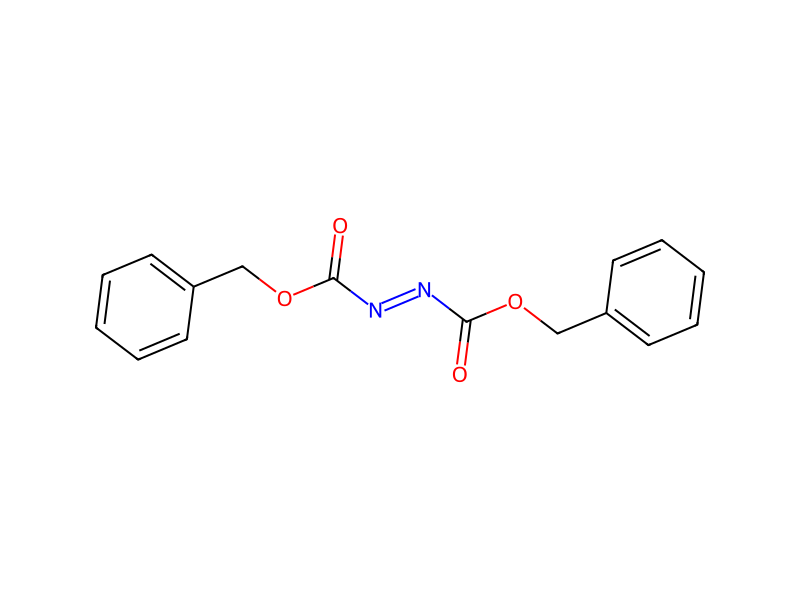

Product 1

Reagents, catalysts & solvents 1

Procedure
To a solution of ethyl 2,5-dioxopyrrolidine-3-carboxylate (3.92 g) in ethyl acetate (60 ml) was added dibenzyl azodicarboxylate (7.27 g), followed by potassium carbonate (317 mg) at room temperature. After this mixture was stirred at room temperature for 1 hour, the mixture was filtered through a Celite pad. The filtrate was concentrated and the resulting residue was purified by a flash column chromatography (hexane:ethyl acetate=2:1) to give the ethyl 3-[N,N′-bis(benzyloxycarbonyl)hydrazino]-2,5-dioxopyrrolidine-3-carboxylate (10.1 g, 94%) as amorphous.
Workup
- filtrationthe mixture was filtered through a Celite pad
- concentrationThe filtrate was concentrated
- customthe resulting residue was purified by a flash column chromatography (hexane:ethyl acetate=2:1)
Sources & evidence
- ORD record
- ord-4faacf44633047b4ade76eefc09a49e6
- Source dataset
- uspto-grants-2011_11
- Patent number
- US08058456B2
Linked notes
Loading…