HomeMCPWorkbenchSkills
HomeWorkbenchNotificationsMe
llms.txt · MCP GuidePrivacy Policy · Terms of Service · Supportv1.8.3
  1. Home
  2. /Reaction

Oxalyl chloride → 6-Bromo-2-naphthoyl chloride

HRID 55752
Print

Reaction equation

HRID 55752 reaction equation
[Br:1][C:2]1[CH:3]=[C:4]2[C:9](=[CH:10][CH:11]=1)[CH:8]=[C:7]([C:12]([OH:14])=O)[CH:6]=[CH:5]2.C(Cl)(=O)C([Cl:18])=O>ClCCl.CN(C=O)C>[Br:1][C:2]1[CH:3]=[C:4]2[C:9](=[CH:10][CH:11]=1)[CH:8]=[C:7]([C:12]([Cl:18])=[O:14])[CH:6]=[CH:5]2
ParticipantsProcedureWorkupSources & evidenceReaction notes

Participants

5

Reactant 2

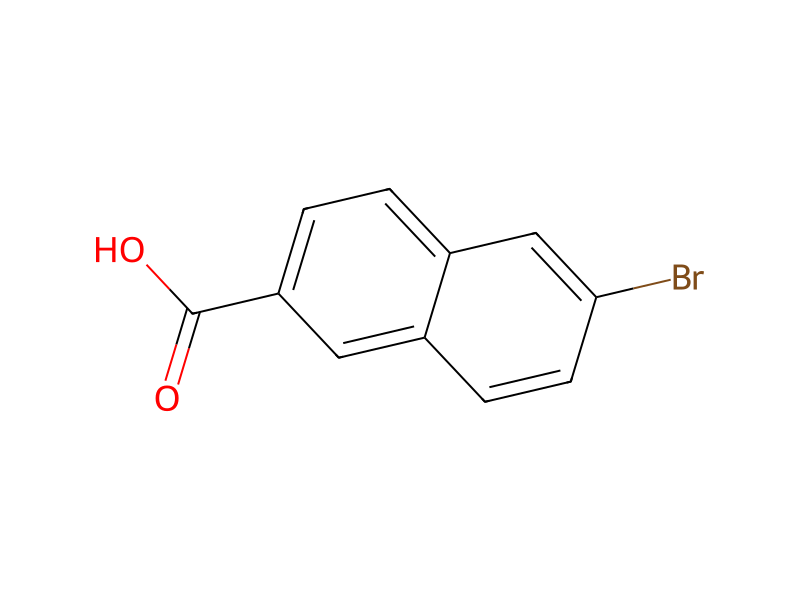
HCID 65578Oxalyl chlorideHCID 45498526-Bromo-2-naphthalenecarboxylic acid

Product 1

HCID 218796066-Bromo-2-naphthoyl chlorideYield 100.1%

Reagents, catalysts & solvents 2

HCID 6228DimethylformamideCatalystHCID 6344DichloromethaneSolvent

Procedure

6-bromo-2-naphthoic acid (72.3 g, 282 mmol, 1.0 equiv.) was suspended in dichloromethane (600 mL) and DMF (catalytic, 5 drops) was added. Oxalylchloride (71.6 g, 564 mmol, 2.0 equiv.) was added portion wise during 1 hour. The reaction mixture was stirred overnight with a CaCl2 drying tube mouthed on the flask. Complete dissolution occurred. The reaction mixture was concentrated, dichloromethane (100 mL) was added and the solvent was evaporated again, yielding 6-bromo-2-naphthoyl chloride (76.1 g, 100%) as an oil which was used as such in next step.

Workup

  1. dissolutionComplete dissolution
  2. concentrationThe reaction mixture was concentrated
  3. additiondichloromethane (100 mL) was added
  4. customthe solvent was evaporated again

Sources & evidence

ORD record
ord-8e890819485b476c9aa40cc3b93e3f03
Source dataset
uspto-grants-2016_09
DOI
10.6084/m9.figshare.5104873.v1
Patent number
US09433609B2

Reaction notes

On this pageParticipantsProcedureWorkupSources & evidenceReaction notes