Reaction equation

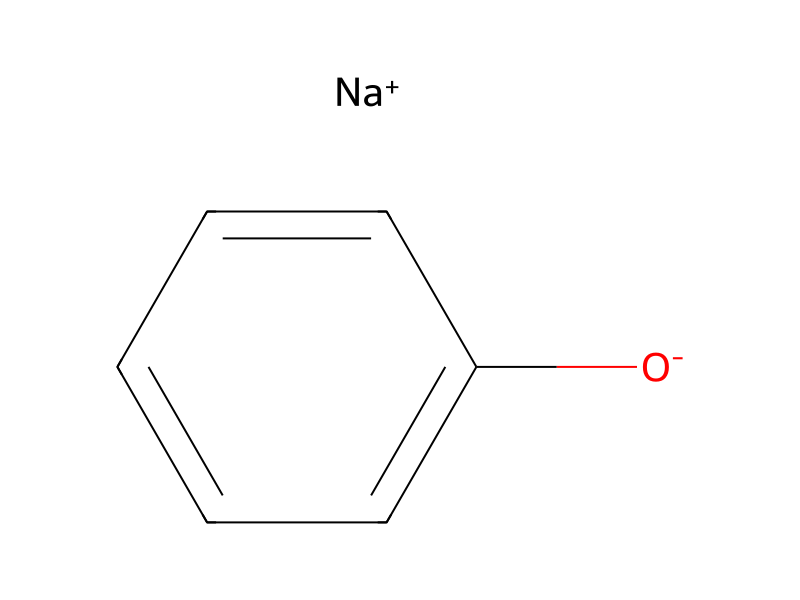
[N+]([C:4]1[CH:5]=[C:6]([C:14]([O:16][CH3:17])=[O:15])[C:7](=[CH:12][CH:13]=1)[C:8]([O:10][CH3:11])=[O:9])([O-])=O.[C:18]1([O-:24])[CH:23]=[CH:22][CH:21]=[CH:20][CH:19]=1.[Na+].Cl>CN(C)C=O>[O:24]([C:4]1[CH:5]=[C:6]([C:14]([O:16][CH3:17])=[O:15])[C:7](=[CH:12][CH:13]=1)[C:8]([O:10][CH3:11])=[O:9])[C:18]1[CH:23]=[CH:22][CH:21]=[CH:20][CH:19]=1Participants
Reactant 3


Product 1

Reagents, catalysts & solvents 1

Procedure
0.1 Mole of dimethyl 4-nitrophthalate and 0.1 mole of sodium phenolate were reacted with each other in a solvent of dimethylformamide at 100° C. over a 3-hour period under a stream of nitrogen. After being allowed to stand at room temperature and thereby cooled, the reaction mixture was poured into a dilute aqueous solution of hydrochloric acid, and extracted with ethyl acetate. The solvent was distilled away from the extract to yield dimethyl 4-phenoxyphthalate. Then, dimethyl 4-phenoxyphthalate thus-obtained was refluxed in a mixture of ethanol and an aqueous solution of potassium hydroxide to result in conversion into 4-phenoxyphthalic acid. Thereafter, the acid underwent reaction in an acetic acid/acetic anhydride mixture at a temperature of 100° C., and the solvent was distilled away from the reaction solution to yield 4-phenoxyphthalic anhydride. Subsequently, equimolar amounts of 4-phenoxyphthalic anhydride. Subsequently, equimolar amounts of 4-phenoxyphthalic anhydride and m-diethylaminophenol were refluxed in toluene to yield a 2-(2-hydroxy-4-diethylaminobenzoyl)-4- or -5-aryloxybenzoic acid.
Workup
- customto stand at room temperature
- temperaturecooled
- extractionextracted with ethyl acetate
- distillationThe solvent was distilled away from the
- extractionextract
Sources & evidence
- ORD record
- ord-67aea6715aa24828bb278aa9828acc6a
- Source dataset
- uspto-grants-1988_03
- Patent number
- US04728633
Linked notes
Loading…