HomeMCPWorkbenchSkills
HomeWorkbenchNotificationsMe
llms.txt · MCP GuidePrivacy Policy · Terms of Service · Supportv1.8.3
  1. Home
  2. /Reaction

Diethyl Oxalate → Ethyl 2-(5-((tert-butyldiphenylsilyloxy)methyl)-4-((2R,6S)-2,6-dimethylmorpholino)-2,3-difluorophenyl)-2-oxoacetate

HRID 577867
Print

Reaction equation

HRID 577867 reaction equation
[Si:1]([O:18][CH2:19][C:20]1[C:25]([N:26]2[CH2:31][C@H:30]([CH3:32])[O:29][C@H:28]([CH3:33])[CH2:27]2)=[C:24]([F:34])[C:23]([F:35])=[CH:22][CH:21]=1)([C:14]([CH3:17])([CH3:16])[CH3:15])([C:8]1[CH:13]=[CH:12][CH:11]=[CH:10][CH:9]=1)[C:2]1[CH:7]=[CH:6][CH:5]=[CH:4][CH:3]=1.C([Li])(CC)C.[C:41](OCC)(=[O:47])[C:42]([O:44][CH2:45][CH3:46])=[O:43]>C1COCC1>[Si:1]([O:18][CH2:19][C:20]1[C:25]([N:26]2[CH2:31][C@H:30]([CH3:32])[O:29][C@H:28]([CH3:33])[CH2:27]2)=[C:24]([F:34])[C:23]([F:35])=[C:22]([C:41](=[O:47])[C:42]([O:44][CH2:45][CH3:46])=[O:43])[CH:21]=1)([C:14]([CH3:16])([CH3:17])[CH3:15])([C:2]1[CH:7]=[CH:6][CH:5]=[CH:4][CH:3]=1)[C:8]1[CH:13]=[CH:12][CH:11]=[CH:10][CH:9]=1
ParticipantsConditionsProcedureWorkupSources & evidenceReaction notes

Participants

5

Reactant 3

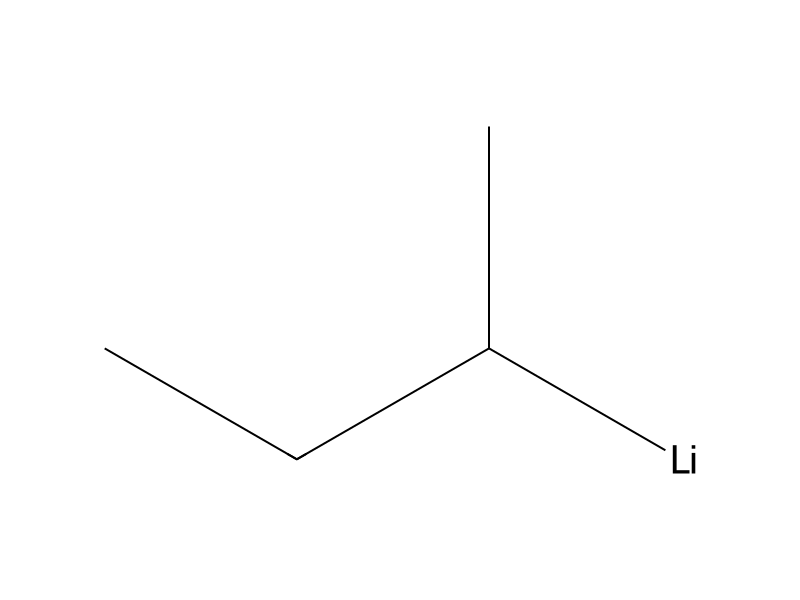
HCID 7268Diethyl OxalateHCID 67357593(2R,6S)-4-(6-((tert-butyldiphenylsilyloxy)methyl)-2,3-difluorophenyl)-2,6-dimethylmorpholine2×HCID 178418400CID 53628100

Product 1

HCID 86658065Ethyl 2-(5-((tert-butyldiphenylsilyloxy)methyl)-4-((2R,6S)-2,6-dimethylmorpholino)-2,3-difluorophenyl)-2-oxoacetateYield 81%

Reagents, catalysts & solvents 1

HCID 8028TetrahydrofuranSolvent2×

Conditions

Temperature
-78 °C

Procedure

(2R,6S)-4-[6-({[tert-Butyl(diphenyl)silyl]oxy}methyl)-2,3-difluorophenyl]-2,6-dimethylmorpholine (Intermediate 3, 0.5 g, 1.01 mmol) was dissolved in 10 ml of THF and cooled to −78° C. Sec-butyl lithium (1.358 ml, 1.77 mmol) was added drop wise over 5 minutes. The reaction stirred at −78° C. for 1.5 hours. The reaction mixture was cannulated into a −78° C. cooled flask containing diethyl oxalate (1.370 ml, 10.09 mmol) in 10 ml of THF. The reaction was allowed to stir at −78° C. for 30 minutes; quenched cold with 1 ml sat NH4Cl and allowed to warm to room temp. The reaction was diluted with water and extracted twice with ethyl acetate. The organic layers were combined and washed twice with brine, dried over MgSO4 and concentrated. The residue was purified by silica gel column chromatography using a gradient of hexanes to ethyl acetate to give the title compound (486 mg, 81% yield) contaminated with diethyl oxalate. This material was taken to the next step without further purification.

Workup

  1. customwas cannulated into a −78° C.
  2. temperaturecooled flask
  3. stirringto stir at −78° C. for 30 minutes
  4. customquenched cold with 1 ml
  5. temperatureto warm to room temp
  6. additionThe reaction was diluted with water
  7. extractionextracted twice with ethyl acetate
  8. washwashed twice with brine
  9. dry with materialdried over MgSO4
  10. concentrationconcentrated
  11. customThe residue was purified by silica gel column chromatography

Sources & evidence

ORD record
ord-aa14087aa86e481cab8682fc77524c1b
Source dataset
uspto-grants-2015_05
DOI
10.6084/m9.figshare.5104873.v1
Patent number
US09040528B2

Reaction notes

On this pageParticipantsConditionsProcedureWorkupSources & evidenceReaction notes