Reaction equation

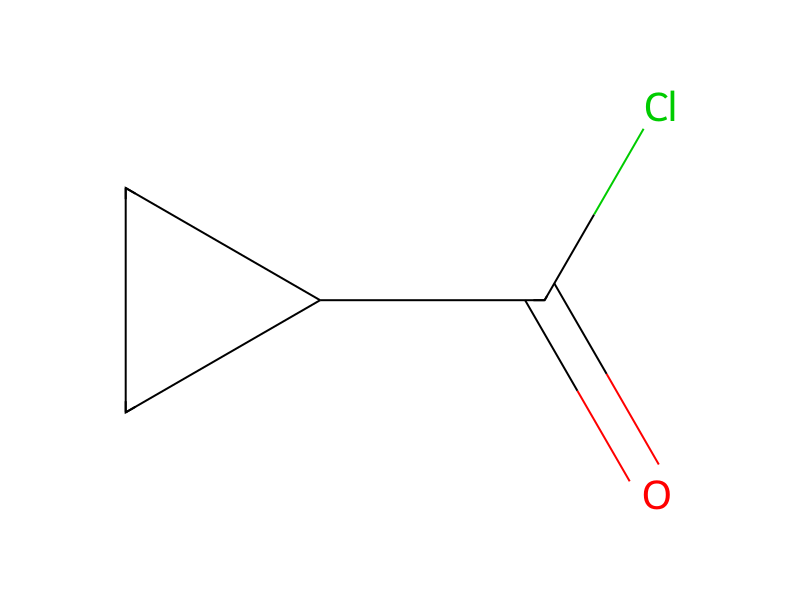
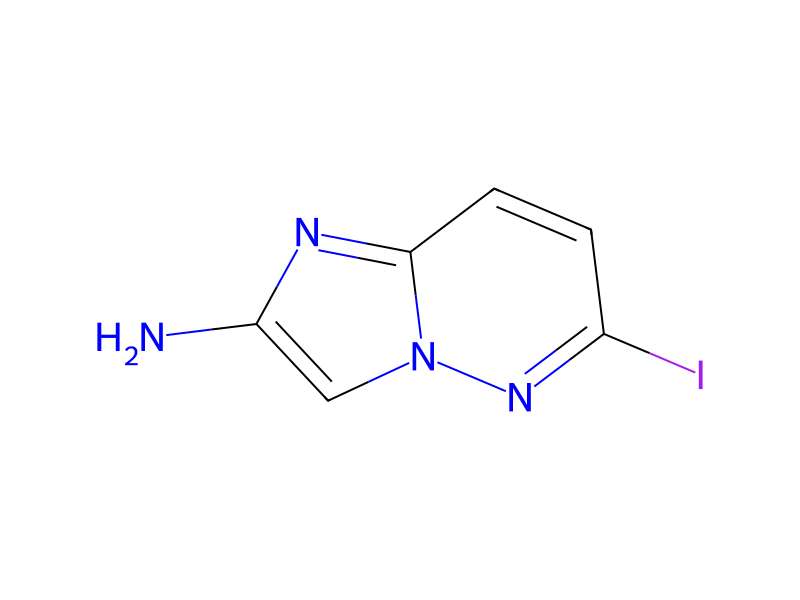
[I:1][C:2]1[CH:3]=[CH:4][C:5]2[N:6]([CH:8]=[C:9]([NH2:11])[N:10]=2)[N:7]=1.C(N(CC)C(C)C)(C)C.[CH:21]1([C:24](Cl)=[O:25])[CH2:23][CH2:22]1>ClCCl>[I:1][C:2]1[CH:3]=[CH:4][C:5]2[N:6]([CH:8]=[C:9]([NH:11][C:24]([CH:21]3[CH2:23][CH2:22]3)=[O:25])[N:10]=2)[N:7]=1Participants



Procedure
To the mixture of 6-iodo-imidazo[1,2-b]pyridazin-2-ylamine (130 mg, 0.5 mmol, 1 eq) and N,N-diisopropylethylamine (0.26 mL, 3 eq) in anhydrous dichloromethane (10 mL) at room temperature was added dropwise cyclopropane carbonyl chloride (0.26 mL, 3 eq). After the reaction mixture was stirred at ambient temperature for two hours, it was partitioned between saturated aqueous sodium bicarbonate and ethyl acetate (with 10% THF added). The organic layer was isolated, washed with brine, and dried with anhydrous sodium sulfate. The upper clear solution was decanted, concentrated, and the residue was subject to a gradient column chromatography (from DCM to MeOH-DCM 1:30) to give N-(6-iodoimidazo[1,2-b]pyridazin-2-yl)cyclopropanecarboxamide as a white powder in amount of 51 mg.
Workup
- customit was partitioned between saturated aqueous sodium bicarbonate and ethyl acetate (with 10% THF added)
- customThe organic layer was isolated
- washwashed with brine
- dry with materialdried with anhydrous sodium sulfate
- customThe upper clear solution was decanted
- concentrationconcentrated
Sources & evidence
- ORD record
- ord-d699e3077e134d508f9c2367d727eae4
- Source dataset
- uspto-grants-2016_01
- Patent number
- US09233968B1
Linked notes
Loading…