HomeMCPWorkbenchSkills
HomeWorkbenchNotificationsMe
llms.txt · MCP GuidePrivacy Policy · Terms of Service · Supportv1.8.3
  1. Home
  2. /Reaction

Cesium carbonate → 3-(5-acetyl-4,5,6,7-tetrahydropyrazolo[1,5-a]pyrazin-2-ylamino)-5-bromo-1-methylpyridin-2(1H)-one

HRID 592622
Print

Reaction equation

HRID 592622 reaction equation
[NH2:1][C:2]1[CH:13]=[C:5]2[CH2:6][N:7]([C:10](=[O:12])[CH3:11])[CH2:8][CH2:9][N:4]2[N:3]=1.Br[C:15]1[C:16](=[O:23])[N:17]([CH3:22])[CH:18]=[C:19]([Br:21])[CH:20]=1.C(=O)([O-])[O-].[Cs+].[Cs+].CC1(C)C2C(=C(P(C3C=CC=CC=3)C3C=CC=CC=3)C=CC=2)OC2C(P(C3C=CC=CC=3)C3C=CC=CC=3)=CC=CC1=2>O1CCOCC1.[Pd].[Pd].C(=CC(C=CC1C=CC=CC=1)=O)C1C=CC=CC=1.C(=CC(C=CC1C=CC=CC=1)=O)C1C=CC=CC=1.C(=CC(C=CC1C=CC=CC=1)=O)C1C=CC=CC=1.CO.CCOCC.CCOC(C)=O.O>[C:10]([N:7]1[CH2:8][CH2:9][N:4]2[N:3]=[C:2]([NH:1][C:15]3[C:16](=[O:23])[N:17]([CH3:22])[CH:18]=[C:19]([Br:21])[CH:20]=3)[CH:13]=[C:5]2[CH2:6]1)(=[O:12])[CH3:11]
ParticipantsConditionsProcedureWorkupSources & evidenceReaction notes

Participants

11

Reactant 4

HCID 10796Cesium carbonateHCID 6360441,1'-(9,9-Dimethyl-9H-xanthene-4,5-diyl)bis(1,1-diphenylphosphine)HCID 36143503,5-Dibromo-1-methylpyridin-2(1H)-oneHCID 580440081-(2-amino-6,7-dihydropyrazolo[1,5-a]pyrazin-5(4H)-yl)ethanone

Product 1

HCID 580440563-(5-acetyl-4,5,6,7-tetrahydropyrazolo[1,5-a]pyrazin-2-ylamino)-5-bromo-1-methylpyridin-2(1H)-one
Yield 41%

Reagents, catalysts & solvents 6

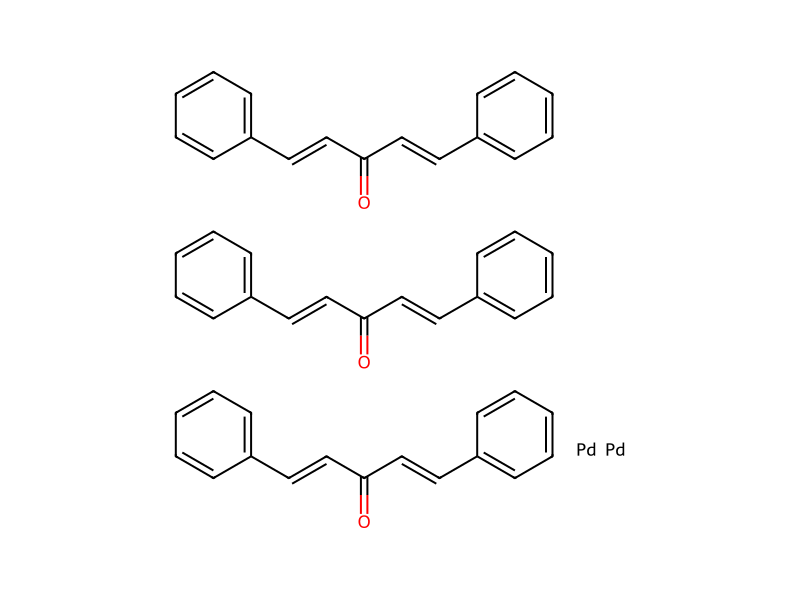
HCID 9832798Tris(dibenzylideneacetone) dipalladiumCatalystHCID 887MethanolSolventHCID 962WaterSolventHCID 3283Diethyl EtherSolventHCID 8857Ethyl AcetateSolventHCID 312751,4-DioxaneSolvent

Conditions

Temperature
100 °C

Procedure

A sealed tube was equipped with a magnetic stirrer and charged with 125f (860 mg, 4.8 mmol), 3,5-dibromo-1-methylpyridin-2(1H)-one (1.8 g, 6.7 mmol), and cesium carbonate (3.4 g, 10.5 mmol) in 1,4-dioxane (67 mL). After bubbling nitrogen through the solution for 30 min, Xantphos (330 mg, 0.6 mmol) and tris(dibenzylideneacetone) dipalladium(0) (300 mg, 0.3 mmol) were added, and the reaction mixture was heated to 100° C. for 16 h. After this time, H2O (50 mL) and EtOAc (50 mL) were added. The aqueous layer was separated and extracted with EtOAc (2×50 mL). The combined organic extracts were washed with brine (100 mL) and dried over sodium sulfate. The resulting residue was purified by column chromatography eluting with a gradient of CH2Cl2— 60:35:5 CH2Cl2:Et2O:MeOH to afford a 41% yield of 125g (720 mg).

Workup

  1. customA sealed tube was equipped with a magnetic stirrer
  2. customAfter bubbling nitrogen through the solution for 30 min
  3. customThe aqueous layer was separated
  4. extractionextracted with EtOAc (2×50 mL)
  5. washThe combined organic extracts were washed with brine (100 mL)
  6. dry with materialdried over sodium sulfate
  7. customThe resulting residue was purified by column chromatography
  8. washeluting with a gradient of CH2Cl2— 60:35:5 CH2Cl2

Sources & evidence

ORD record
ord-c40ac28baec747cc9e63087bcc0c2526
Source dataset
uspto-grants-2016_01
DOI
10.6084/m9.figshare.5104873.v1
Patent number
US09238655B2

Reaction notes

On this pageParticipantsConditionsProcedureWorkupSources & evidenceReaction notes