o-Chlorophenylacetic acid → 2-(2-chlorophenyl)-1-(3-(pyridin-4-yl)-6,7-dihydro-1H-pyrazolo pyridin-5(4H)-yl)ethanone
HRID 594934
Reaction equation

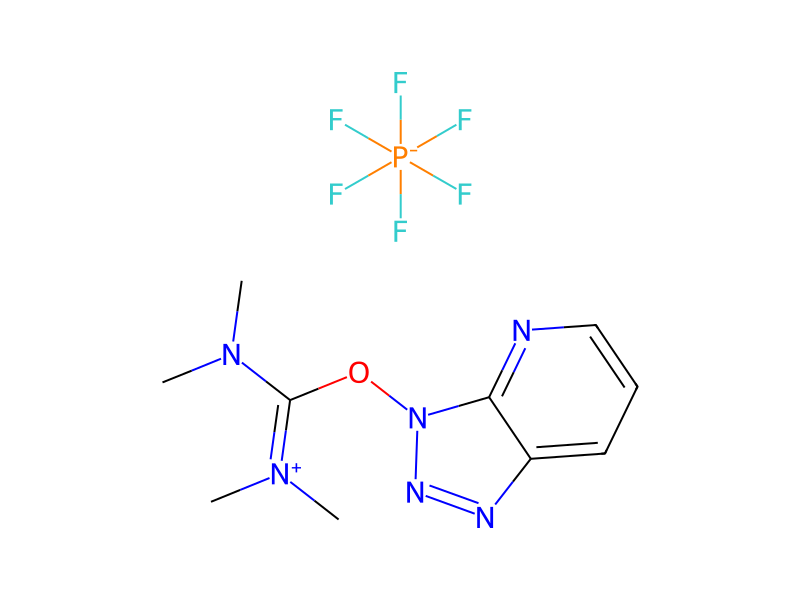
[Cl:1][C:2]1[CH:7]=[CH:6][CH:5]=[CH:4][C:3]=1[CH2:8][C:9]([OH:11])=O.CCN(C(C)C)C(C)C.CN(C(ON1[N:37]=[N:36][C:31]2[CH:32]=[CH:33][CH:34]=[N:35][C:30]1=2)=[N+](C)C)C.F[P-](F)(F)(F)(F)F.Cl.[N:46]1[CH:51]=[CH:50][C:49]([C:52]2C3CNCCC=3NN=2)=[CH:48][CH:47]=1>CN(C=O)C.O>[Cl:1][C:2]1[CH:7]=[CH:6][CH:5]=[CH:4][C:3]=1[CH2:8][C:9]([CH:34]1[CH2:33][CH2:32][C:31]2[NH:36][N:37]=[C:52]([C:49]3[CH:50]=[CH:51][N:46]=[CH:47][CH:48]=3)[C:30]=2[NH:35]1)=[O:11]Participants
7
Reactant 4



Product 1


