HomeMCPWorkbenchSkills
HomeWorkbenchNotificationsMe
llms.txt · MCP GuidePrivacy Policy · Terms of Service · Supportv1.8.3
  1. Home
  2. /Reaction

Boronic Acid → (E)-methyl 4-(3-(furan-2-yl)benzylidene)-1,4,5,6-tetrahydrocyclopenta[b]pyrrole-2-carboxylate

HRID 601786
Print

Reaction equation

HRID 601786 reaction equation
[OH-].[Ba+2].[OH-].B(O)O.[O:7]1[CH:11]=[CH:10][CH:9]=[C:8]1[C:12]1[CH:13]=[C:14]([CH:38]=[CH:39][CH:40]=1)/[CH:15]=[C:16]1\[CH2:17][CH2:18][C:19]2[N:20](S(C3C=CC(C)=CC=3)(=O)=O)[C:21]([C:24]([O:26][CH3:27])=[O:25])=[CH:22][C:23]\1=2>CN(C=O)C.O.C(OCC)(=O)C.C1C=CC([P]([Pd]([P](C2C=CC=CC=2)(C2C=CC=CC=2)C2C=CC=CC=2)([P](C2C=CC=CC=2)(C2C=CC=CC=2)C2C=CC=CC=2)[P](C2C=CC=CC=2)(C2C=CC=CC=2)C2C=CC=CC=2)(C2C=CC=CC=2)C2C=CC=CC=2)=CC=1>[O:7]1[CH:11]=[CH:10][CH:9]=[C:8]1[C:12]1[CH:13]=[C:14]([CH:38]=[CH:39][CH:40]=1)/[CH:15]=[C:16]1\[CH2:17][CH2:18][C:19]2[NH:20][C:21]([C:24]([O:26][CH3:27])=[O:25])=[CH:22][C:23]\1=2
ParticipantsProcedureWorkupSources & evidenceReaction notes

Participants

8

Reactant 3

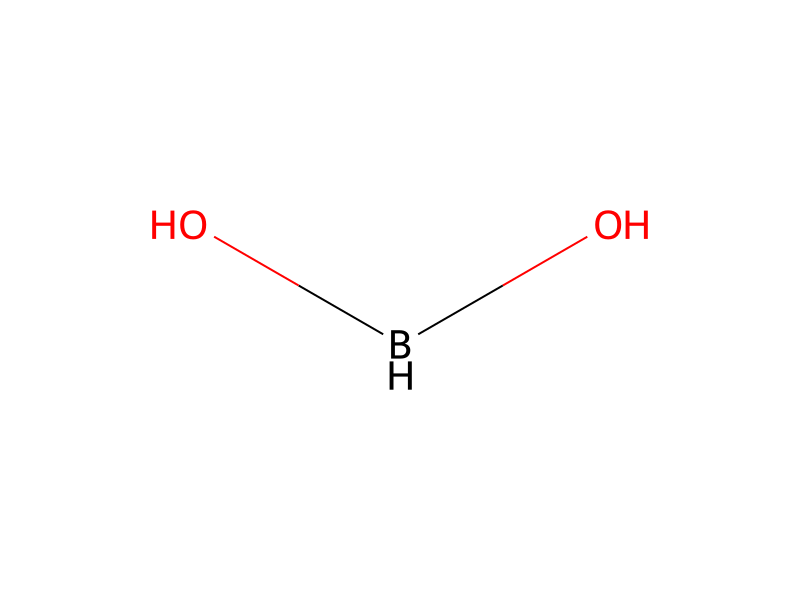
HCID 61668Boronic AcidHCID 6093286Barium hydroxideHCID 66873562(E)-methyl 4-(3-(furan-2-yl)benzylidene)-1-tosyl-1,4,5,6-tetrahydrocyclopenta[b]pyrrole-2-carboxylate

Product 1

HCID 66873323(E)-methyl 4-(3-(furan-2-yl)benzylidene)-1,4,5,6-tetrahydrocyclopenta[b]pyrrole-2-carboxylate

Reagents, catalysts & solvents 4

HCID 178418397
HCID 178418397, compound
Catalyst
HCID 962WaterSolvent2×
HCID 6228DimethylformamideSolvent
HCID 8857Ethyl AcetateSolvent

Procedure

The starting aryl halide (i.e., (E)-methyl 4-(3-bromobenzylidene)-1-tosyl-1,4,5,6-tetrahydrocyclopenta[b]pyrrole-2-carboxylate) (0.824 mmol) was dissolved in DMF (8 mL) and H2O (2 mL) was added, forming a suspension. Barium hydroxide (0.213 g, 1.24 mmol) was then added, and the suspension was isolated and back-flushed four times with N2. The boronic acid (i.e. furan-2-boronic acid) (1.23 mmol) was added, and the suspension was isolated and back-flushed with N2 an additional four times and finally sparged with N2 for about 5-10 min. Then tetrakis(triphenylphosphine)palladium(0) (0.143 g, 0.21 mmol) was added, and the reaction was placed in a preheated (80° C.) heating block and stirred for 1 hour. The reaction was diluted with H2O (20 mL) and ethyl acetate (20 mL) and filtered through Celite. The organic layer was collected, washed once with H2O, once with brine, and dried over Na2SO4. Purification by column chromatography afforded the desired coupled product (i.e., (E)-methyl 4-(3-(furan-2-yl)benzylidene)-1-tosyl-1,4,5,6-tetrahydrocyclopenta[b]pyrrole-2-carboxylate). De-protected product (i.e., (E)-methyl 4-(3-(furan-2-yl)benzylidene)-1,4,5,6-tetrahydrocyclopenta[b]pyrrole-2-carboxylate) may also be formed.

Workup

  1. customforming a suspension
  2. customthe suspension was isolated
  3. customback-flushed four times with N2
  4. customthe suspension was isolated
  5. customback-flushed with N2 an additional four times
  6. customfinally sparged with N2 for about 5-10 min
  7. customwas placed in a preheated (80° C.)
  8. temperatureheating block
  9. filtrationfiltered through Celite
  10. customThe organic layer was collected
  11. washwashed once with H2O, once with brine
  12. dry with materialdried over Na2SO4
  13. customPurification by column chromatography
  14. customafforded the

Sources & evidence

ORD record
ord-46d519650c1a4266894e2bb7789830ad
Source dataset
uspto-grants-2011_03
DOI
10.6084/m9.figshare.5104873.v1
Patent number
US07902252B2

Reaction notes

On this pageParticipantsProcedureWorkupSources & evidenceReaction notes