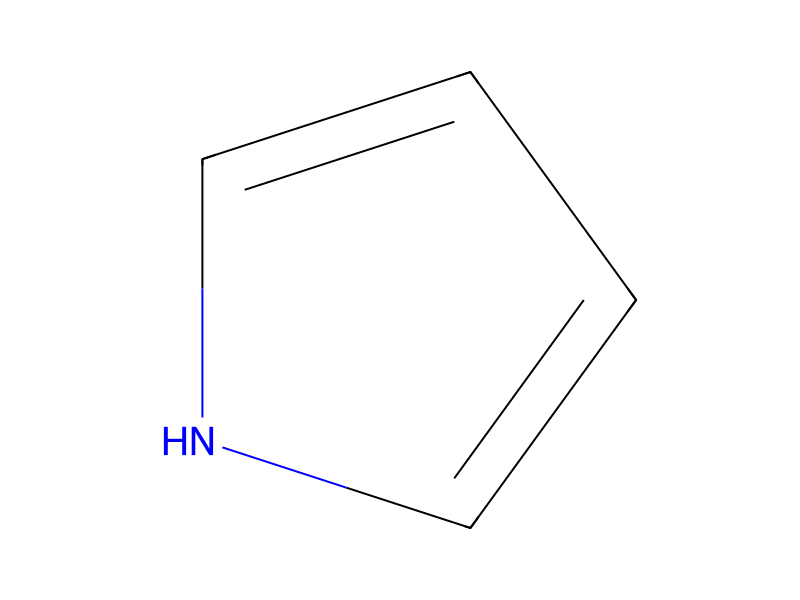
A 2-L three-necked flask equipped with a stirrer, a thermometer, a condenser tube and a nitrogen inlet tube was charged with 134.6 g (0.500 mol) of 2,5-dichloro-4′-fluorobenzophenone, 50.3 g (0.750 mol) of pyrrole, 76.0 g (0.550 mol) of potassium carbonate and 840 ml of dehydrated N,N′-dimethylacetamide. The reaction solution was heated under a nitrogen atmosphere in an oil bath at 100° C. for 3 hours. After thin layer chromatography confirmed that the materials showed no peaks, the reaction liquid was allowed to cool to room temperature. The reaction liquid was slowly added to 3 L of water, and the product was precipitated. The liquid was then filtered. The product obtained by the filtration was dissolved in 2.5 L of toluene. The solution was washed with salt solution using a separating funnel until the water phase became neutral. The organic phase was dried over magnesium sulfate, and the solvent was evaporated with an evaporator. A crude product weighing 133.3 g was obtained. The crude product was subjected to recrystallization using a hexane/ethyl acetate mixed solvent, and the resultant crystal was isolated. As a result, 125.3 g (0.396 mol) of an objective purified product was obtained with a yield of 79.3%.