Reaction equation

[C:1]([O:6][CH2:7][CH2:8][CH2:9][CH2:10][CH2:11][CH2:12][CH2:13][CH2:14][CH2:15][CH2:16][CH2:17][CH3:18])(=[O:5])[C:2]([CH3:4])=[CH2:3].[CH:19]([N:21]1[CH2:25][CH2:24][CH2:23][C:22]1=[O:26])=[CH2:20].N(C(C)(C)C#N)=NC(C)(C)C#N>>[CH:19]([N:21]1[CH2:25][CH2:24][CH2:23][C:22]1=[O:26])=[CH2:20].[C:1]([O:6][CH2:7][CH2:8][CH2:9][CH2:10][CH2:11][CH2:12][CH2:13][CH2:14][CH2:15][CH2:16][CH2:17][CH3:18])(=[O:5])[C:2]([CH3:4])=[CH2:3]Participants
4

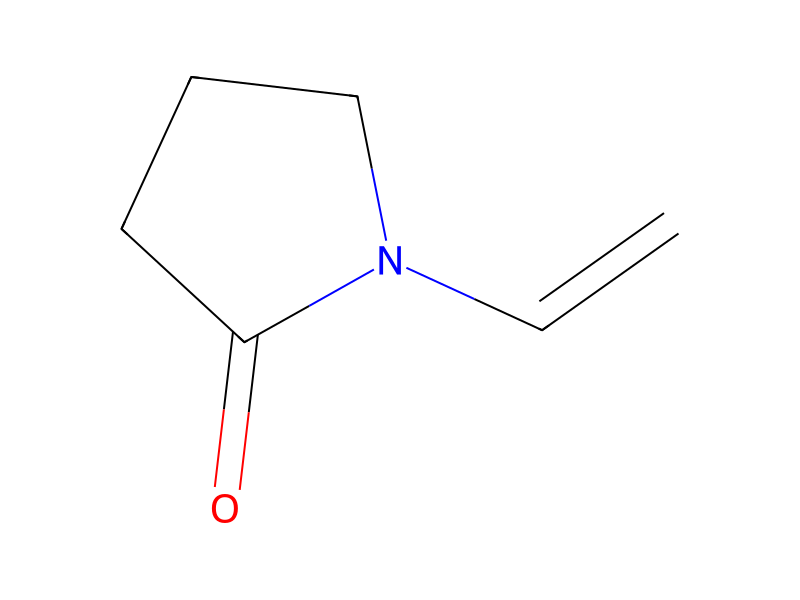


Procedure
The N-vinyl-2-pyrrolidone/lauryl methacrylate (6/94) copolymer was prepared in the following manner. In 100 parts of 0-grade Solvent L were placed 47 parts of lauryl methacrylate, 3 parts of N-vinyl-2-pyrrolidone and 0.2 parts of azobisisobutyronitrile (polymerization initiator). The mixture was reacted at 60 to 70° C. for about 12 hours at nitrogen atmosphere.
Workup
- customThe mixture was reacted at 60 to 70° C. for about 12 hours at nitrogen atmosphere
Sources & evidence
- ORD record
- ord-48795fde0e514c28afb9751c2a4e4355
- Source dataset
- uspto-grants-1999_12
- Patent number
- US05998075
Linked notes
Loading…